


Countries of the Congo Basin have adopted a regional strategy aimed at expanding agroecological farming practices to increase food production while safeguarding one of the world’s largest tropical forest ecosystems, as governments across Central Africa seek to balance rising food demand, climate pressures and biodiversity conservation. The agreement was endorsed through the Yaoundé Declaration 2026 during the Second Congo Basin Convening held in Cameroon from August 25 to 27, bringing together 187 delegates from 20 countries to define a common approach to food systems, land management and environmental protection.

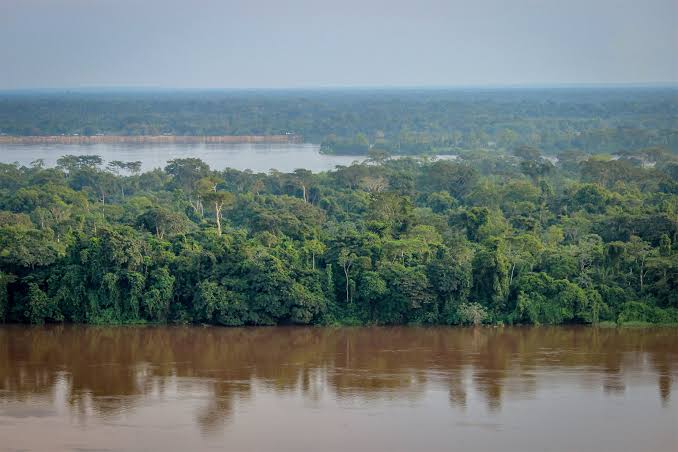
The declaration reflects a growing recognition among policymakers that food security and forest conservation can no longer be treated as separate policy challenges. Across the Congo Basin, governments face mounting pressure to expand agricultural output for rapidly growing populations while limiting deforestation, land degradation and biodiversity loss. The region contains the world’s second-largest tropical rainforest after the Amazon and plays a critical role in climate regulation, carbon storage and ecosystem services that support millions of livelihoods.
Under the roadmap, governments and the African Union Commission are encouraged to integrate agroecology into national and regional agricultural investment plans. The declaration also calls for at least 30% of relevant food-system budget allocations to be directed towards agroecological approaches, while seeking to ensure that at least 20% of climate and biodiversity financing reaches farmers’ organisations, women, young people, Indigenous peoples and local communities directly. Participants further advocated stronger protection of customary land rights, support for farmer-managed seed systems and the creation of a regional financing mechanism dedicated to agroecology.
The initiative comes at a time when food security concerns are intensifying throughout Central Africa. In Cameroon, agriculture remains a cornerstone of the economy, accounting for 16.8% of gross domestic product in 2025 and providing employment for 41.9% of the workforce, according to World Bank data cited during the conference.
Opening the gathering, Cameroon’s Minister of Agriculture and Rural Development, Gabriel Mbairobe, underscored the challenge facing governments across the region: producing sufficient food while agricultural systems operate under increasing environmental, climatic and financial constraints. His remarks highlighted the broader policy dilemma confronting many African economies, where food import dependence, population growth and climate-related disruptions are placing additional strain on public finances and domestic food systems.
The pressures are already evident on the ground. An April 2026 Food and Agriculture Organization country brief, referencing the October 2025 Cadre Harmonisé assessment, projected that more than 2.8 million people in Cameroon would experience severe acute food insecurity between June and August 2026. Of that total, approximately 250,000 people were expected to face emergency levels of food insecurity. Conflict, socio-political instability, flooding, elevated food prices and rising agricultural input costs have continued to affect production and access to food.
Against this backdrop, agroecology is increasingly being viewed not merely as an environmental strategy but as an economic resilience tool. Advocates argue that farming systems built around soil health, biodiversity, diversified production and lower external input dependence can help farmers manage climate risks while maintaining productivity. For governments facing constrained budgets and volatile international commodity markets, such approaches may also help reduce vulnerability to imported fertiliser and input price shocks.
The stakes are particularly high in the Congo Basin because of the economic value of its forests. Cameroon’s forest cover represented 42.7% of national land area in 2023, according to data cited during the meeting. At the same time, World Bank forest ecosystem accounts indicate that while biodiversity and forest conditions remain relatively strong across much of the basin, deterioration has been observed in some ecosystems, including areas of Cameroon.
For the six Congo Basin countries: Cameroon, Gabon, Equatorial Guinea, the Central African Republic, the Republic of Congo and the Democratic Republic of Congo, the challenge is not only environmental, but developmental. Agricultural expansion remains essential for job creation, poverty reduction and rural incomes, yet uncontrolled land conversion risks undermining natural capital that supports water resources, climate resilience and long-term economic productivity.
The Yaoundé roadmap therefore seeks to position regional cooperation as a central component of implementation. Discussions during the convening focused on ecological resilience, sustainable food systems, land rights, resource mobilisation and policy coordination. Organisers argued that fragmented national approaches are unlikely to address challenges that cross borders, including ecosystem degradation, food market disruptions and climate impacts.
The Alliance for Food Sovereignty in Africa (AFSA), one of the organisers of the event, has been tasked with supporting resource mobilisation for the Congo Basin Biodiversity, Climate and Agroecology Initiative and hosting its regional coordination unit. Meanwhile, participating countries are expected to establish or strengthen national agroecology platforms to coordinate implementation at the domestic level.
The initiative also aligns with broader efforts to strengthen agricultural value chains across the region. In Cameroon, authorities and United Nations partners launched the CONVERGEFOOD programme in March 2026 to improve market access, expand financing opportunities and strengthen links between smallholder farmers and agribusinesses.
 For Africa, the significance of the Yaoundé Declaration extends beyond environmental protection. It illustrates how governments are increasingly attempting to integrate food security, climate adaptation, biodiversity management and rural development into a single policy framework. Whether the strategy delivers measurable results will depend largely on financing, institutional coordination and implementation capacity at national level. However, the agreement signals a growing regional consensus that future agricultural expansion in the Congo Basin must be designed not only to increase production, but also to preserve the natural assets on which long-term economic stability and food security depend.


