


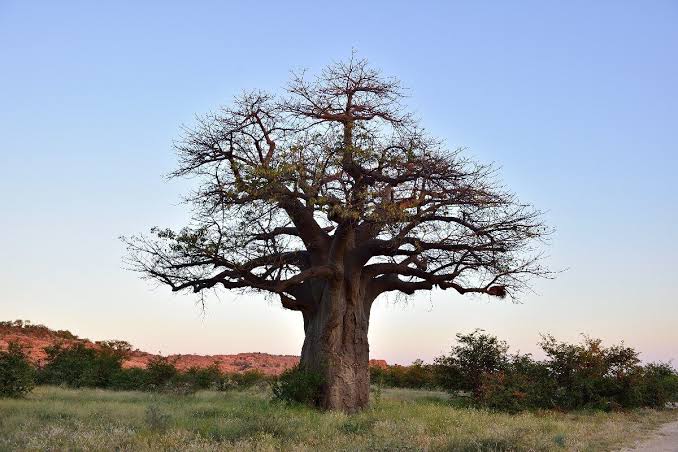
South African authorities have halted the attempted export of five protected baobab trees to Georgia and opened a criminal investigation after the exporter allegedly failed to obtain the permits required under national forestry law, raising questions about the commercial trade in mature indigenous trees and the economic value lost when they are removed from their natural landscapes. The trees, estimated to be between 200 and 300 years old, were uprooted in Limpopo’s Waterberg district and transported to Durban, where they remain impounded at a logistics warehouse as officials consider their recovery and possible replanting.
According to the Organized Crime and Corruption Reporting Project, each tree weighs up to 30 tonnes. The exporter subsequently applied for retrospective approval, but South Africa’s Department of Forestry, Fisheries and the Environment rejected the request, saying it would not issue a licence to regularise alleged illegal activity. The department has not identified the exporter or intended recipient because the investigation is ongoing.

The case centres on South Africa’s National Forests Act, which restricts the cutting, removal, transport, possession, sale and export of protected trees without a ministerial licence or exemption. The government’s published list of protected species classifies violations as first category offences, carrying a possible fine, imprisonment of up to three years, or both. The legislation provides a basis for enforcement, although the effectiveness of protection depends on monitoring and intervention before trees are removed from their original locations.
The immediate concern is whether the five trees can survive. Reports by OC Media indicate that they had remained on hot tarmac outside the Durban warehouse for almost three months, with much of their root systems and branches severed during removal. A tree transport specialist warned that they required rapid transfer to a botanical garden or specialist nursery, while Baobab Expert Sarah Venter said replanting remained possible. Their eventual survival will depend on the condition of the trees, the handling they receive and whether suitable sites and specialist care are available.
The seizure therefore presents a conservation challenge beyond the legal question of whether the export was authorised. Even where mature trees can be transported, relocation can involve substantial ecological and technical risks. Root damage, exposure to heat, delays and unsuitable planting conditions can reduce the likelihood of survival. Without a clear recovery plan, preventing an export does not necessarily preserve the environmental value of the trees.
The economic implications extend beyond the landscaping market. Baobabs support livelihoods through their fruit, seeds and other products, which are used in food, cosmetics and natural product industries. In rural communities, the trees can provide recurring economic value through harvesting and processing, particularly in areas where agricultural incomes are exposed to drought and variable rainfall.
A 2026 case study by the Climate and Development Knowledge Network found that a formal baobab fruit value chain in Northern Mozambique was providing drought resilient income to thousands of women suppliers. Training and producer associations had also strengthened women’s participation in commercial activities and household decisions. Research in Kenya has similarly identified baobab products as contributors to nutrition and household income, although processing capacity and market access remain constraints in parts of the sector.
These value chains illustrate the difference between the one-off sale of a mature tree and the longer-term income that can be generated while it remains part of a productive landscape. Harvesting fruit and processing it into powder, oil and other products can create opportunities for rural producers, traders and small enterprises. The distribution of those benefits, however, depends on access to buyers, fair prices, sustainable harvesting practices and clear rights over land and natural resources.
The removal of mature trees for export can shift that economic value away from the communities and ecosystems where it has accumulated over generations. A transaction may compensate an owner or intermediary, but it does not automatically account for the tree’s ecological functions, future harvests or wider contribution to the local landscape. The extent of this loss depends on the terms of the transaction and whether affected communities have been consulted and adequately compensated.
The South African investigation also follows a case in Kenya involving eight baobab trees removed from Kilifi County and exported to Georgia. NTV Kenya, citing a statement from the destination park, reported that the trees died six to seven months after planting after remaining uprooted for an extended period. The deaths raised concerns about the environmental and practical standards applied to the relocation of mature trees, as well as the responsibilities of exporters and receiving institutions.
The two cases point to a broader regulatory challenge for African countries. Export permits may establish whether a transaction meets legal requirements, but they do not necessarily demonstrate that removing a mature tree is ecologically viable or economically beneficial to the communities where it originated. Regulators must consider not only ownership and documentation but also the condition of the tree, the proposed relocation method, the receiving site and the likelihood of survival.
For South African investigators, the next stage will involve establishing who authorised the removal, who owned or controlled the trees, what payments were made and whether each participant in the transport and export chain complied with the law. Authorities must also determine where the trees can be replanted and how the costs of recovery should be allocated if wrongdoing is established. The outcome could influence how future applications involving protected trees are assessed and monitored.
For African governments, the issue is closely linked to the management of natural capital. Indigenous trees can support biodiversity, soil stability, water retention and livelihoods, while also contributing to local economic activity through non-timber forest products. Their value is not limited to timber or their appearance in private landscapes. In dryland and semi-arid areas, where communities face increasing pressure from climate variability, the continued productivity of native tree species can form part of broader livelihood and resilience strategies.
This creates a policy challenge for countries seeking to develop legitimate markets for natural products while preventing the unsustainable extraction of valuable resources. Restricting all commercial activity could limit opportunities for rural producers, but weak controls can allow high value assets to be removed without sufficient consideration of ecological costs or community interests. Effective regulation therefore requires a distinction between sustainable harvesting and the extraction of entire mature trees.
Linking forestry permits to reliable land records, requiring independent assessments for proposed relocations and publishing non-sensitive permit information could strengthen oversight. Authorities may also need to establish clear requirements for community consultation, compensation and post relocation monitoring. These measures would help ensure that the costs and benefits of commercial activity are more transparently distributed.
The baobab trade also raises questions about how African countries capture value from their natural resources. Processing fruit and seeds within producing regions can support local enterprises and employment, while stronger producer organisations may improve bargaining power and access to formal markets. Such approaches require investment in processing equipment, quality standards, storage, transport and market development, but they offer a route to retaining more economic activity in rural areas.

The Durban seizure has stopped five trees from leaving South Africa without the required permits, but the outcome will depend on whether they can be saved and whether the investigation establishes accountability across the supply chain. For communities living alongside baobab landscapes, the wider issue is whether the economic value of these trees can be managed in ways that preserve their ecological functions and sustain local livelihoods. The cases in South Africa and Kenya show that the cost of a poorly managed living tree trade may extend well beyond the loss of individual trees, reaching the natural systems and rural economies that depend on them.


