


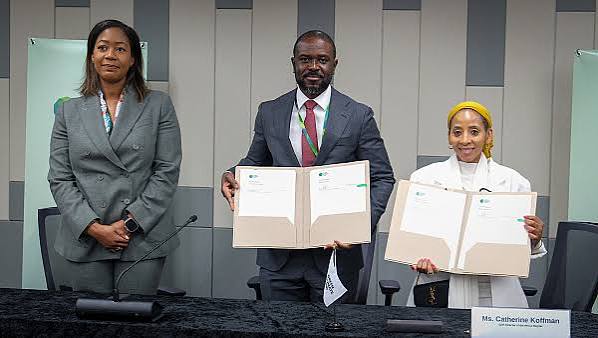
The Africa Finance Corporation (AFC) and the Green Climate Fund (GCF) have launched a $690 million Africa Sovereign Climate Facility to help Angola, Benin, Côte d’Ivoire and Nigeria finance climate-resilient development and integrate climate priorities into national public investment programmes. The initiative introduces a sovereign-level financing mechanism at a time when African governments are seeking to expand infrastructure, strengthen economic resilience and mobilise long-term capital for climate-related investments.
The facility is designed to help participating governments develop and finance projects aligned with national climate priorities, addressing a persistent challenge in climate investment: the difficulty of preparing projects that are sufficiently developed to attract long-term financing. Its focus on sovereign investment places public infrastructure planning at the centre of climate finance, connecting environmental priorities with decisions on energy, transport, water and other assets that shape national development.
The launch coincides with an expansion in the Green Climate Fund’s financing activity. The fund announced that its 2026 Board approvals had reached a record $3.3 billion, following the approval of 21 projects across 44 developing countries. The latest decisions added nearly $2 billion in financing to its annual commitments, bringing its portfolio to 379 projects and programmes supported by $22.3 billion in GCF financing.

The approved projects cover climate adaptation, low-carbon development, industrial transformation and ecosystem protection across Africa, Asia-Pacific, Europe, Central Asia, the Middle East and Latin America. For African economies, the portfolio includes sovereign climate investment, industrial decarbonisation, forest conservation in Cameroon and additional funding for urban climate investment through the Green Cities Facility.
The GCF also reported that changes to its balance sheet management, introduced earlier in 2026, had increased its capacity to finance new projects. The revised approach could make approximately $5.65 billion available for new programmes over the following two years, compared with $1.37 billion under the previous model. The changes reflect an effort to make more of the fund’s available capital accessible for investment as demand for climate financing grows.
Established under the United Nations Framework Convention on Climate Change, the GCF supports low-emission and climate-resilient development in developing economies. Its financing is intended to support investments that may be difficult to fund through domestic budgets or conventional commercial lending, particularly where projects require substantial upfront expenditure, long investment periods or deliver adaptation and environmental benefits that are not easily captured through commercial returns.
For African governments, the AFC facility addresses a financing requirement that extends beyond individual climate projects. Public investment decisions determine the resilience of infrastructure and the capacity of economies to withstand climate-related disruptions. Roads, energy systems, water infrastructure and agricultural programmes can all face increasing exposure to extreme weather and changing environmental conditions. Integrating climate considerations into these investments can influence their long-term costs, reliability and economic value.
The sovereign financing approach also comes as governments face competing demands on public expenditure and pressure to manage debt obligations. Climate-resilient infrastructure often requires significant initial capital, while the economic benefits of adaptation and improved resource management may emerge over several years. By helping governments structure investments around national climate and development priorities, the facility seeks to connect climate objectives with projects capable of attracting longer-term financing.
Its approach complements other financing mechanisms operating across the continent. The $200 million African Rural Climate Adaptation Financing Mechanism, known as ARCAFIM, involving Equity Group, the GCF and the International Fund for Agricultural Development, targets climate adaptation financing for farmers and rural businesses in East Africa. While ARCAFIM works through financial institutions to reach agricultural producers and enterprises, the AFC facility focuses on sovereign investment programmes. The distinction highlights the different channels through which climate finance can support public infrastructure and economic activity at the community level.
Blended finance is also becoming an important part of this financing landscape. By combining development finance with commercial investment, such structures can help reduce risks that discourage private capital from entering projects with high upfront costs, extended repayment periods or uncertain revenue streams. Guarantees, risk-sharing arrangements and technical assistance can improve the conditions under which commercial lenders and investors participate in climate-related investments.
The role of commercial finance is evident in Kenya’s sustainable finance market, where Absa Bank Kenya has reported channelling more than KSh200 billion into sustainable finance over five years. Its strategy also includes a target of allocating 30% of its financing to sustainable activities by 2030. Alongside development finance institutions, commercial banks can provide lending capacity and financial expertise needed to expand the scale of investment.
However, access to capital remains only one part of the project development process. Governments and businesses require technical expertise, credible financial structures and institutions capable of coordinating implementation. Nature-based enterprises, for example, often face difficulties moving from early-stage development to investment readiness. FSD Africa’s Nature First Innovation Lab, which is preparing African nature-based businesses to attract investment and targets approximately $10 million in capital for participating enterprises, illustrates the importance of project preparation in widening access to climate finance.
The GCF’s latest approvals also extend into industrial transformation, with the Southern African Industrial Decarbonization Facility developed in partnership with the Development Bank of Southern Africa. The initiative targets emissions reductions from industrial activity while supporting productive capacity in economies where manufacturing and electricity systems remain exposed to fossil fuels.
Industrial decarbonisation requires investment in energy efficiency, cleaner production technologies and supporting infrastructure. Businesses may need to upgrade equipment, electrify operations, adopt renewable energy and develop alternative sources of industrial power. These changes can involve substantial capital expenditure, particularly for industries with energy-intensive production processes. Concessional and blended financing could help reduce investment barriers and support businesses seeking to modernise their operations.
The initiative also places industrial transformation alongside emerging investment activity in green hydrogen and other lower-carbon technologies. South Africa’s SA-H2 Fund, which targets hard-to-abate industrial sectors through green hydrogen investment, reflects the growing interest in financing solutions for industries where emissions reductions require changes to production systems rather than reliance on renewable electricity alone.
Forest conservation in Cameroon forms another part of the GCF’s latest portfolio. The programme addresses the relationship between ecosystem protection, emissions reduction and local economic systems. Forest conservation initiatives require coordination between public institutions, communities and economic actors whose livelihoods depend on land and natural resources. Financing can support conservation and sustainable land management while recognising the economic interests of communities living in forest areas.
Nature-based investment is also gaining attention through initiatives linking ecosystem protection with enterprise development. In Kenya, KCB’s partnership with WWF-Kenya to channel KSh10 billion into nature-related investment reflects the potential role of financial institutions in supporting projects connected to natural capital. Such investments sit alongside programmes aimed at developing African nature-based businesses and strengthening the commercial viability of restoration and conservation activities.
The GCF portfolio further includes a second tranche of financing for the Green Cities Facility, implemented with the European Bank for Reconstruction and Development. Urban climate investment is particularly relevant to African countries experiencing population growth and rising demand for transport, housing, water, waste management and electricity. Investments in resilient urban infrastructure can help cities manage exposure to flooding and extreme heat while improving the reliability of essential services.
Energy infrastructure remains another critical area where climate finance can influence wider economic performance. In Kenya, KenGen secured approximately KSh10.5 billion in financing for a 100MWh battery energy storage project, including $45 million from the GCF and €32.08 million from the World Bank’s International Development Association. The project is intended to strengthen electricity supply and support the integration of renewable energy into the power system.

Battery storage can help manage fluctuations in renewable electricity generation, improve power system flexibility and support more reliable electricity supply for businesses and households. Its financing illustrates how international climate capital can support infrastructure investments with implications for energy security and economic activity.
The expansion of the GCF’s approvals and the launch of the AFC facility therefore reflect a broader shift in the financing architecture supporting Africa’s climate and development priorities. Sovereign facilities, development banks, commercial lenders and regional institutions each have a role in preparing projects, mobilising capital and supporting implementation. Their ability to coordinate financing with technical assistance and national development planning will influence whether approved investments translate into functioning infrastructure and measurable economic outcomes.
For the four countries initially covered by the AFC facility, the immediate priority will be translating national climate objectives into investment programmes that can attract and absorb financing. Across the continent, the wider challenge is ensuring that increased climate capital reaches productive infrastructure, industrial development, agricultural resilience and natural resource management. The record level of GCF approvals signals greater financing capacity, but the economic value of that expansion will ultimately depend on the quality of projects, the strength of implementing institutions and the ability of governments to turn climate investment into long-term development gains.


