


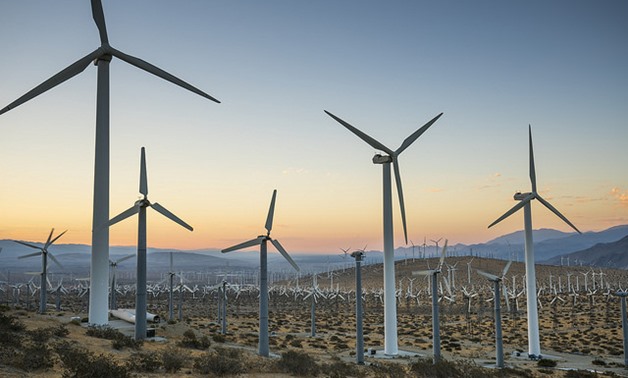
Egypt is linking a planned 2,000-megawatt wind power project in the Gulf of Suez to the country’s first wind turbine manufacturing plant, in a move that places industrial development alongside electricity generation at the centre of its renewable energy strategy. The partnership with China’s SANY Renewable Energy is designed to supply Egypt’s growing clean-energy market while creating manufacturing capacity that could eventually serve other African and Middle Eastern markets. For countries such as Nigeria, where a 10-megawatt wind project spent years struggling with delays, the initiative highlights a broader question for Africa’s energy transition: whether renewable power projects can be structured to build domestic industrial capabilities rather than simply import equipment.
The Egyptian project is still at an early stage, but its structure is significant. The agreement combines the development of the 2,000 MW wind project with a manufacturing facility capable of producing wind turbines at an annual capacity of about 2 GW. The project is expected to connect to Egypt’s national grid within 23 months of the final agreements, while the factory is intended to support domestic projects and potentially supply equipment to markets across Africa and the Middle East.
 That combination reflects a shift in how renewable energy investment can be viewed in economies seeking to industrialise. A wind farm creates electricity-generating assets, but a manufacturing base can create a wider ecosystem involving engineering, component production, logistics, installation, maintenance and technical skills. The economic effect therefore depends not only on how many megawatts are installed, but also on how much of the associated value chain remains within the country.
For Egypt, localisation also addresses a practical vulnerability in renewable-energy deployment: dependence on imported equipment and foreign technical support. The government has been discussing the SANY partnership as part of a wider effort to develop domestic renewable-energy manufacturing and strengthen the country’s industrial base. Earlier discussions between Egyptian authorities and SANY focused on technology transfer and the establishment of local turbine manufacturing capacity.
The financing structure is another important part of the Egyptian model. According to the Associated Press, the 2,000 MW project is being structured in local currency, reducing some of the foreign-exchange exposure that has complicated infrastructure investment elsewhere in Africa. The issue is particularly relevant for power projects because revenues are often generated in local currencies while equipment, debt or other project costs are denominated in dollars or euros. Currency depreciation can therefore raise debt-service and operating costs even where a project has strong underlying electricity demand.
Across Africa, the cost and availability of capital remain among the most significant constraints on clean-energy investment. The International Energy Agency has highlighted the importance of the cost of capital for clean-energy projects because many require substantial upfront investment before generating returns. The challenge is compounded by relatively small domestic markets, currency volatility, weak transmission infrastructure and uncertainty over power-sector revenues.
Nigeria offers a particularly relevant comparison. Its Lambar Rimi wind farm in Katsina state was conceived as a 10 MW renewable-energy project more than two decades ago. Construction was contracted to French manufacturer Vergnet in 2010, with completion initially expected within 24 months. Security problems, financing and implementation difficulties contributed to prolonged delays, while dependence on imported equipment created additional maintenance challenges. The project was eventually commissioned in 2025 after Katsina state added 10 MW of solar capacity.
The experience illustrates that renewable resources alone do not create functioning energy infrastructure. Project design, financing, ownership, procurement, grid readiness, technical capacity and long-term maintenance arrangements can determine whether an investment produces electricity for decades or becomes a stranded asset.
Engineers involved with the Katsina project told TheCable that replacement components sometimes had to be shipped from abroad, increasing delays when equipment required repair. Nigeria’s electricity-sector local-content rules already seek to increase domestic participation across the electricity value chain, including the development of skills to install, service and maintain imported high-technology equipment. The gap between those policy objectives and the experience at Lambar Rimi demonstrates the difficulty of converting local-content requirements into industrial capability.
For Africa, that distinction matters because the continent’s renewable-energy transition is also becoming an industrial policy question. Countries are investing in solar panels, batteries, wind turbines, transmission equipment and electric mobility infrastructure at a time when global supply chains for clean technologies are becoming strategically important. If African markets remain primarily destinations for finished equipment, much of the manufacturing, engineering and intellectual-property value associated with the transition will continue to be captured elsewhere.
Egypt’s approach does not eliminate that risk. A manufacturing plant owned or operated with a foreign technology partner can still leave critical intellectual property and higher-value engineering functions outside the country. The AP report notes concerns among experts that technology-transfer arrangements need to produce meaningful local capabilities rather than simply create another form of dependence on overseas manufacturers.
The question for governments is therefore less about whether foreign companies should participate in Africa’s energy transition and more about the terms under which they participate. Large projects can provide the scale needed to justify local production, but procurement agreements can also determine whether local firms gain access to engineering, maintenance, component manufacturing and technical knowledge.
There is a wider regional opportunity. Egypt’s position within the Suez Canal Economic Zone and its established trade links could provide a potential platform for serving markets beyond its domestic electricity system. For other African economies, regional demand could similarly help overcome the limitations of relatively small national markets. Coordinated procurement, common technical standards and regional industrial strategies could make it easier for manufacturers to justify investment in production capacity and skills.
Nigeria’s experience shows why that industrial dimension cannot be separated from energy planning. The country has substantial solar and wind resources, yet unreliable electricity continues to impose costs on households and businesses. According to data cited by TheCable from the Nigerian Electricity Regulatory Commission, Nigeria had 13,625 MW of installed grid-connected generation capacity as of April 2026, but only an average of 4,286 MW was available for dispatch that month.
For businesses, the consequences are immediate: unreliable grid supply increases reliance on diesel and petrol generators, raises operating costs and reduces the productive value of installed infrastructure. A renewable-energy project that cannot be maintained, integrated into the grid or financed sustainably does little to resolve those underlying constraints.
Egypt’s wind initiative therefore offers Africa a case study rather than a finished model. Its significance will ultimately depend on whether the factory creates durable domestic capabilities, whether technology transfer extends beyond assembly, whether local suppliers become part of the value chain and whether the electricity generated is integrated efficiently into the grid.
For African economies facing simultaneous pressure to expand electricity access, manage fiscal constraints and build competitive industries, that distinction is increasingly important. The energy transition is not only about replacing one source of electricity with another. It is also about deciding where the equipment is made, where skills are developed, where financing risks are absorbed and where the economic value of new infrastructure is retained.
 Egypt’s bet is that those questions can be addressed within the same project. Nigeria’s experience suggests why they need to be addressed from the beginning.


