


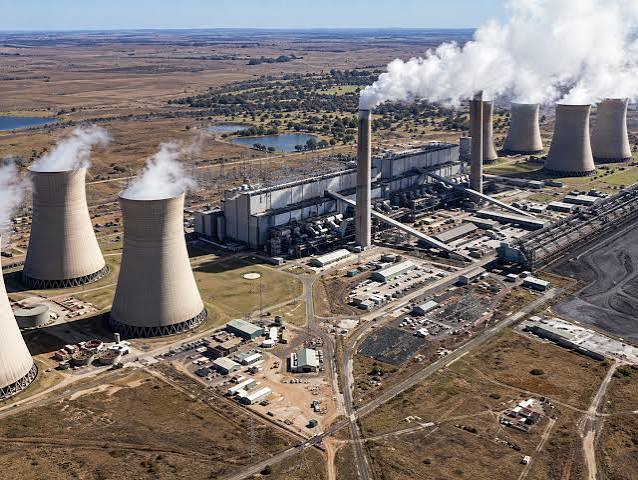
South Africa has reached 504 consecutive days without national load shedding, marking the longest sustained period of grid stability in years as improved Eskom generation performance, fewer unplanned outages and lower reliance on expensive emergency power begin to change the economics of electricity supply. The streak, which began on 16 May 2025, has been accompanied by a rise in Eskom’s year-to-date Energy Availability Factor to 68.11% and an 80.49% year-on-year reduction in diesel expenditure, according to the state-owned utility.
The improvement is significant for an economy where electricity shortages had become a constraint on industrial production, business investment and household activity. South Africa’s power crisis was not simply an energy-sector problem; it increased operating costs across mining, manufacturing, retail and services while forcing businesses and households to invest in backup generation and alternative electricity sources. The World Bank estimated that power outages cut South Africa’s GDP by about 2% in 2023 and cost roughly 500,000 jobs, illustrating the wider economic consequences of unreliable infrastructure.

According to Eskom, the latest gains are linked to better performance across its generation fleet, lower unplanned outages and the return of additional generating capacity to service. About 2,943 MW of generation capacity was returned during the latest reporting period, while Eskom said its Energy Availability Factor had improved by 12.76 percentage points compared with three years earlier.
The financial impact is equally important. Eskom’s diesel expenditure fell from R5.95 billion to R1.16 billion between 1 April and 1 October 2026, a reduction of R4.79 billion. The utility’s open cycle gas turbine load factor also declined from 6.72% to 1.02%, reflecting reduced dependence on diesel-fired emergency generation to meet electricity demand.
For Eskom, lower emergency generation costs can improve the operating position of a utility that has spent years under pressure from ageing infrastructure, high debt and weak financial performance. Reuters reported in August that Eskom recorded a R30.3 billion net profit for the financial year ended March 2026, its first annual profit in eight years, although electricity sales declined and municipal debt owed to the utility rose to R111.6 billion.
That distinction matters because improved generation performance does not by itself resolve the structural weaknesses in South Africa’s electricity system. Eskom still faces the challenge of maintaining ageing plants, expanding transmission capacity, improving distribution networks and managing a changing electricity market as private renewable generation continues to grow.
The 504-day period has also coincided with a broader restructuring of South Africa’s electricity sector. The government has been opening space for private investment in generation and transmission while pursuing reforms aimed at establishing a more competitive wholesale electricity market. In July, the World Bank approved a $1.5 billion development policy loan supporting reforms in electricity, freight transport, water and sanitation. The programme includes support for a competitive wholesale electricity market and increased private investment in electricity transmission.
The reliability gains therefore arrive at a point when South Africa is trying to balance two objectives: restoring the performance of existing electricity infrastructure while accelerating a transition towards a more diversified and lower carbon power system. The end of frequent load shedding reduces the immediate pressure for emergency interventions, but it does not remove the need for investment in transmission, renewable generation, storage and grid flexibility.
Read also: https://furtherafrica.com/2026/10/06/eskom-load-shedding-ends-for-504-straight-days/
The role of renewable energy is particularly relevant. South Africa has attracted substantial private investment into wind and solar projects since reforms opened more opportunities for independent power producers. According to the World Bank, private investment in renewable energy increased sixfold as electricity-sector reforms progressed.
A more reliable grid can make those investments more productive by providing the transmission and system flexibility required to integrate variable renewable generation. At the same time, a more diversified generation fleet can reduce the concentration of system risk associated with relying heavily on ageing coal-fired plants. The challenge is to ensure that new generation capacity is matched by sufficient transmission infrastructure and a market structure capable of allocating electricity efficiently.
For businesses, the improvement changes the risk calculation around electricity. During the worst years of load shedding, large electricity users increasingly invested in rooftop solar, batteries, gas generation and other forms of self-supply. Greater grid reliability could reduce the need for some forms of costly backup capacity while improving the predictability of electricity-intensive operations. This has implications for investment decisions in sectors such as manufacturing, mining, data centres and logistics, where electricity availability can influence both operating costs and decisions about where to locate new capacity.
Yet the national milestone should not be interpreted as meaning that every South African customer now has uninterrupted electricity. Eskom continues to implement targeted load reduction in areas where distribution networks face localised constraints, illegal connections and electricity theft. By early October, the number of customers affected had fallen from about 1.69 million to 202,590, representing 2.8% of Eskom’s customer base, with the remaining affected customers concentrated primarily in Gauteng and KwaZulu-Natal. Eskom has targeted full elimination of load reduction by March 2027.
This distinction between national grid stability and local network reliability is important for the wider African infrastructure debate. Electricity systems can have sufficient generation capacity at national level while communities and businesses continue to experience outages because of weak distribution infrastructure, overloaded transformers, illegal connections or insufficient maintenance. The experience illustrates why energy security requires investment across the entire electricity value chain rather than generation alone.
South Africa’s experience also carries implications for other African economies confronting electricity shortages. Reliable power is a foundation for industrialisation, digital infrastructure, cold chains, water systems and modern manufacturing. When electricity becomes unreliable, firms often compensate through diesel generators and other private systems, shifting the cost of infrastructure failure from the public utility to businesses and households. That can raise production costs and weaken competitiveness, particularly for smaller companies that cannot afford significant backup capacity.
The reduction in Eskom’s diesel use demonstrates the fiscal and economic value of restoring core generation performance. It also shows that energy transition policy and energy reliability cannot be treated as separate agendas. South Africa needs to maintain adequate electricity supply while reducing emissions, and the most durable approach requires a combination of better performing existing assets, private renewable investment, transmission expansion, storage and stronger electricity market institutions.

For Africa, the lesson is less about the number of days without load shedding than about the economic value of dependable infrastructure. South Africa’s recovery in electricity availability comes as the country seeks to attract investment, improve industrial competitiveness and address long-standing infrastructure bottlenecks. Sustaining those gains will depend on whether operational improvements can be translated into financially viable utilities, stronger networks and a power market capable of supporting both economic growth and the continent’s broader energy transition.


