


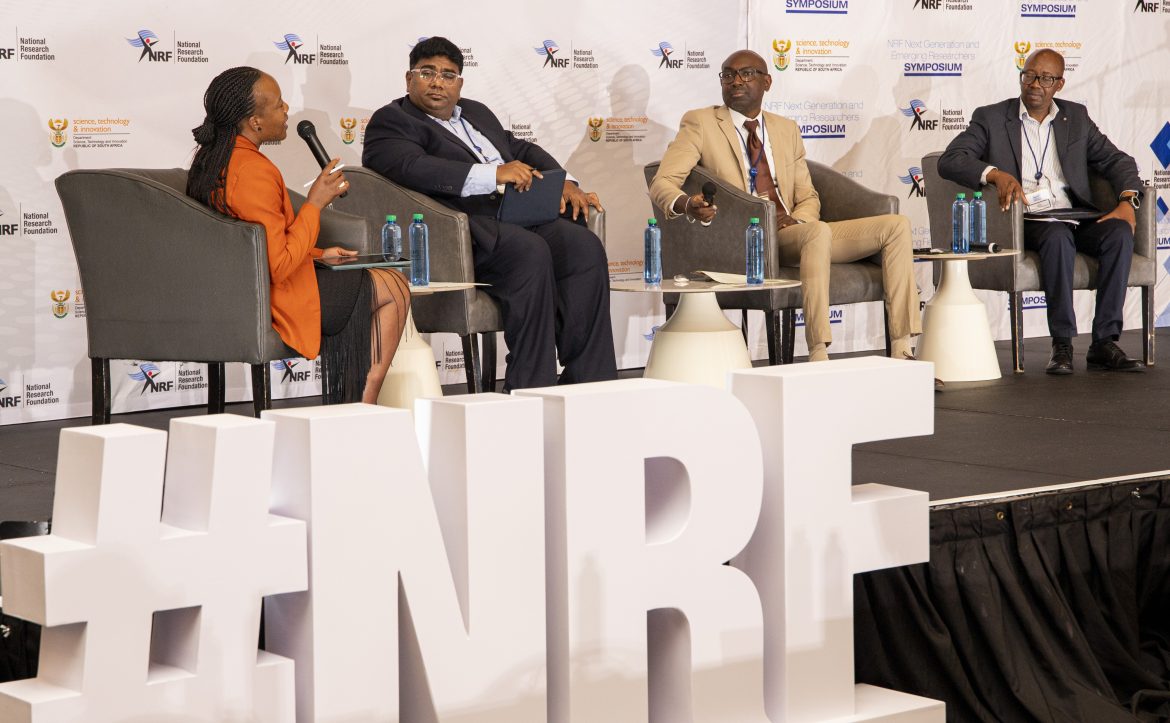
South Africa’s National Research Foundation (NRF) has called on emerging academics to place societal needs at the centre of scientific research, as researchers, experienced professionals and research sector leaders gathered in Gauteng from 7 to 9 October 2026 for the Next Generation and Emerging Researchers (NGER) Symposium. Held under the theme “Research for a Better Society”, the three-day event examined how research excellence can translate into practical solutions for the country’s social, economic and developmental challenges.
The symposium brought together emerging academics who hold NRF research grants to discuss the future of South Africa’s research enterprise, including the role of innovation, commercialisation, international collaboration and responsible research practices. A central question ran through the discussions: how can research improve lives, address pressing national challenges and contribute to a more inclusive and prosperous future?
The conversations reflected growing attention to the relationship between knowledge production and its practical application. While scientific research remains essential for expanding understanding and advancing discovery, its wider value also depends on whether findings inform public policy, support innovation, respond to community needs and create opportunities for economic and social development.

Dr Gugu Moche, Deputy Chief Executive Officer for Research, Innovation, Impact Support and Advancement at the NRF, challenged emerging researchers to consider the problems their work seeks to address, who stands to benefit from the knowledge they produce and the kind of research leaders they intend to become.
The questions place purpose and accountability at the beginning of the research process rather than treating societal impact as an outcome to be considered after a study is completed. They also encourage researchers to examine the intended beneficiaries of their work and assess whether their research questions reflect the needs of the people and institutions they seek to serve.
For South Africa, this approach has implications for how research priorities are established, how public research funding is directed and how institutions measure success. Research can generate significant scientific findings without necessarily producing immediate social or economic benefits. Connecting research design to identifiable needs may help improve the prospects of translating knowledge into interventions that address challenges in areas such as healthcare, education, energy, agriculture and environmental sustainability.
However, translating scientific findings into tangible outcomes requires more than identifying a problem. Researchers need access to appropriate funding, laboratory and technical infrastructure, interdisciplinary expertise, industry partnerships and pathways through which new ideas can be tested and adopted. The symposium’s discussions highlighted the importance of building a research ecosystem that can support these connections while maintaining scientific quality.
A key issue raised during the event was the need to move new knowledge towards innovations that serve a clearly defined target market. This requires researchers to understand the users of a potential product or service, assess demand and develop the systems needed to move an idea from research into practical application.
Commercialisation can help research institutions convert discoveries into products, technologies and services, potentially creating businesses, employment and new sources of economic value. Yet the process can be complicated by limited early-stage financing, intellectual property considerations, regulatory requirements and gaps between academic research and private-sector demand.
Developing a more effective pipeline from research to market therefore requires collaboration among universities, industry, investors, government agencies and innovation-support institutions. It also requires researchers to understand the difference between a scientifically promising idea and a solution that can be manufactured, financed, distributed and sustained in the market.
These considerations are particularly relevant to South Africa’s efforts to strengthen its research and innovation capacity while addressing persistent social and economic challenges. Research institutions can contribute to national development by generating evidence for policy decisions, supporting industrial innovation and developing technologies that respond to local conditions. The extent of that contribution depends partly on whether the wider innovation system can support the transition from discovery to adoption.
The symposium also explored issues affecting the research environment, including the decolonisation of research, international research funding, geopolitical and technological developments, researcher wellbeing, artificial intelligence and transformation.
The discussion around decolonising research raises questions about whose knowledge is recognised, which problems receive research attention and how communities participate in the generation and application of evidence. Ensuring that research responds to South Africa’s development priorities also requires attention to the diversity of researchers, the accessibility of research opportunities and the relevance of research methods to the contexts in which they are applied.
International research funding and geopolitical developments present another set of considerations. Cross-border partnerships can provide access to specialist expertise, equipment and financing, but changing international priorities and funding arrangements may affect the continuity of research programmes. Strengthening domestic research capacity can help institutions sustain long-term projects while participating in international scientific networks.
Artificial intelligence introduces additional opportunities and challenges. AI-enabled tools can support data analysis, modelling and research workflows, potentially improving the speed and scope of some scientific investigations. Their use also raises questions about research integrity, transparency, data quality and the appropriate role of human judgement. The symposium’s inclusion of AI among its discussion areas reflected the need for emerging researchers to navigate technological change while maintaining rigorous research standards.
Researcher wellbeing was also part of the programme, underscoring the human and institutional conditions required to sustain a productive research environment. Early-career academics often need to balance research, teaching, publication requirements, funding applications and professional development. Institutions seeking to strengthen their research capacity must therefore consider not only funding and infrastructure, but also mentorship, career development and working conditions.
Investment in emerging researchers remains central to the NRF symposium’s wider objectives. Developing the next generation of researchers can expand the country’s ability to generate knowledge, train specialists and respond to changing national and international priorities. Support for early-career academics also helps maintain continuity in research programmes and creates opportunities for new perspectives to shape scientific inquiry.

The challenge is to ensure that investment in research talent is matched by opportunities for researchers to apply their skills. Access to suitable research facilities, competitive funding, mentorship and collaboration with industry and public institutions can influence whether emerging academics are able to sustain their work and contribute to the wider economy.
The NGER Symposium 2026 reaffirmed a vision of research that combines scientific excellence with inclusive opportunities, responsible practices and measurable relevance to society. Its theme, “Research for a Better Society”, places the relationship between research and development at the centre of the national conversation.
For South Africa, the next step lies in translating that principle into institutional practices and investment decisions that support research throughout its lifecycle. This includes defining relevant research questions, producing reliable evidence, developing innovations, engaging intended beneficiaries and establishing pathways for the adoption of successful solutions.
The symposium’s broader message is that research impact cannot be judged solely by the volume of knowledge produced. It also depends on how effectively that knowledge informs decisions, reaches the people who need it and contributes to improved livelihoods and long-term development. As South Africa continues to build its research and innovation capacity, connecting scientific discovery with practical societal needs will remain an important test of the value generated by its research enterprise.


