


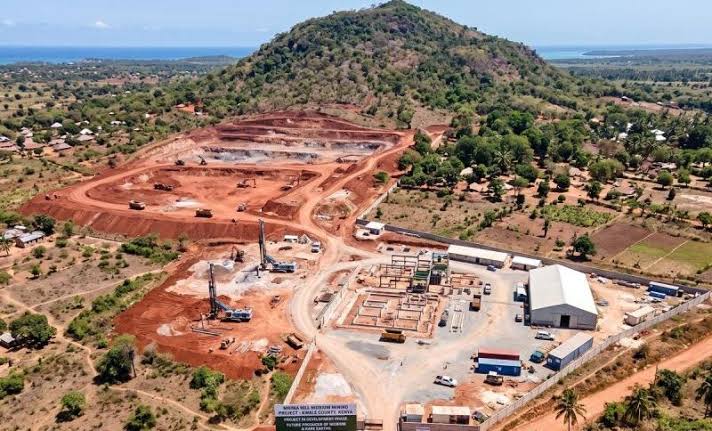
Kenya is evaluating five international and domestic groups seeking to develop the Mrima Hill critical minerals deposit in Kwale County, with the government expected to select a developer within weeks, as Nairobi seeks to attract investment into rare earth minerals and niobium while increasing domestic value addition. Mining Minister Hassan Ali Joho told Reuters on October 30 that the bidders include US-linked companies, an Australian partnership and a Kenyan-British joint venture, placing the project at the centre of growing competition for minerals used in advanced manufacturing, energy technologies and industrial supply chains.
The deposit is believed to contain tens of billions of dollars’ worth of rare earth minerals and niobium, although its commercial value will depend on the resource that can be economically extracted, the cost of processing and the infrastructure required to bring production to market. According to Reuters, Fluor Corporation is among the US firms competing through Meridian Mineral Holdings. The other bidders include a US consortium, another US-affiliated group, an Australian partnership and a Kenyan-British joint venture.

Joho said Kenya would select a developer through a transparent process based on national interests and was not under pressure from Washington or Beijing. Two Chinese companies withdrew from the process, although the reasons were not disclosed. The minister’s comments come as governments increasingly seek to diversify critical mineral supply chains and reduce dependence on a small number of countries for processing and refined materials.
The competition reflects a broader shift in the strategic importance of minerals used in electronics, electric vehicles, renewable energy equipment and other industrial applications. Rare earth elements are used in permanent magnets and specialised technologies, while niobium has applications in steel alloys and advanced materials. Demand is linked to industrial development and electrification, although prices, processing costs and technology requirements vary considerably across mineral types.
For Kenya, the central economic question is whether the project can generate more value domestically than a conventional extraction and export model. Mining can contribute royalties, taxes, foreign exchange and employment, but the scale of those benefits depends on the structure of the investment, the fiscal terms agreed with the developer and the extent of local participation. Processing minerals within the country could create additional industrial activity, but it would also require reliable electricity, water, transport infrastructure, skilled labour and access to specialised technology.
The project’s location in Kwale County makes environmental and community governance important to its development. Mining operations can affect land use, water resources, local livelihoods and public infrastructure. Rare earth extraction and processing can also involve complex waste streams and chemical treatment, depending on the deposit’s mineral composition and the processing method selected. Environmental assessments, water management plans, waste controls and transparent community engagement will therefore be important in determining the project’s long-term viability.
Kenya’s broader mining ambitions have increasingly focused on moving beyond the export of unprocessed minerals. The government has sought to strengthen domestic processing and improve the contribution of mining to industrial development. However, local value addition is not guaranteed simply by requiring processing facilities. The economics of refining and separation depend on scale, technology, energy costs, market access and the availability of specialised inputs. A project that is commercially viable at the extraction stage may require additional capital or partnerships to establish downstream operations.
The international interest in Mrima Hill also reflects the changing investment environment for critical minerals. Western governments and companies are seeking alternatives to supply chains in which China has a dominant role in processing several strategic materials. That competition may create opportunities for African mineral producers, but it also raises the risk that projects are developed primarily to serve external supply priorities rather than domestic industrial needs.
Recent investment discussions across the continent show that access to capital is only one part of the challenge. Mining investors have raised concerns about policy uncertainty, permitting delays and changing fiscal arrangements, while African governments have sought greater public revenue and local participation. The balance between these priorities can influence whether projects attract long-term investment and whether communities receive durable economic benefits.
For Kenya, the selection process will be an early indication of how the government intends to manage that balance. The terms of the award, including ownership, royalties, tax treatment, environmental obligations, infrastructure commitments and local procurement, will shape the distribution of benefits and risks. Transparency in the process will also matter for public confidence, particularly where the resource is described as potentially valuable but its recoverable reserves and development costs remain to be established.
The project could create opportunities for Kenyan suppliers, technical services firms and workers if procurement and skills development are incorporated into the development plan. However, those benefits will depend on the capabilities of local businesses and the extent to which project requirements can be met competitively. Training programmes and supplier development may help expand participation, but they require time and coordination with the project’s construction and operating schedule.
The infrastructure implications are equally significant. Large scale mineral extraction and processing require dependable power and water, while transport systems must accommodate equipment, materials and eventual mineral exports. If new infrastructure is built primarily for the mine, its wider economic value will depend on whether it can also serve surrounding communities and other productive sectors. The cost of those systems and the allocation of responsibility between the developer and government will be important considerations in the final investment structure.
Kenya’s decision also comes as African governments seek to position critical minerals as a foundation for industrial development rather than only a source of export revenue. The continent holds resources relevant to global energy and technology markets, but much of the value associated with refining, component manufacturing and advanced materials remains concentrated outside Africa. Developing those capabilities requires investment, technical expertise, stable regulatory frameworks and access to markets.

The Mrima Hill project therefore presents Kenya with an opportunity to test whether strategic mineral investment can be aligned with domestic economic priorities. The immediate decision will determine who develops the deposit, but the longer-term outcome will depend on the quality of the investment agreement, environmental oversight and the capacity to build local supply chains. For Kenya and other African mineral producers, the measure of success will be whether resource development strengthens public finances, creates productive employment and supports industrial capacity while managing the environmental and social costs of extraction.


