


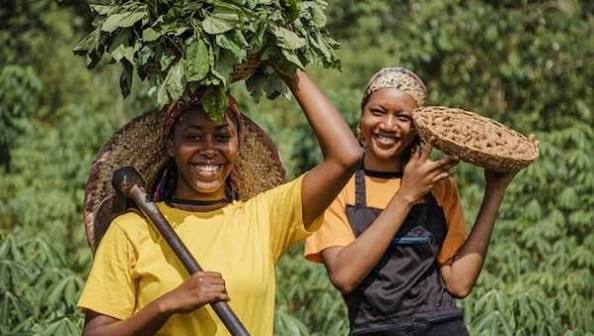
Women entrepreneurs in Nigeria, Uganda, Kenya and Malawi are building businesses that address waste management, renewable energy, food security and deforestation, demonstrating how locally developed enterprises can connect environmental challenges with employment and economic activity. In a feature published on November 2, 2026, The Guardian profiled four business leaders whose ventures are turning discarded materials into industrial products, expanding access to solar-powered irrigation, supplying school meals and producing alternative cooking fuels from agricultural waste.
The businesses operate in different sectors and at different scales but share a common approach: addressing practical development challenges through commercial and community-based solutions. Their experiences also highlight the financing, infrastructure and market barriers that women entrepreneurs continue to face when attempting to expand businesses in sectors traditionally dominated by larger firms and male-led investment networks.

In Nigeria, Ifedolapo Runsewe founded Freee Recycle in 2020 after more than 12 years in banking. The company collects discarded tyres from four states: Oyo, Lagos, Osun and Kwara and processes them into rubber granules used in playground surfaces, gym flooring, paving blocks and interlocking tiles. The factory employs about 62 people, turning a waste stream that is often dumped or burned into materials with commercial value.
The environmental implications extend beyond the reduction of visible waste. Burning tyres releases hazardous pollutants, while poorly managed disposal can create additional environmental and public health risks. Recovering rubber for manufacturing offers an alternative to these disposal practices, although the viability of the model depends on reliable waste collection, processing capacity and sustained demand for recycled products.
Runsewe’s experience also illustrates the difficulty of financing industrial recycling. According to The Guardian, 56 per cent of female entrepreneurs’ most recent loan applications in Nigeria were denied, compared with 17 per cent for men, citing World Bank data. Capital-intensive businesses such as recycling require investment not only in collection and processing equipment but also in product development, quality control and market access. These requirements can make it difficult for smaller enterprises to compete with established manufacturers.
In Uganda, Water Engineer Kyokushaba Shine established Winta Engineering Solutions in February 2025 to provide affordable irrigation systems for smallholder farmers. The company designs and installs water systems, many powered by solar energy, and combines pumping equipment with technologies such as drip irrigation to improve water use. Shine told The Guardian that the business had installed 30 water systems across Uganda, more than 10 of them for female farmers, and that women account for 80 per cent of its workforce.
The company has also collaborated with local microfinance providers to connect farmers with loans of about 5 million Ugandan shillings, equivalent to roughly £1,000, to finance irrigation equipment. The arrangements reflect a wider challenge across African agriculture: farmers may have access to land and markets but lack the infrastructure and affordable capital needed to manage increasingly variable rainfall.
Solar-powered irrigation can reduce dependence on fuel-based pumping and improve access to water during dry periods. However, its contribution to agricultural resilience depends on more than the installation of equipment. Maintenance services, access to finance, soil management and farmer training remain important to ensure that systems continue operating and that additional water translates into sustainable productivity.
In Kenya, Wawira Njiru’s Food4Education has expanded from a small community kitchen established in Ruiru in 2012 to a school feeding operation serving more than 700,000 children daily through 209 kitchens, according to The Guardian. The organisation employs about 6,000 people and sources approximately 80 per cent of its food purchases from local smallholder farmers.
Its operating model links school nutrition with agricultural markets and energy use. The organisation’s flagship kitchen in Nairobi uses solar energy and steam, while other kitchens have been transitioning towards eco-briquettes made from sawdust and agricultural waste. A digital platform helps estimate the number of meals required, with food waste reported at about 2 per cent.
The organisation has also demonstrated how large institutional buyers can support agricultural supply chains. During a mango surplus in Murang’a County in early 2026, Food4Education purchased 1.3 million mangoes from farmers whose produce had become difficult to sell. The fruit was incorporated into meals for schoolchildren, providing an outlet for farmers while reducing the risk of produce going to waste.
This model has implications for African food systems, where weak storage infrastructure, limited processing capacity and fragmented markets often leave smallholder farmers exposed to post-harvest losses and price fluctuations. Large scale school feeding programmes can create predictable demand for agricultural produce, but their effectiveness depends on procurement systems that include local farmers, maintain food quality and manage public and donor resources transparently.
In Malawi, Chifuno Stevens established the Chifuno Changa Green Initiative in 2020 to address waste management and deforestation in Dedza. The enterprise works with 18 women from the Dauya Ladies Environmental Group to produce charcoal briquettes using discarded peanut shells. The products provide an alternative fuel source for households and businesses that depend on conventional charcoal and firewood.
The initiative has also developed a commercial relationship with Dedza Pottery, which uses the briquettes as supplementary fuel when other energy supplies are insufficient. Since early 2026, the organisation has expanded into reusable bag production through sewing training for its members, creating an additional source of income.
The business faces constraints common to small scale clean energy enterprises, including irregular supplies of agricultural waste, limited access to specialised equipment and the need to keep products affordable for low income consumers. These factors influence whether alternative fuels can compete with established cooking fuels and expand beyond community-level markets.
Across the four countries, the businesses illustrate how environmental pressures can create opportunities in waste recovery, distributed energy, agricultural services and food supply chains. They also show that the commercial potential of these sectors depends on functioning markets. Recycling enterprises need manufacturers and consumers willing to purchase recovered materials; irrigation businesses need financing and maintenance networks; school-feeding programmes require reliable procurement; and alternative fuel producers need consistent feedstock and distribution channels.
The gender dimension is significant because women remain underrepresented in access to finance and ownership of larger businesses, despite their substantial participation in African entrepreneurship. The Guardian cited evidence of financing constraints in Nigeria, while Runsewe described instances in which investors and financial institutions assumed that male colleagues accompanying her were the business owners. Such barriers can restrict the ability of women-led enterprises to acquire machinery, secure contracts and move from small operations into industrial-scale production.
For African economies, the importance of these businesses extends beyond individual entrepreneurship. They operate in sectors connected to municipal waste costs, agricultural productivity, household energy expenditure, food security and employment. Their growth could support local value chains and reduce dependence on imported equipment, fuels or processed materials, provided that the enterprises can access the capital and infrastructure required to operate sustainably.
However, locally developed solutions cannot substitute for broader institutional investment. Waste collection systems, electricity networks, rural water infrastructure, agricultural extension services and affordable credit remain necessary to support businesses operating in these sectors. Governments and development finance institutions also have a role in improving procurement access, financing mechanisms and regulatory conditions for smaller enterprises.

The experiences of the four entrepreneurs point to a practical issue for Africa’s green transition: environmental solutions are increasingly being developed within local markets, but their ability to generate lasting economic value depends on whether those markets can support them. Expanding access to finance, strengthening supply chains and improving infrastructure will determine whether such enterprises remain isolated examples or become a more substantial part of the continent’s employment, industrial development and sustainability agenda.


