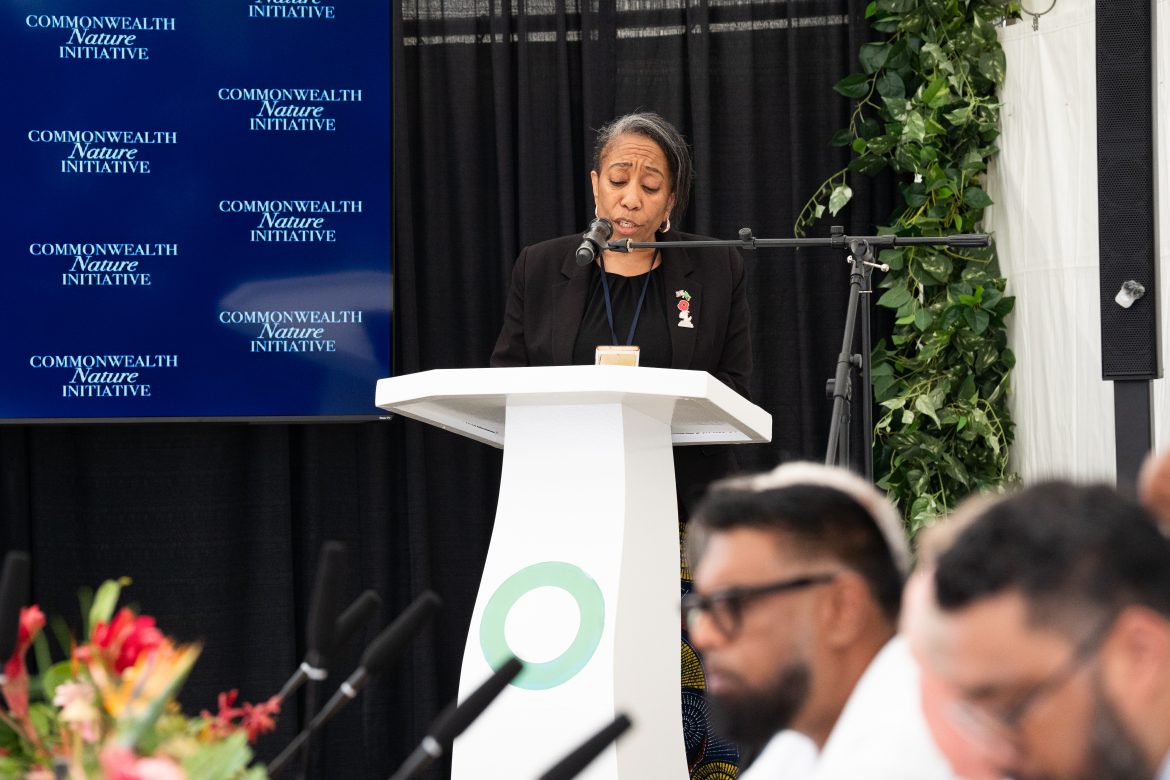
The Commonwealth has launched a US$202.2 million conservation financing initiative aimed at accelerating protection of the world’s land and oceans, bringing together governments, philanthropic foundations and conservation organisations as countries face mounting pressure to meet the global target of conserving at least 30 per cent of terrestrial and marine areas by 2030.
The Commonwealth Nature Initiative (CNI) was launched on 2 November 2026 during the Commonwealth Heads of Government Meeting (CHOGM) in Antigua and Barbuda. The announcement, made aboard Fortescue’s Green Pioneer vessel, brought together participating governments and founding supporters behind an initial package of commitments intended to strengthen terrestrial and marine protected areas across Commonwealth countries.
The initiative comes with only four years remaining to achieve the 30×30 target established under the Kunming-Montreal Global Biodiversity Framework in 2022. Its launch reflects growing recognition that national conservation commitments will require more predictable financing, stronger institutions and closer partnerships with communities that manage and depend on natural ecosystems.

The founding supporters include Minderoo Foundation, the Rob Walton Foundation, Rainforest Trust, the Gordon and Betty Moore Foundation, the Waitt Foundation and National Geographic Pristine Seas. Their initial commitments are intended to support the establishment, expansion and implementation of protected and conserved areas, alongside programmes that strengthen the rights and governance of Indigenous Peoples and local communities.
The initiative has set a longer-term ambition to attract a further US$1 billion from donor governments and philanthropic organisations by 2030. This additional fundraising target is intended to expand financing for conservation programmes across the Commonwealth. The distinction between the US$202.2 million announced at launch and the further US$1 billion ambition will be important in assessing how much capital is ultimately mobilised and deployed on the ground.
The Commonwealth provides a substantial geographical platform for the initiative. Its member countries account for almost a quarter of the world’s land area and more than 40 per cent of global ocean exclusive economic zones. These territories include important tropical forests, marine ecosystems, coral reefs, coastal habitats and other biodiversity-rich landscapes that contribute to climate regulation, food systems, livelihoods and economic activity.
The CNI is designed to connect countries at different income levels under a shared conservation agenda, with an emphasis on supporting national and regional priorities rather than creating a separate funding institution. According to its launch statement, the initiative will operate through a lightweight secretariat that convenes partners, mobilises investment and communicates progress, without holding funds or establishing a new grant-making entity. Its approach is therefore based on coordinating existing programmes and directing additional resources towards country-led conservation priorities.
At the launch, Antigua and Barbuda, Australia, Fiji, Guyana, Mozambique, Papua New Guinea, Solomon Islands, Tonga, Uganda, the United Kingdom and Zambia presented 30×30 initiatives, including plans to establish new protected areas. Their participation demonstrated the geographical breadth of the programme, extending from the Caribbean and Pacific to Africa.
For African countries, the initiative’s proposed areas of focus include the Africa Keystone Protected Area Partnership, which aims to secure sustainable financing for 162 of the continent’s most irreplaceable protected areas. The programme addresses a central challenge facing conservation across Africa: the long-term management of protected landscapes often depends on financing that can cover operational costs, monitoring, enforcement and community engagement beyond the initial establishment of protected status.
Protected areas can contribute to biodiversity conservation while supporting tourism, water security, climate resilience and local livelihoods. However, legal designation alone does not guarantee effective protection. Inadequate staffing, limited monitoring capacity, competing land-use pressures and insufficient recurrent funding can weaken conservation outcomes. Sustainable financing arrangements are therefore essential if the initiative’s commitments are to translate into lasting ecological and economic benefits.
The CNI also identifies the Eastern Caribbean, where the Organisation of Eastern Caribbean States (OECS) is pursuing its 30×30 Transformation Programme, and the Pacific, through the Unlocking Blue Pacific Prosperity initiative. The latter seeks to secure long-term financing for marine and coastal conservation across Pacific island countries. These regional programmes illustrate the initiative’s intention to work through existing platforms and priorities rather than apply a uniform conservation model across different ecosystems and national circumstances.
The role of Indigenous Peoples and local communities is another defining element of the initiative. Its founding commitments include support for programmes intended to strengthen community rights and governance. This is significant because conservation outcomes are closely linked to how land and marine resources are governed, who participates in decisions and how the benefits and costs of protection are distributed.
In many Commonwealth countries, local and Indigenous communities are directly involved in managing forests, fisheries, coastal ecosystems and other biodiversity-rich areas. Their participation can strengthen conservation monitoring and improve the legitimacy of protected-area arrangements. However, meaningful inclusion requires more than consultation. It depends on recognition of rights, secure governance arrangements, access to financing and clear mechanisms for communities to influence decisions affecting their territories and livelihoods.
Antigua and Barbuda’s Prime Minister, Gaston Browne, described the initiative’s model of directing funding towards regional and national 30×30 programmes as essential to ensuring that resources reach communities and deliver tangible results. Mozambique’s Foreign Minister, Maria Manuela dos Santos Lucas, outlined her country’s commitment to protecting at least 30 per cent of its terrestrial and marine ecosystems by 2030. She also announced plans to restore 500,000 hectares of degraded ecosystems and strengthen protection of forests, mangroves and marine biodiversity.
The founding pledges provide an indication of the different forms of support behind the initiative. Minderoo Foundation’s founder, Dr Andrew Forrest, announced a US$10 million contribution as catalytic cornerstone funding, intended to help attract further philanthropic investment and accelerate conservation activities across the Pacific and wider Commonwealth. Rainforest Trust’s Chief Executive Officer, James Deutsch, announced a US$50 million pledge to support local conservation organisations, strengthen Indigenous and community rights, and protect important ecosystems.
The Waitt Foundation, meanwhile, highlighted support for holistic ocean management in Bermuda, Fiji, Samoa, Tonga and Vanuatu. Its implementation funding is intended to support monitoring, enforcement and outreach in countries that have already achieved 30 per cent full protection of their marine areas. National Geographic Pristine Seas also emphasised the importance of financing marine conservation, citing ecosystems ranging from coral reefs in Kiribati to sperm whale habitats around Dominica.
The initiative’s financing model reflects a wider challenge in global biodiversity policy. Governments have adopted ambitious conservation targets, but implementation continues to depend on whether sufficient resources can be mobilised and sustained. The Campaign for Nature’s chair, Senator Russ Feingold, noted that international finance for 30×30 had declined over the previous two years, despite progress in national commitments and regional conservation planning. The CNI is intended to help reverse that trend by attracting additional public and private funding.
Dynamic Planet founder and chief executive Kristin Rechberger also highlighted the potential to combine public budgets, philanthropic capital and private investment to support conservation programmes. Such financing arrangements could help broaden the sources of funding available to countries, although their effectiveness will depend on transparent allocation, measurable outcomes and clear accountability for how resources are used.

The initiative’s success will ultimately depend on the quality of its implementation. Mobilising capital is only one part of the challenge; countries will also need the institutional capacity to identify priority ecosystems, establish effective governance arrangements, monitor biodiversity outcomes and maintain protected areas over time. Financing must also reach the national and local institutions responsible for delivering conservation, rather than remain concentrated at the level of international commitments.
As the 2030 deadline approaches, the Commonwealth Nature Initiative provides a platform for coordinating conservation priorities across a diverse group of countries and ecosystems. Its initial US$202.2 million commitments create an important starting point, while the ambition to attract another US$1 billion signals the scale of financing considered necessary to expand action.
For Africa and other biodiversity-rich Commonwealth regions, the more consequential measure will be whether these resources strengthen the long-term management of protected areas, support community rights and produce verifiable improvements in ecosystem health. The initiative’s contribution to the global 30×30 target will therefore be judged not only by the money pledged, but by the extent to which financing becomes sustained protection and measurable benefits for the people and ecosystems it is intended to serve.