


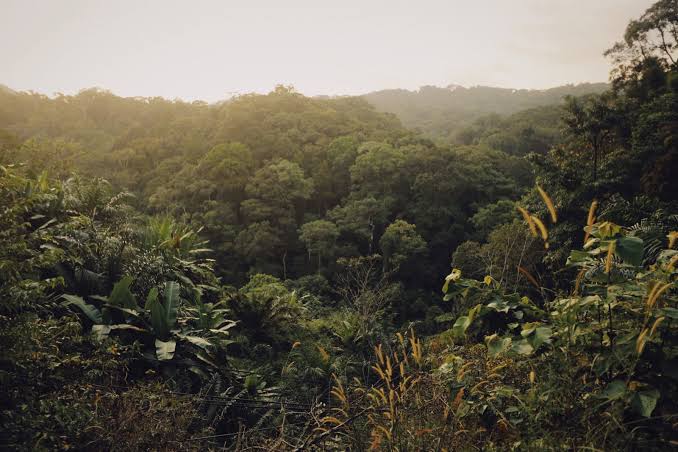
Liberia is pursuing a natural capital strategy aimed at unlocking more than $30 billion from its forests, biodiversity, rivers, mangroves and coastline, seeking to expand climate finance and diversify its economy. Presented on September 23 at a high level event on the sidelines of the United Nations General Assembly in New York, the initiative will depend on whether carbon markets and other nature-based investments can generate credible revenues while protecting land rights, strengthening public institutions and delivering tangible benefits to communities that depend on the country’s natural resources.
The strategy is intended to position Liberia’s ecosystems as economic assets rather than relying solely on conventional resource extraction. Jeanine M. Cooper, Liberia’s Presidential Envoy on Climate Action and Chief Executive of the Liberia Carbon Markets Authority, said the government was developing a high integrity carbon market, valuation systems and digital infrastructure to assess and register carbon assets.

According to the United Nations Development Programme, Liberia holds more than 40% of the remaining Upper Guinea Forest, alongside extensive mangroves, 15 major river systems and a 579 kilometre coastline. The government has also presented its first National Carbon Policy to President Joseph Boakai, establishing a proposed framework for translating some of the country’s ecological assets into climate finance opportunities.
For Liberia, the potential is significant. Carbon credits, biodiversity finance, ecosystem restoration, agroforestry, ecotourism and non-timber forest products could create new sources of income, employment and investment in a country where public resources remain constrained. However, the $30 billion valuation is not equivalent to money available for government spending or community development. The amount that can be mobilised will depend on carbon measurement, project quality, buyer demand, land and carbon rights, transaction costs and the durability of environmental gains.
These conditions matter beyond Liberia. Across Africa, governments are increasingly looking to forests, wetlands and other ecosystems to support climate finance, rural livelihoods and economic diversification. Yet natural capital projects operate within complex land tenure systems, where customary rights and community dependence on resources may not align neatly with formal ownership or commercial agreements. Without clear rules, the financial value assigned to an ecosystem can create disputes over who controls it and who receives the proceeds.
For Liberia’s forest communities, the first test is therefore ownership and consent. Rural households depend on forests, rivers and wetlands for food, fuel, farming, fishing and income. Carbon projects that restrict access to land or resources without clear consent, compensation and alternatives could impose costs on communities even as they generate revenue elsewhere.
The government will need to establish transparent rules governing who owns carbon, who can enter project agreements, how long obligations last and how disputes are resolved. These questions are particularly important where customary land rights intersect with state authority and private investment. If communities cannot understand or negotiate the terms of an agreement, their participation may be formal rather than meaningful.
Benefit sharing will be another measure of whether the strategy delivers development gains. Payments to households, employment in forest monitoring and restoration, support for climate smart agriculture and investments in local infrastructure could help translate environmental protection into economic security. Schools, clinics, roads, clean energy and water systems are among the services that could benefit from locally agreed investment priorities.
Cooper told the New York forum that “peace dividends” should arrive before a single carbon credit is sold, linking climate investment with reduced competition over land and resources. That approach places community benefits at the centre of the strategy, although its credibility will depend on how commitments are funded, monitored and enforced.
The governance challenge is substantial. Liberia’s Environmental Protection Agency has identified coastal erosion, illegal mining, deforestation and wetland encroachment among the pressures requiring stronger institutions and community-driven responses. Carbon finance could support efforts to address these problems, but projects will need to demonstrate that environmental protection is not undermined by competing land uses or weak enforcement.
For investors and carbon credit buyers, the quality of safeguards will also influence confidence in Liberia’s market. High integrity projects require public information on boundaries, methodologies, credit issuance, prices, fees and the distribution of revenue. Independent grievance mechanisms and accessible contracts would help reduce the risk that communities enter agreements without adequate information or bargaining power.
Monitoring will need to extend beyond carbon accounting. Changes in household income, access to land, employment, food security and local services are relevant indicators of whether projects produce development benefits. A project that records emissions reductions while weakening customary access to forests could face social and reputational risks that undermine its long-term viability.
Liberia’s climate commitments add to the importance of implementation. The country has pledged through its updated national climate plan to reduce economy-wide emissions by 64% by 2040, while UNDP says it contributes about 0.03% of global greenhouse gas emissions. The government is also preparing for COP31 in Antalya, Türkiye, which opens on November 9. The UNFCCC schedule includes African Group coordination from the first morning, with climate finance, implementation and accountability expected to remain central to negotiations.
The wider financing environment presents both an opportunity and a constraint. Developing countries continue to face a substantial gap between climate adaptation needs and available funding. According to the UN Environment Programme’s 2026 Adaptation Gap Report, developing countries are projected to require $305 billion annually by 2035, while developed country adaptation finance reached about $28.2 billion in 2024. The shortfall highlights why countries such as Liberia are seeking additional sources of climate investment, but also why carbon markets cannot substitute for broader public and concessional finance.
Liberia’s climate diplomacy has also faced scrutiny. A FrontPageAfrica analysis reported that the country’s May 20 vote against a UN resolution welcoming the International Court of Justice’s climate advisory opinion was later described by officials as an error. The episode has intensified civil society calls for clearer institutional safeguards and public accountability as Liberia seeks adaptation, loss and damage and forest finance.
The natural capital strategy will therefore require more than a valuation framework or digital registry. Its success will depend on whether Liberia can establish enforceable rights, credible environmental accounting, transparent financial arrangements and community participation before projects scale up. Those foundations will affect the country’s ability to attract reputable buyers and retain public confidence.
For African economies pursuing nature-based finance, Liberia’s experience could offer lessons on the relationship between environmental assets and development outcomes. Forests and wetlands can support livelihoods, regulate water systems and protect infrastructure, but converting those functions into financial products introduces new obligations and risks. Governments will need to balance investment opportunities with customary rights, public oversight and the long-term costs of ecosystem management.
The $30 billion vision is consequently an opening rather than a realised financial outcome. If Liberia can translate its natural assets into investment while protecting community access and ensuring transparent benefit-sharing, the strategy could support jobs, resilience and economic diversification. If those safeguards remain weak, the country risks creating financial value around its landscapes without giving the people who depend on them meaningful influence over the proceeds.

For forest communities, the practical measure will be whether protecting a forest, river basin or mangrove improves household security and local services without weakening customary access to land. That will determine whether Liberia’s natural capital strategy becomes a development instrument or another source of disputes over control of the country’s resources.


