


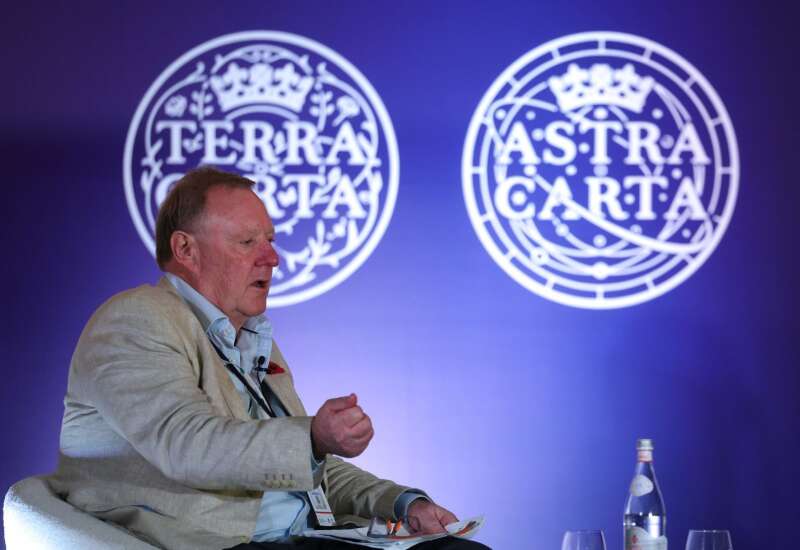
The Sustainable Markets Initiative (SMI) has completed a feasibility study for a proposed mutual reinsurance vehicle, Commonwealth Mutual, designed to help Commonwealth countries manage the financial consequences of extreme weather events through shared risk protection. Announced on 5 November 2026 during the 28th Commonwealth Heads of Government Meeting (CHOGM) in St John’s, Antigua and Barbuda, the proposal seeks to expand access to affordable disaster insurance and reduce the financial exposure of governments facing increasingly costly climate-related events.
The study brought together insurers, reinsurers, brokers, risk-modelling specialists and capital providers to examine how a collective reinsurance structure could help close the gap between insured losses and the wider economic costs of disasters. Its findings were presented at an SMI joint-sponsored forum attended by 42 Commonwealth heads of government. With the supply-side feasibility assessment completed, the initiative is now working with key Commonwealth countries to develop a fully costed business proposal.

The proposed vehicle comes as extreme weather events continue to place pressure on public finances, infrastructure, businesses and household livelihoods. Hurricanes, cyclones, floods, droughts, excessive rainfall and earthquakes can generate losses that extend well beyond the immediate damage to property and infrastructure. For governments with limited fiscal space, the costs of rebuilding, restoring essential services and supporting affected communities can create additional pressure on public expenditure and borrowing.
The protection gap remains particularly significant in Small Island Developing States (SIDS) and African countries, where exposure to climate hazards often coincides with constrained insurance penetration and limited capacity to absorb large-scale losses. The World Meteorological Organization has reported a five-fold increase in weather-related disasters over the past 50 years, while analysis by the MSCI Institute cited in the announcement estimates that climate-related losses could cost listed companies globally $1.3 trillion in the next year alone.
Commonwealth Mutual is being developed around the principle that countries can obtain greater protection by pooling their exposure rather than negotiating coverage independently. According to the feasibility study, diversification across the Commonwealth would allow participating states to access insurance capacity at a lower cost and secure coverage limits that many could not obtain individually.
The proposed structure would operate as a sovereign-owned mutual reinsurance vehicle, with the intention of complementing existing regional risk-pooling mechanisms rather than replacing them. These include the Caribbean Catastrophe Risk Insurance Facility, the African Risk Capacity and the Pacific Catastrophe Risk Insurance Company. The initiative also envisages the potential for these established mechanisms to expand their contribution to disaster risk financing.
For African countries, the proposal raises questions about how regional and continental risk-pooling arrangements could interact with a broader Commonwealth structure. The African Risk Capacity already provides a mechanism through which participating governments can access financial protection against selected climate-related risks. A complementary arrangement could widen the pool of available reinsurance capacity, although the extent of its benefits would depend on participation, pricing, coverage design and the relationship with existing facilities.
The proposed Commonwealth Mutual would perform four principal functions. It would diversify risk across member states to reduce volatility, provide rapid liquidity following disasters, improve access to global reinsurance through a larger purchasing programme and help governments pre-finance disaster response through private insurance capacity. These functions are intended to make disaster financing more predictable and reduce dependence on emergency loans and post-disaster aid.
The liquidity component is particularly relevant to countries that face immediate financing requirements after extreme weather events. Delays in accessing funds can affect the restoration of public infrastructure, healthcare, education, water services and other essential functions. Insurance payouts structured around agreed triggers could provide governments with resources more quickly than relying entirely on post-disaster budget reallocations or external assistance.
However, the practical value of such a mechanism will depend on the terms of coverage, including the hazards insured, payout triggers, premiums and the speed at which claims are settled. Countries will also need to assess whether the cost of annual premiums can be accommodated within national budgets, particularly where public debt and competing development priorities already constrain fiscal decisions.
The initiative also seeks to use private-sector insurance capacity to strengthen public-private collaboration around resilience planning. By treating disaster risk financing as a predictable annual cost, governments could potentially integrate insurance into wider climate adaptation and fiscal planning. This would not remove the need for investment in resilient infrastructure, early-warning systems and preparedness, but could provide an additional financial layer when prevention measures are insufficient to avoid losses.
Jennifer Jordan-Saifi, Chief Executive Officer of the Sustainable Markets Initiative, said the proposal presents an opportunity to convert shared climate exposure into collective financial protection. She said the completion of the feasibility study would allow the organisation to engage further with Commonwealth leaders and move towards developing the proposed vehicle.
Neil Eckert, Chief Executive Officer of Conduit Re, said the study had demonstrated that the model was achievable and that private-sector participants, including brokers, insurers, regulators and capacity providers, were willing to contribute to closing the protection gap. He added that pooling risk across Commonwealth countries could enable coverage limits and pricing that would be difficult for individual states to secure independently.
The next stage will require governments to engage with the proposal and establish the financial, institutional and operational arrangements needed to make it viable. The completed study confirms the supply-side feasibility of the concept, but it does not yet represent an operational insurance facility or guarantee that participating countries will receive coverage. A fully costed business proposal will need to clarify the capital structure, governance, membership requirements, risk allocation and terms under which governments can access protection.

For African Commonwealth members, the development comes amid wider efforts to strengthen climate resilience and improve access to finance for disaster preparedness. The continent faces substantial exposure to droughts, floods, cyclones and other climate-related hazards, while many governments have limited resources to respond to repeated shocks. A broader reinsurance arrangement could offer another instrument for managing these risks, provided its design reflects the different exposure profiles and fiscal capacities of participating countries.
The proposal ultimately places disaster risk financing within a wider discussion about how governments can manage climate-related economic losses before they occur. Whether Commonwealth Mutual advances beyond feasibility will depend on the willingness of member states to participate, the affordability of its coverage and its ability to work alongside existing regional mechanisms. Its development will also test whether collective insurance arrangements can translate shared exposure into reliable financial protection for countries facing increasingly complex climate risks.


