


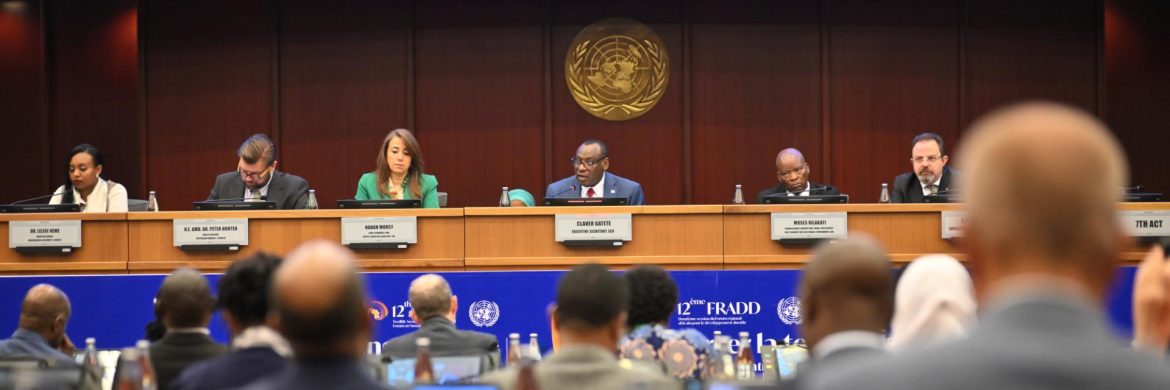
African climate negotiators and policymakers opened the 7th Africa Climate Talks with calls for a shift from global climate pledges to measurable implementation, as the continent seeks to strengthen its bargaining position ahead of COP31 in Türkiye and COP32, which Ethiopia will host in 2027.
The meeting, convened in Addis Ababa by the African Climate Policy Centre under the United Nations Economic Commission for Africa and ClimDevAfrica partners, comes amid growing concern that international climate financing and adaptation commitments are failing to keep pace with the economic and environmental pressures facing African countries.
Opening the talks, Claver Gatete said COP32 would test whether the multilateral climate system could restore credibility through concrete delivery rather than new promises.
“COP32 will be a defining test of credibility,”
Gatete said, arguing that implementation gaps were undermining trust between developed and developing economies at a time when climate shocks are intensifying across Africa.
The discussions are taking place against a backdrop of rising fiscal pressure on African governments, many of which are simultaneously grappling with debt burdens, infrastructure deficits and climate-related disasters. According to the Economic Commission for Africa, African countries require an estimated US$277 billion annually through 2030 to implement their Nationally Determined Contributions under the Paris Agreement. Yet the continent currently receives only about 11 per cent of the financing needed.
That financing gap has become increasingly central to Africa’s negotiating position in global climate diplomacy. African policymakers argue that adaptation spending should be treated not only as an environmental necessity, but also as a core economic and development investment linked to food systems, energy security, infrastructure resilience and public health.
Climate-related losses are already affecting economic stability across several African economies. Recurrent droughts in the Horn of Africa, floods in West and Central Africa and prolonged heat stress in Southern Africa have disrupted agricultural production, strained electricity systems and increased pressure on public budgets. Rising climate vulnerability has also raised borrowing costs for some African states, complicating efforts to mobilise long-term development finance.
Gatete said adaptation needed to be integrated more directly into national planning and budget frameworks, while calling for reforms to global climate finance systems to make funding more predictable, concessional and accessible to African governments.
The talks are also expected to shape Africa’s negotiating strategy around the next cycle of Nationally Determined Contributions, known as NDC 3.0, following the conclusions of the first Global Stocktake under the Paris Agreement. Delegates are expected to develop technical recommendations on finance, adaptation, carbon markets and just transition frameworks ahead of the next round of climate negotiations.
African negotiators have increasingly argued that the continent’s climate agenda should extend beyond vulnerability narratives to focus on industrialisation and economic transformation opportunities linked to the energy transition. The continent holds some of the world’s largest renewable energy potential, alongside significant reserves of minerals critical to clean energy technologies, including cobalt, lithium, manganese and graphite.
However, policymakers continue to caution that without adequate financing, technology transfer and industrial investment, Africa risks remaining primarily a supplier of raw materials while importing higher-value green technologies and products.
The Addis Ababa discussions also highlighted growing efforts to position climate action as part of broader economic restructuring strategies. Officials said climate-linked investments in energy systems, transport infrastructure, agriculture and manufacturing could support job creation and improve energy access while strengthening resilience to future climate shocks.
Among the priorities outlined for Africa’s engagement ahead of COP32 are scaling climate finance, embedding adaptation into development policy, strengthening regional coordination in negotiations and ensuring that climate frameworks support industrial growth and poverty reduction objectives.
Senior officials attending the talks included Fitsum Assefa, Moses Vilakati and Antwi-Boasiako Amoah.
For African governments, the significance of the talks extends beyond diplomacy. With climate impacts increasingly intersecting with debt sustainability, food imports, infrastructure costs and energy security, the negotiations are becoming more closely tied to economic policy and fiscal planning across the continent.


