


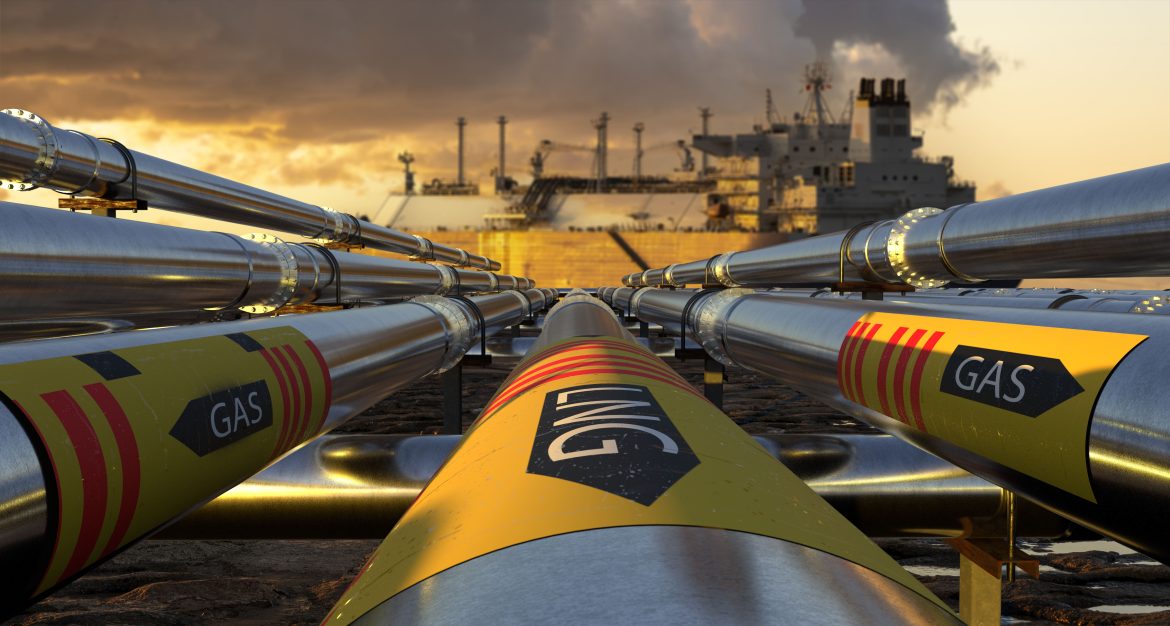
Mozambique will host the Africa Gas & LNG Summit from November 11 to 13 as governments, energy companies, investors and industry specialists assess how the continent can translate its expanding natural-gas resources into investment, infrastructure, industrial development and broader economic value.
The Africa Gas & LNG Summit (AfGLNG) will take place at the Joaquim Chissano International Conference Centre in Maputo under the official patronage of Mozambique President Daniel Chapo and the Ministry of Mineral Resources and Energy. Chapo is scheduled to deliver the presidential welcome on the opening day, while Mineral Resources and Energy Minister Estevão Pale is expected to participate in discussions on the sector’s investment and policy outlook.
The summit comes at a consequential point for Africa’s gas industry. Several large developments are approaching investment decisions or construction milestones, while governments are under increasing pressure to ensure that resource development generates economic activity beyond the export of hydrocarbons.
Mozambique provides one of the clearest examples of the scale of that opportunity. The country’s Rovuma Basin contains some of the world’s largest undeveloped gas resources, with multiple LNG developments targeting international markets while creating potential demand for local infrastructure, logistics, engineering, construction and financial services.
Mozambique LNG, led by TotalEnergies, is a roughly $20 billion development with planned production capacity of 13.1 million tonnes of LNG a year. The project was restarted in October 2025 after security conditions in Cabo Delgado allowed TotalEnergies and its partners to lift force majeure, bringing the development back into active construction. (totalenergies.com)
Rovuma LNG, operated by ExxonMobil on behalf of the Area 4 partners, is designed around 12 liquefaction modules with combined capacity of 18.6 million tonnes a year. The project is moving towards a final investment decision after its developers resumed preparations following the lifting of force majeure. (corporate.exxonmobil.com)
Mozambique’s LNG industry is already generating exports through Eni’s Coral South floating LNG project, which began production in 2022. The development was Africa’s first deepwater floating LNG project and established Mozambique as an LNG exporter before the larger onshore developments have reached full production.
Coral North, also operated by Eni, represents another expansion of the country’s floating LNG capacity. Eni and its partners reached a final investment decision on the project in October 2025, with production expected to add approximately 3.5 million tonnes of LNG annually and bring total Coral floating LNG capacity to around 7 million tonnes a year. (eni.com)
The concentration of projects makes Mozambique an important setting for discussions about how gas investment can translate into domestic economic participation. Large LNG developments require ports, roads, power, accommodation, logistics, engineering services, fabrication, security and financial services, creating potential markets for local companies if they can meet the technical and financial requirements of international operators.
That question will form a central part of AfGLNG 2026. The summit is being hosted by the Associação de Conteúdo Local de Moçambique, with Empresa Nacional de Hidrocarbonetos (ENH) and the Instituto Nacional de Petróleo (INP) serving as strategic partners. Local content is particularly significant because the economic benefits of gas development extend beyond government royalties and export receipts. The ability of African businesses to supply equipment, services and expertise can determine how much of the investment remains within domestic economies.
The dedicated SME and Entrepreneurs session will examine supplier development, access to finance and practical routes for African businesses to participate in the gas value chain. For smaller companies, the issue is often not simply whether contracts exist, but whether they can secure working capital, obtain the required certifications, build technical capacity and withstand the payment cycles associated with large energy projects.
Financing will therefore feature prominently across the summit programme. A dedicated session on final investment decisions will examine the conditions required to move major gas projects from development to financial commitment, while discussions will cover project finance, LNG infrastructure, gas-to-power and the wider African LNG value chain.
The financing environment is becoming more complex as investors assess commodity prices, construction costs, security risks, carbon exposure and the long-term demand outlook for natural gas. For African producers, the challenge is to secure investment while demonstrating that projects can generate competitive returns and contribute to energy and industrial-development objectives.
Gas-to-power will be another important component of that discussion. Although Africa holds substantial natural-gas resources, many countries continue to face electricity shortages and unreliable power supply. Using a greater share of domestic gas for electricity generation can potentially support industrial activity, although infrastructure constraints, fuel pricing, generation economics and emissions considerations remain important factors.
The summit’s regional focus also reflects the increasingly interconnected nature of Africa’s gas market. Sessions will examine developments in Mozambique, North Africa, West Africa and Southern Africa, including Senegal and Mauritania’s Greater Tortue Ahmeyim project, Nigeria’s LNG and pipeline infrastructure, and gas developments in Angola, Congo and Tanzania.
Nigeria remains central to the continental gas discussion because of its established LNG industry and extensive gas reserves, while Senegal and Mauritania are emerging as significant Atlantic gas producers through the Greater Tortue Ahmeyim development. Angola is also seeking to expand its gas sector and associated industrial activity as it develops new energy infrastructure.
A pan-African approach to gas development raises questions about infrastructure and regional trade. Cross-border pipelines, shared processing infrastructure, electricity interconnections and coordinated regulatory frameworks could allow countries to capture more value from gas resources while reducing the cost of developing individual markets.
An Africa Energy Ministers’ Forum at AfGLNG will bring together representatives from nine African energy ministries to examine policy, investment and regional cooperation. The discussions come as governments face the competing objectives of attracting capital, expanding energy access, developing domestic industries and responding to pressure for lower-carbon economic growth.
The involvement of institutions such as APPO also places the summit within the broader continental debate over how African petroleum producers can use their resources to support economic development. The African Petroleum Producers’ Organisation has consistently advocated greater cooperation among producing countries, including through shared infrastructure, investment and technical capacity.
The leadership participation announced for the summit reflects those different dimensions. Confirmed participants include Rudêncio Morais, Chairman of ENH; Nazário Bangalane, Chairman of INP; Dr Elthon Chemane, Chairman of ACLM Mozambique; Farid Ghezali, Secretary General of APPO; Ranti Omole, CEO of Radial Circle; and Eng. Elizabeth Rogo, President and CEO of Kenya’s Tsavo Oilfield Services.
The timing of the Maputo meeting is also important for Mozambique’s wider economic strategy. The country’s gas projects have the potential to generate substantial export revenues and foreign investment, but the experience of other resource-rich economies demonstrates that large hydrocarbon projects do not automatically produce broad-based development.
The quality of local procurement, public financial management, infrastructure planning and economic diversification will influence whether gas investment generates durable benefits. The challenge is particularly pronounced for countries where hydrocarbons account for a large share of exports but domestic manufacturing and service industries remain relatively small.
This makes the local-content discussion more than a question of procurement quotas. The longer-term objective is to develop companies and skills capable of competing across multiple sectors, including logistics, engineering, manufacturing, construction and financial services, so that infrastructure built for the gas industry can support economic activity after individual projects reach production.
For investors, the immediate focus will remain on project economics and FIDs. For African governments, the wider question is how to use the current gas investment cycle to address infrastructure deficits, strengthen domestic enterprises and expand access to reliable energy without creating new forms of long-term economic dependence.
AfGLNG 2026 will therefore take place against a sector at an important crossroads. Africa’s gas resources continue to attract major international investment, but the economic case for new projects increasingly extends beyond volumes exported. The central issue is whether gas can serve as a platform for infrastructure, industrialisation and regional value creation, while countries manage the financial, environmental and security risks associated with a long-lived hydrocarbon industry.


