


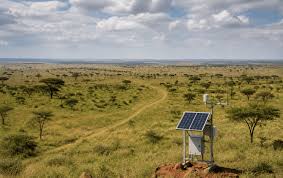
Finance Earth, FSD Africa and FSD Africa Investments have launched a financing platform targeting $100 million for early stage nature conservation and nature-based carbon projects across Africa, seeking to address a funding gap that has left many environmental initiatives unable to progress from project development to commercial operation. Announced at the Carbon Markets Africa Summit in Kigali, Rwanda, on 13 October, the Africa Nature Impact Fund is targeting an initial close of $20 million in 2027, supported by a £5 million ($6.6 million) cornerstone commitment from FSD Africa Investments. Its performance will depend on whether it can attract additional investors, establish credible revenue streams and demonstrate that conservation projects generate measurable environmental and economic benefits.
The fund is designed to finance projects at stages when conventional investors may be reluctant to commit capital. Nature based projects often require substantial spending on feasibility studies, land assessments, community consultations, project design and carbon-credit certification before generating revenue. These upfront costs can prevent projects from reaching implementation even where their potential environmental value is significant.

According to FSD Africa, the new platform will provide financing across different stages of project development, from preparation and commercial piloting to implementation. Managed by environmental investment firm Finance Earth, the planned closed end debt fund is intended to help projects move towards more predictable, long-term income, including revenue from carbon credits.
The distinction between a fundraising target and capital already secured is important. The $100 million represents the fund’s overall ambition, while the initial $20 million close remains a target for 2027. Beyond the cornerstone commitment from FSD Africa Investments, the platform will need to attract additional institutional and local investors to reach its intended scale. The financing structure and the commercial performance of its first investments will be important in determining whether it can mobilise capital beyond its founding partners.
The initiative comes as African governments and businesses face growing pressure to account for the economic value of ecosystems while financing development priorities. FSD Africa says more than 62% of the continent’s gross domestic product depends on natural capital, including land, water, forests and other ecosystems that underpin agriculture, tourism, fisheries and related industries. Degradation of these resources can affect rural incomes, food production, water security and the long-term viability of economic activity.
Yet the economic importance of nature has not consistently translated into investment. Projects involving forest restoration, mangrove protection, improved agricultural land management and other nature based solutions can produce public benefits that are difficult to capture through conventional commercial revenue models. Carbon credits may provide an income stream, but returns depend on project design, verified emissions reductions, market demand and the prices buyers are willing to pay.
Africa Nature aims to bridge part of this financing gap by providing capital before projects have established reliable revenue. Its approach builds on the Carbon Accelerator Programme for the Environment, an initiative delivered by FSD Africa with Finance Earth. The programme has assessed more than 300 projects and developed a pipeline representing potential carbon benefits of more than 3.4 billion tonnes of carbon dioxide equivalent across 76.5 million hectares, according to FSD Africa. These figures represent assessed project potential rather than emissions reductions already delivered.
The fund’s proposed targets are substantial. It aims to protect or regenerate 4.5 million hectares of land, sequester or avoid more than 100 million tonnes of carbon dioxide equivalent over the lifetimes of supported projects, and improve the livelihoods of 1.4 million people, half of them women. It also aims to support the protection of more than 60 animal and plant species. These are intended outcomes, not achieved results, and their delivery will depend on the projects selected, the capital ultimately raised and the quality of implementation and monitoring.
For African financial markets, the initiative also raises the question of who will finance and retain value from the continent’s natural assets. Nature based carbon projects have often relied on international developers, specialist intermediaries and overseas buyers, while communities and local institutions have faced challenges securing the expertise and capital needed to participate on more favourable terms.
Africa Nature says it will require meaningful benefit-sharing arrangements designed to direct a substantial share of gross carbon value to host communities, with a target of generating around $450 million for local communities. It also intends to work with African financial institutions to strengthen their capacity to assess and finance nature based projects. If implemented effectively, these measures could support greater local participation in carbon markets and create opportunities for domestic banks and investors to build expertise in nature-related finance.
However, benefit sharing commitments will need to be reflected in enforceable agreements, transparent payment systems and clear rights over the land involved. Communities may face risks where carbon projects restrict access to land or natural resources without adequately accounting for existing livelihoods, customary tenure and local decision-making. Independent monitoring, accessible grievance procedures and clarity over who receives payments will therefore be important to establishing trust and limiting disputes.
The debt based structure also presents commercial challenges. Projects that depend on carbon credit sales can be exposed to fluctuating prices, changing buyer preferences and uncertainty over the timing of revenue. Ecological restoration may take years to produce measurable results, while carbon credit issuance can depend on verification procedures and regulatory requirements. Financing terms will need to reflect these timelines if borrowers are to avoid repayment pressures before projects generate sufficient income.
Investors will also need evidence that supported projects deliver additional environmental benefits, maintain those benefits over time and avoid shifting deforestation or other damaging activities elsewhere. Weak carbon accounting, unclear land rights or inadequate safeguards could undermine both environmental outcomes and the financial value of a project. The fund’s ability to attract further capital will therefore depend not only on the size of its pipeline but also on the credibility of its standards and the performance of its investments.
For African governments, the development of nature finance has implications for public policy and institutional capacity. Clearer land use rules, reliable environmental data, effective oversight of carbon projects and consistent approaches to community rights can reduce uncertainty for investors while protecting public interests. Domestic financial institutions will also need the technical capacity to evaluate nature related risks and distinguish commercially viable projects from proposals whose returns depend on uncertain carbon revenues.
The proposed fund offers one route for addressing the gap between conservation potential and investable projects, but it will not remove the broader financing constraints facing African ecosystems. Reaching its $100 million target will require additional capital, while translating that funding into durable results will depend on project quality, governance and the distribution of economic benefits.

As the platform moves towards its planned first close in 2027, the central test will be whether early-stage financing can produce a pipeline of projects that attract sustained investment without weakening environmental integrity or community rights. For African economies that depend heavily on natural resources, the value of the initiative will ultimately be measured not by the amount it seeks to raise, but by the quality of the assets it helps protect, the income it generates and the share of that value retained by African institutions and communities.


