


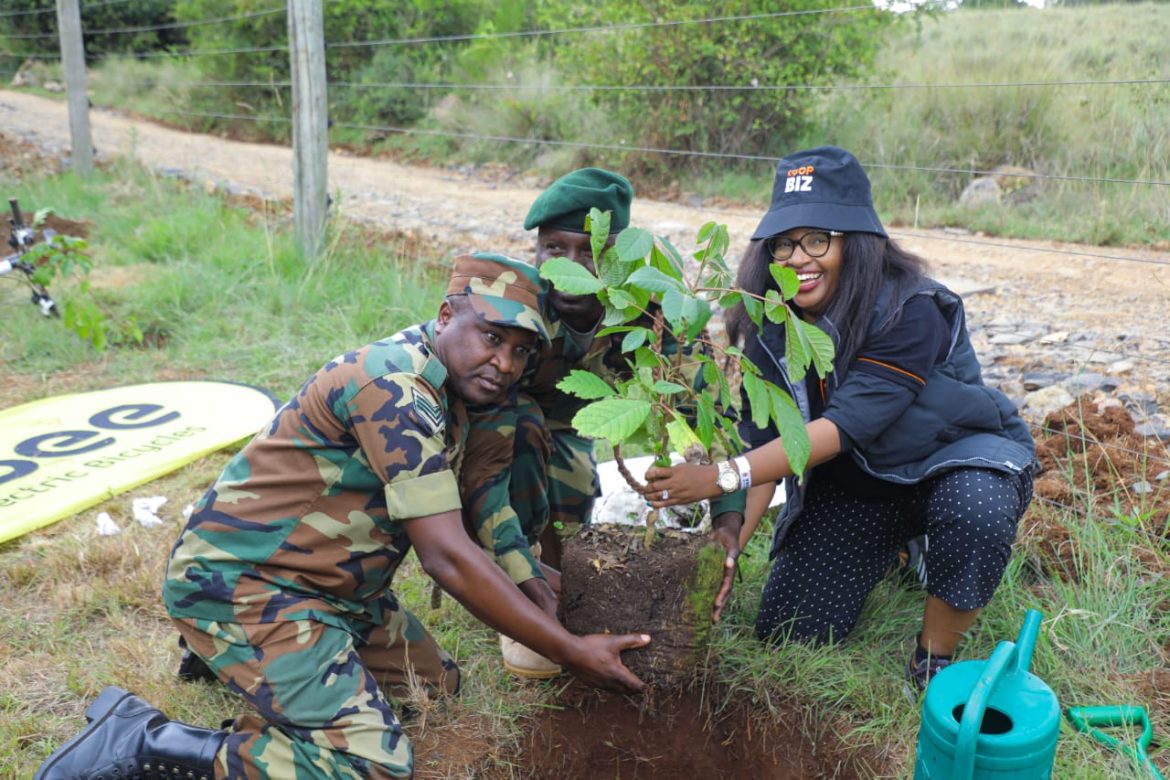
The LOOP Safari Gravel Series has planted 10,000 trees since its launch in 2024, marking a milestone in NCBA Group’s efforts to connect sporting events with environmental conservation as Kenya seeks to expand tree cover, protect natural ecosystems and strengthen tourism beyond traditional wildlife safaris.
The achievement follows the planting of 4,000 trees across the four races of the 2026 season, which concluded in Nanyuki on 17 October. The final race was held at Mount Kenya Wildlife Conservancy, where LOOP Digital Financial Services (LOOP DFS), NCBA’s fintech unit, planted 100 indigenous trees. Jordan Schleck and Mary Aleper won the season finale.
The series began in Limuru in March before moving to Naivasha in June and Vipingo in August, with Nanyuki hosting the final leg. By combining gravel cycling with tree-growing activities at its host destinations, the initiative seeks to extend the event’s impact beyond competition and encourage participants to engage with the landscapes through which they ride.

“Sport has the power to bring people together around a shared purpose and create a positive impact that extends beyond the finish line,” said Nelly Wainaina, NCBA Group director of marketing, communication and citizenship. She described the 10,000-tree milestone as evidence of what can be achieved when sport and sustainability initiatives are brought together.
Gravel cycling involves riding on unpaved roads and varied terrain, often through rural landscapes and areas with natural or agricultural significance. The format has gained visibility in Kenya as cycling events increasingly combine athletic competition with outdoor recreation, destination experiences and community engagement.
For the organisers, this creates an opportunity to integrate environmental activities into sporting events that attract cyclists, spectators and other visitors. Tree planting can provide a visible conservation component, while the locations selected for the races can draw attention to the ecological value of landscapes beyond the country’s best-known national parks and wildlife reserves.
The initiative also contributes to NCBA’s wider commitment to grow 10 million trees across Kenya, Uganda, Tanzania and Rwanda by 2030. The group’s tree-growing programme is part of its broader sustainability agenda, which includes addressing emissions associated with its operations and value chain while working with partners and communities on restoration activities.
The 10,000 trees attributed to the cycling series represent a small but identifiable contribution to that larger ambition. The significance of the programme, however, will depend on more than the number of seedlings planted. Tree survival, species selection, site suitability, maintenance and long-term monitoring determine whether planting activities translate into lasting improvements in tree cover and ecosystem health.
The planting of indigenous trees at Mount Kenya Wildlife Conservancy is relevant in this respect because the area supports conservation and habitat restoration activities. The conservancy is known for its work to breed and rewild the critically endangered mountain bongo, alongside habitat restoration and conservation education. Its wider conservation objectives illustrate how tree-growing initiatives can complement efforts to maintain habitats and support biodiversity.
The choice of planting locations is therefore important. Indigenous species suited to local conditions can support ecological restoration when selected and managed appropriately, while planting in unsuitable locations or without follow-up care can limit long-term benefits. For corporate programmes, transparent reporting on survival rates and the condition of restored sites can help distinguish trees planted from trees that continue to grow.
The series also sits within a broader debate over how companies measure and communicate environmental commitments. A tree-planting total is a useful activity indicator, but it does not by itself establish how much carbon has been removed from the atmosphere, how much habitat has been restored or what biodiversity benefits have been achieved. Those outcomes require additional monitoring over time.
NCBA’s stated target of growing 10 million trees by 2030 offers a framework for scaling its activities. To assess progress towards that target, the group’s reporting will need to show not only the number of trees planted across its markets but also the locations, species, survival rates and restoration outcomes associated with the programme. Partnerships with conservation organisations, government agencies and local communities can help support that work.
The cycling series also connects environmental activities with Kenya’s sports-tourism ambitions. Events held in places such as Limuru, Naivasha, Vipingo and Nanyuki can encourage visitors to explore destinations beyond the established safari circuit. Depending on the scale of participation and visitor spending, such events may create opportunities for accommodation providers, restaurants, guides, transport operators and local businesses.
The potential benefits are not automatic. Sports tourism depends on reliable event organisation, safe routes, visitor services, effective promotion and a clear value proposition for participants and spectators. Local economic gains will also depend on whether businesses in host communities can capture spending generated by the events.
For host destinations, combining cycling with conservation can help differentiate an event from a conventional sporting competition. The approach may also create opportunities for partnerships between event organisers, tourism businesses and environmental organisations. Its lasting value will depend on whether activities continue between race dates and whether communities have a role in maintaining the environmental initiatives associated with the series.

The LOOP Safari Gravel Series’ progress comes as the ownership of NCBA enters a new phase. South Africa’s Nedbank Group announced on 19 October 2026 that it had completed the acquisition of a controlling 66% stake in NCBA, making the Kenyan financial services group a subsidiary. NCBA said it would retain its brand, local leadership and Nairobi headquarters, while continuing to be listed on the Nairobi Securities Exchange.
The acquisition is primarily a financial services transaction, but it provides relevant context for NCBA’s next phase of corporate development. The group’s sustainability commitments remain an area in which its activities, reporting and partnerships can be assessed over time. The ownership change does not in itself establish whether the tree-growing programme or its targets will change.
For LOOP DFS, the series provides a way to connect its consumer-facing brand with cycling, wellness and environmental activities. For NCBA, it is one part of a wider citizenship and sustainability programme. The 10,000-tree milestone demonstrates the scale of activity undertaken since 2024, but the environmental contribution will ultimately be determined by the trees’ survival and the quality of the restoration work.
As Kenya looks to combine conservation with tourism and local economic development, initiatives such as the LOOP Safari Gravel Series show how sporting events can serve as platforms for environmental engagement. Their longer-term contribution will depend on whether the momentum generated by race days leads to measurable ecological benefits, sustained community participation and transparent reporting beyond the finish line.


