


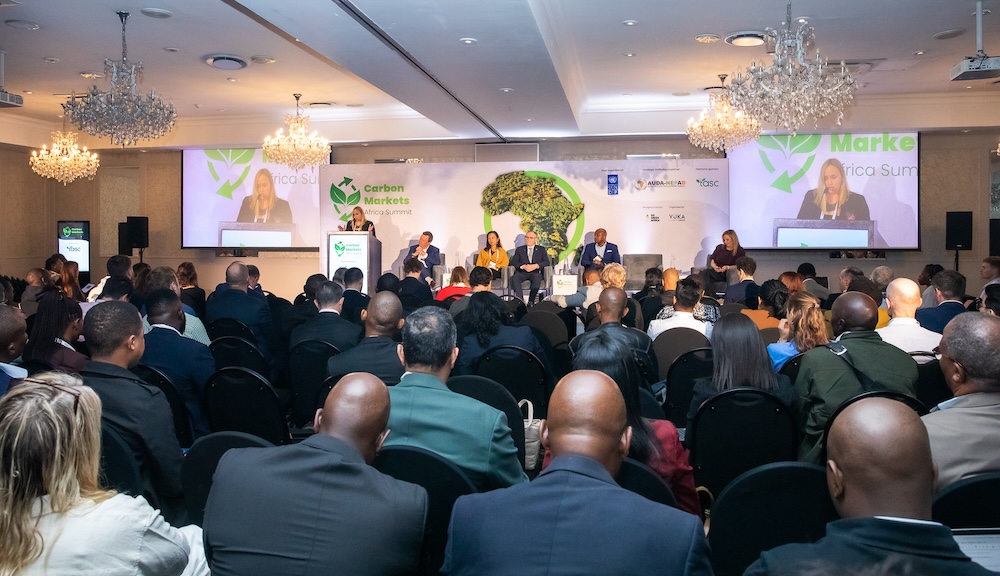
Africa’s carbon markets are moving from policy design towards implementation, with governments developing Article 6 systems, investors demanding stronger project safeguards and project developers seeking capital for investment-ready pipelines. These issues will take centre stage at the Carbon Markets Africa Summit (CMAS) 2026 in Kigali from October 13 to 15, as policymakers, financiers, corporate buyers and carbon-market specialists assess whether the continent can convert its large climate-finance potential into credible transactions.
The summit comes as African governments increasingly establish the institutional infrastructure needed to participate in international carbon markets. The African Union endorsed its Africa Action Plan on Carbon Markets in 2025, setting out a continental approach focused on strengthening Africa’s capacity to participate in emerging market mechanisms while protecting environmental integrity and sustainable-development interests.
That policy shift is already being reflected at national level. According to the UN Environment Programme’s Article 6 pipeline, African countries had 35 bilateral agreements involving 12 countries by June 2026, while approved activities under the Paris Agreement’s cooperative mechanisms were also expanding. Kenya, Ghana, Zambia, Senegal, Tunisia, Rwanda and Morocco were among the countries with multiple bilateral arrangements.
For Africa, the significance extends beyond carbon-credit revenues. Well-designed carbon markets could provide additional financing for renewable energy, clean cooking, forest conservation, agriculture, waste management and other projects that struggle to secure sufficient conventional capital. But the market’s ability to deliver that financing increasingly depends on whether buyers can establish that emissions reductions or removals are real, measurable and durable.
This is where Article 6 is becoming particularly important. Under the Paris Agreement, countries can authorise mitigation outcomes for international transfer, subject to accounting and reporting requirements. The African Union’s action plan places governments at the centre of authorisation, reporting and accounting, giving national institutions an important role in determining how mitigation outcomes generated within their jurisdictions are used.

The emerging architecture creates opportunities but also new institutional demands. Governments need systems capable of reviewing projects, avoiding double counting, tracking authorisations and assessing whether transactions are consistent with national climate targets. For countries with limited technical and financial capacity, building these systems can become a constraint on market participation.
Rwanda is among the countries developing such infrastructure. Its carbon-market framework establishes procedures for Article 6.2 and 6.4 participation, with the Rwanda Environment Management Authority serving as the national designated authority and assessing projects against national sustainable-development priorities, environmental safeguards and climate commitments.
The Kigali summit therefore arrives at a point when the central question is shifting from whether Africa can participate in carbon markets to whether it can develop projects that attract capital at scale while retaining greater economic value locally.
The organisers expect more than 500 participants, including investors, buyers, project developers, governments and standards organisations, with the 2026 programme focused on connecting policy, projects and capital. The official programme includes investor and buyer roundtables, project presentations, technical workshops and discussions on project bankability, monitoring, reporting and verification, market access and regional alignment.
The emphasis on bankability is important because many African projects remain constrained not necessarily by a shortage of natural or technical opportunities, but by the difficulty of converting those opportunities into investable assets. Developers require upfront capital for project preparation, measurement systems and validation, while investors need confidence that projects will generate credits under credible methodologies and that future revenues will be sufficient to support repayment or returns.
Monitoring, reporting and verification capacity is consequently becoming a central part of Africa’s carbon-market infrastructure. Independent validation and verification can improve confidence among buyers and financiers, but building sufficient local expertise could also help reduce transaction costs and retain more technical value within African markets.
The summit’s focus on nature-based projects is similarly significant. Africa contains major forests, wetlands, agricultural landscapes and other ecosystems with potential carbon-market applications. Yet nature-based credits face complex questions around land tenure, permanence, community participation, additionality and measurement. These risks make robust governance and benefit-sharing arrangements particularly important.
The financial implications are substantial. Carbon finance will not replace conventional development finance, but it could provide an additional revenue stream for projects that deliver measurable climate outcomes. For governments facing infrastructure and adaptation-financing constraints, the challenge will be ensuring that carbon-market proceeds complement national development priorities rather than becoming isolated transactions disconnected from local economic needs.
There are also lessons from Africa’s earlier experience with carbon markets. The Clean Development Mechanism generated projects and investment under the Kyoto Protocol, but participation and benefits were unevenly distributed. UNDP has noted that the experience raises a continuing question over whether the Article 6 system can deliver broader and more equitable benefits for developing countries.

That history explains the growing emphasis on integrity, sovereignty and community benefits. Africa is not simply looking to increase the volume of credits it supplies. Governments are increasingly seeking greater control over how mitigation outcomes are authorised, how revenues are distributed and how carbon-market projects contribute to national development.
The discussion in Kigali will therefore have implications beyond the carbon market itself. If stronger policy frameworks are matched by credible projects, functioning MRV systems and access to capital, carbon markets could become one component of Africa’s wider climate-finance architecture. If implementation remains fragmented, however, projects may struggle to reach financial close and buyers may continue to favour markets and jurisdictions where regulatory and environmental risks are easier to assess.
Speakers at CMAS 2026 include Rwanda’s Environment Minister Bernadette Arakwiye, Kenya’s Special Envoy for Climate Change Ali D. Mohamed, AUDA-NEPAD Director Estherine Lisinge Fotabong, UNDP Africa Regional Director Ahunna Eziakonwa and African Development Bank Climate Change and Green Growth Director Anthony Nyong, according to the summit programme.
For African economies, the test is ultimately practical: whether carbon markets can mobilise capital into productive projects, strengthen local technical capacity and generate measurable environmental and economic benefits. Kigali’s discussions will offer an indication of how far the continent has moved from carbon-market readiness towards a functioning investment market capable of supporting Africa’s broader climate and development priorities.


