


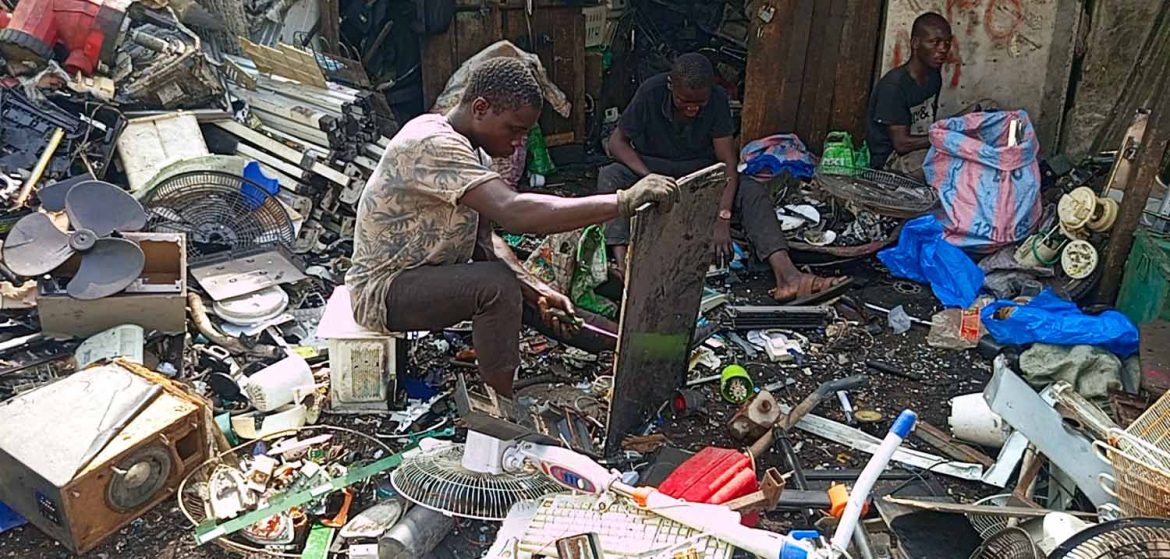
Africa’s growing stockpile of discarded mobile phones and electronic devices could become one of the continent’s most valuable urban resource reserves, as entrepreneurs, development agencies and technology companies increasingly turn their attention to the circular economy as a driver of economic growth, job creation and sustainable industrialisation.
The opportunity was brought into focus during the Mobile Circularity Hackathon held in Accra, Ghana, under the Youth for Circularity 2030 initiative, implemented by the United Nations Development Programme (UNDP) in partnership with Samsung within the framework of the Sixth African Youth SDGs Summit. The event brought together 20 teams of young innovators from across Africa to develop commercially viable solutions aimed at extending the life cycle of electronic devices while reducing the environmental and economic costs associated with electronic waste.
 The discussions reflected a growing recognition that Africa’s digital transition will inevitably generate increasing volumes of electronic waste alongside expanding smartphone adoption. Rather than treating this waste stream solely as an environmental challenge, participants explored how repair, refurbishment, recycling and digital technologies could transform discarded electronics into valuable economic assets.
One of the most striking observations emerging from the event relates to the value embedded within electronic waste itself. According to the United Nations Environment Programme (UNEP), discarded electronic devices contain significant quantities of gold, copper, cobalt, silver and rare earth minerals, with estimates suggesting that a tonne of electronic waste can contain substantially higher concentrations of gold than an equivalent quantity of mined ore. UNEP further estimates that approximately seven percent of the world’s gold may already exist within discarded electronic products awaiting recovery.
The implications extend beyond mineral recovery. Global demand for smartphones continues to rise while consumers replace devices more frequently, creating a rapidly expanding secondary market for refurbished electronics. Industry forecasts project that the global refurbished smartphone market will exceed US$110 billion over the coming years, presenting new opportunities for African businesses capable of building competitive repair and refurbishment ecosystems.
For African economies seeking to diversify beyond primary commodity exports, electronic waste recovery offers an opportunity to retain more value within domestic supply chains. Rather than exporting discarded electronics or relying solely on imported finished products, countries can develop industries that recover strategic minerals, repair devices, manufacture replacement components and support local technology ecosystems.
The Accra hackathon also demonstrated how youth-led innovation is increasingly positioning itself at the centre of Africa’s circular economy agenda. Participants presented solutions ranging from artificial intelligence-powered diagnostics for used smartphones to compliance platforms helping businesses manage electronic waste under emerging environmental regulations.
Among the strongest-performing innovations was E-Waste Marshalls, whose business model focuses on helping organisations comply with electronic waste regulations while creating commercial incentives for responsible recovery and recycling of valuable materials. The solution reflects an emerging trend in environmental entrepreneurship where regulatory compliance increasingly becomes an economic opportunity rather than simply a legal obligation.
Another solution, DeviceDNA, showcased digital diagnostics capable of assessing the condition of used smartphones and recommending whether devices should be repaired, refurbished or recycled. Such technologies have the potential to improve resource efficiency while supporting more transparent secondary markets for electronic devices.
These innovations illustrate how Africa’s digital economy is becoming increasingly interconnected with its sustainability agenda. As smartphone ownership expands across the continent, ensuring devices remain in productive use for longer periods reduces pressure on natural resource extraction while creating employment opportunities across repair, logistics, software development and recycling industries.
The broader context is equally significant. Africa remains one of the world’s fastest-growing mobile markets, yet smartphone penetration remains below that of many developed regions. According to industry estimates, hundreds of millions of additional users are expected to enter the digital economy over the coming decade as smartphone affordability improves and mobile broadband coverage expands.
This growth will generate substantial demand for affordable refurbished devices, particularly among lower-income consumers entering the formal digital economy for the first time. At the same time, it will increase the importance of establishing efficient collection, repair and recycling systems capable of managing electronic products throughout their lifecycle.
The intersection between digital inclusion and circular economy development also creates wider economic opportunities. Digital identity platforms, mobile financial services and employment verification systems increasingly depend on reliable access to mobile devices. Entrepreneurs building solutions around smartphone repair and refurbishment therefore contribute not only to environmental sustainability but also to financial inclusion and labour market participation.
For policymakers, the emerging electronic waste economy highlights the importance of developing regulatory frameworks that encourage investment while preventing environmentally harmful disposal practices. Several African countries are strengthening legislation governing electronic waste management as governments seek to formalise recycling industries, improve environmental protection and capture greater economic value from critical minerals already circulating within domestic markets.
The experience in Ghana also underscores the importance of collaboration between international development organisations, technology companies and local entrepreneurs. Programmes that combine financing, mentorship, technical expertise and access to commercial networks provide young innovators with opportunities to move beyond prototype development toward scalable businesses capable of addressing real market needs.
As demand for critical minerals accelerates globally to support renewable energy technologies, electric vehicles and advanced electronics, attention has increasingly focused on expanding mining activities across Africa. Yet the circular economy offers a complementary pathway by recovering valuable materials already embedded within products in use or awaiting disposal.
Developing these domestic recovery industries could help reduce dependence on imported raw materials, lower environmental impacts associated with primary extraction and strengthen Africa’s participation in global technology value chains.
 The lessons emerging from Accra therefore extend beyond electronic waste management. They illustrate a broader shift in how African entrepreneurs are approaching sustainable development, identifying economic value within overlooked resources while building business models capable of addressing environmental challenges alongside employment creation and digital inclusion.
As governments, investors and development institutions place greater emphasis on circular economy strategies, Africa’s growing community of innovators may prove that the continent’s next generation of economic opportunities lies not only beneath the ground in newly mined minerals but increasingly above it, within the products, technologies and human capital already shaping its rapidly evolving digital economy.


