Table of Contents
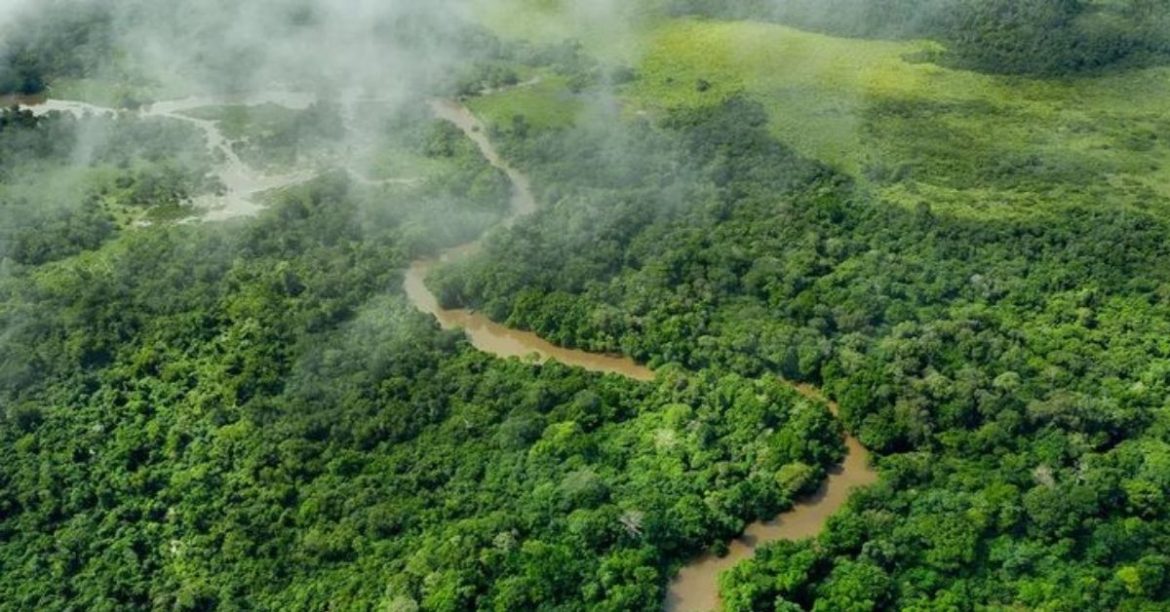
A study led by the University of Leicester has confirmed what many conservationists feared: Africa’s forests, which once absorbed roughly a fifth of all the carbon dioxide captured by plants worldwide, are now net carbon emitters.
The continent’s tropical moist broadleaf forests began losing more biomass than they gained around 2010, driven by small-scale farming, charcoal production and artisanal mining. The losses are concentrated in the Democratic Republic of Congo, Madagascar and parts of West Africa, precisely where millions of the continent’s poorest people depend on forests for survival.
This finding has reignited a pressing debate. Can Payment for Ecosystem Services (PES), the practice of financially compensating landholders who protect or restore natural habitats, serve as a meaningful tool for both conservation and poverty alleviation? Or does the model remain too disconnected from the realities of Africa’s rural poor?
The question is far from theoretical. In January 2026, practitioners and policymakers gathered in Berlin to discuss what fairer financing for ecosystem services might look like, with pilot activities planned in Kenya through the GIZ-backed CompensACTION initiative.
In Tanzania, the African Wildlife Foundation announced plans to pilot a community-led PES scheme in the Vidunda subcatchment during 2026. And across the continent, a volatile but expanding voluntary carbon market worth an estimated $15 billion continues to draw scrutiny over whether revenues actually reach the communities doing the conserving.
The promise and the problem
PES schemes work on a simple principle. Ecosystem services such as biodiversity conservation, carbon sequestration and watershed management benefit everyone but are maintained by specific landholders. When those landholders are poor, they often deplete the very ecosystems they depend on simply to survive. PES attempts to break this cycle by paying them to protect or restore the environment instead.
A research review of PES schemes across Kenya, Uganda, Tanzania and Madagascar found that while PES holds potential for poverty alleviation, its success depends almost entirely on how schemes are designed, who they include and what form compensation takes.
Drawing on Wunder’s framework for poor participation in PES, the review identified a chain of barriers that filter out the poorest at every stage: having land of environmental value, trusting the scheme, possessing capital to undertake conservation and maintaining low costs of compliance.
Design determines everything
What emerged consistently across the East African case studies was that the architecture of a PES programme matters more than its mere existence. Programmes that accounted for the diversity of participating households, recognizing that a smallholder and a wealthier landowner face very different constraints, were far more effective at delivering benefits to the poor.
A study of Kenya’s Arabuko Sokoke Forest found that engagement in forest management hinged on what conservation costs people in practice. Those without forest adjacent land who felt they had more to lose than gain simply did not participate. This finding carries particular weight as Tanzania expands community conservation finance in 2026.
The African Wildlife Foundation’s approach of supporting community conservancies to diversify revenue through ecotourism, carbon credits and strengthened governance reflects a growing consensus that PES must offer more than cash.
Individual payments were overwhelmingly preferred over community based ones across the studies examined. For schemes to work at all, the money paid to participants had to exceed their costs of compliance. When it did not, schemes simply failed to hold participants.
Beyond money
Poverty extends far beyond a lack of income. It encompasses capability, social inclusion, economic well-being, and political participation. Because PES schemes are fundamentally economic instruments, they primarily address the income dimension of poverty. This is necessary but insufficient.
Researchers studying the Arabuko Sokoke Forest proposed that PES programmes need to build capacity that outlasts the scheme itself, equipping participants with skills and diversified livelihood options that persist even when external payments end. Tanzania’s 2026 conservation strategy has embraced this thinking, calling for peer mentorship networks among farmers and targeted support for women’s groups in conservation-linked business.
The combination of cash and in-kind payments, such as training, agricultural inputs or community infrastructure, emerged from the literature as the most promising approach. But even generous payments may fail to move people above the poverty line where compliance costs are high.
A continent at a crossroads
With Africa’s forests now emitting rather than absorbing carbon, the imperative to halt deforestation has intensified. Yet the drivers of that deforestation, subsistence farming, charcoal production and the simple need to survive, are inextricable from poverty itself. Large-scale forestry and conservation projects have, in some instances, led to displacement and minimal revenue for local communities, fuelling concerns about what critics call carbon colonialism.
PES was designed for nature, not for people. The poor who live in and around threatened ecosystems are necessary for schemes to succeed, but their welfare was not the original concern. As Uganda’s 2026 conservation strategy emphasises, safeguards that protect community confidence are essential to preventing conservation from becoming a source of division rather than shared benefit.
The question is no longer whether PES can help the poor. It is whether the people designing these schemes are willing to redesign them so that it does.