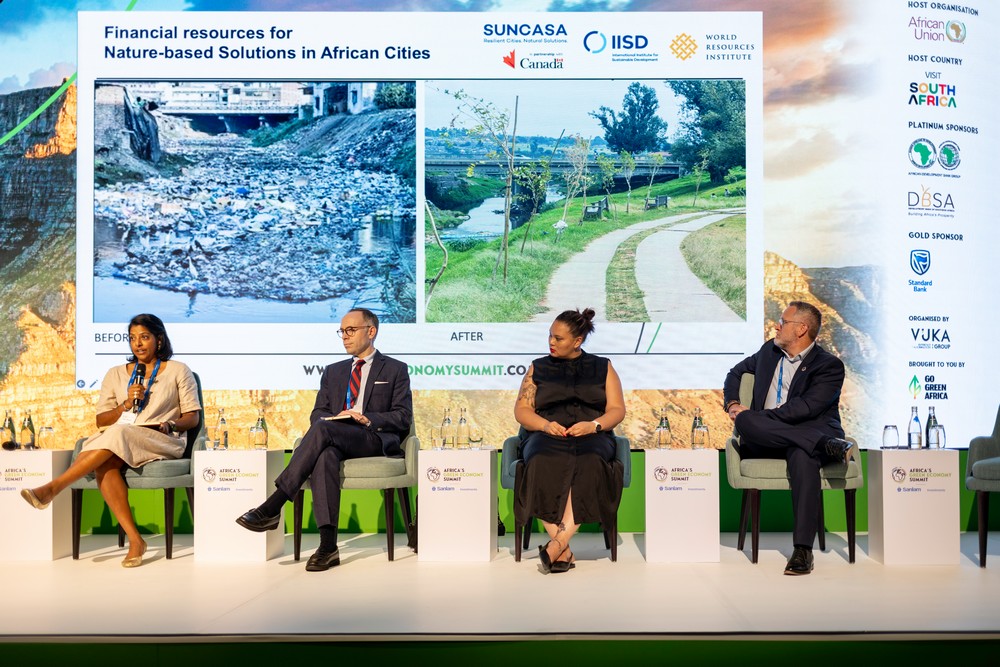

Policymakers, development finance institutions, and private investors will convene in South Africa next week for Africa’s Green Economy Summit 2026 (AGES), a high-level gathering aimed at converting recent continental climate pledges into bankable infrastructure projects. Scheduled to open just days after President Cyril Ramaphosa’s State of the Nation Address and ahead of the February 25 National Budget Speech, the summit serves as a critical barometer for how Africa’s most industrialized economy intends to reconcile fiscal constraints with the urgent requirement for green industrial reform. As the South African government signals a pivot toward greater private-sector participation in energy, water, and logistics, the summit provides a platform to assess whether the legislative momentum is sufficient to crowd in the billions in capital necessary for a resilient economic recovery.
The timing of the summit carries significant weight for South Africa’s public finances and its broader continental mandate. According to the African Union, which is co-hosting the event, the focus has shifted toward the practical implementation of the AU-Green Recovery Action Plan (AU-GRAP). This alignment suggests that green growth is no longer being treated as a secondary environmental concern but as a primary driver of export-led growth and industrial competitiveness. For South Africa, the challenge remains the integration of these green goals into a national budget that must balance social spending with the capital-intensive demands of expanding generation capacity and stabilizing a fragile water system. The outcomes of the summit are expected to influence how the National Treasury frames incentives for green entrepreneurs and the mobilization of sustainable finance instruments.
Economic resilience in the Western Cape provides a regional microcosm of this transition. Wesgro, the province’s investment agency, has increasingly targeted green manufacturing and renewable energy as priority export sectors. This strategy seeks to position the region as a hub for innovation, leveraging global demand for lower-carbon products to maintain a competitive edge. According to Wrenelle Stander, CEO of Wesgro, this focus is a deliberate move toward driving export-led growth, reflecting a wider continental realization that sustainability is a prerequisite for market access in Europe and North America. However, the scalability of such initiatives depends heavily on the robustness of national infrastructure and the ability of the state to de-risk long-term investments for institutional players like Sanlam Investments and Standard Bank.
The involvement of the Development Bank of Southern Africa (DBSA) and the Coega Development Corporation underscores the role of state-owned entities in bridging the gap between policy and project execution. By focusing on special economic zones and green industrial clusters, these institutions aim to create the “bankable reality” required to attract foreign direct investment. For many African nations, the green transition represents a dual challenge: meeting the energy demands of a rapidly growing young population while navigating the physical risks of climate change. Consequently, the summit’s agenda on carbon and nature finance is not merely a technical discussion but a governance reality that will dictate the flow of capital into African markets over the next decade.
Ultimately, the success of Africa’s green economy pathway will be measured by its impact on local communities and the domestic labor market. While large-scale solar and wind projects offer a route to energy security, the transition must also support small-scale green enterprises to ensure inclusive growth. As public policy aligns with private-sector ambition, the focus for the week will be on the efficacy of these partnerships in delivering tangible infrastructure. The implications for Africa are clear: the ability to turn climate ambition into a structured, investable asset class will determine the continent’s fiscal health and its standing in the global green value chain.
Engage with us on LinkedIn: Africa Sustainability Matters