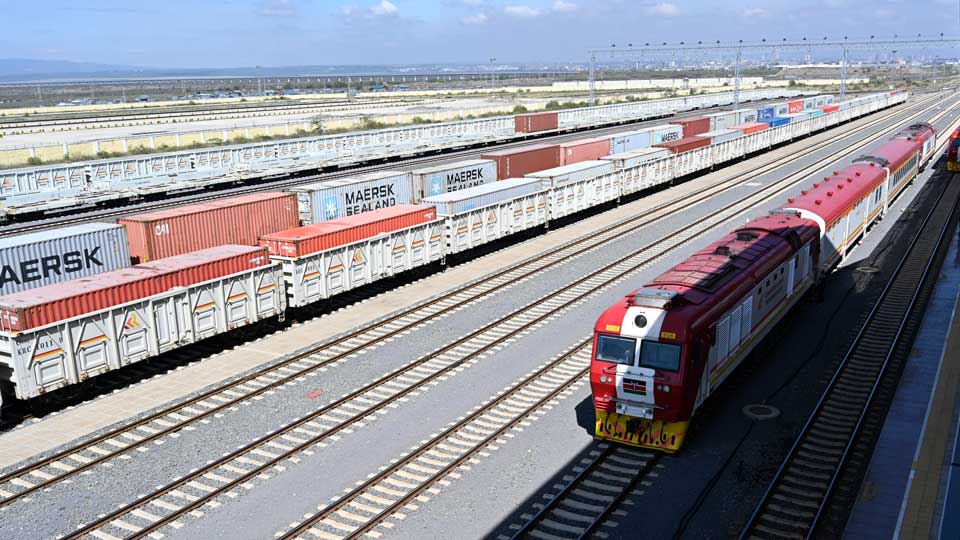

The Lobito Atlantic Railway (LAR) in Angola has secured $753 million in financing to rehabilitate and expand a key 1,300-kilometre rail link connecting the mineral-rich inland regions to the Port of Lobito, strengthening the corridor that links the Democratic Republic of Congo and Zambia to international markets.
The funding, drawn from the U.S. Development Finance Corporation (DFC) and the Development Bank of Southern Africa (DBSA), will support a comprehensive upgrade of the railway and the brownfield mineral port, enabling the corridor to move up to 4.6 million metric tons annually, ten times its current capacity, and cut transportation costs for critical minerals by roughly 30 percent.
The financing package, with $553 million from DFC and $200 million from DBSA, underscores the growing role of development finance in Africa’s strategic infrastructure. The Lobito Corridor, jointly managed by Trafigura, Vecturis SA, and Mota-Engil through LAR, connects the copperbelt mining regions of the DRC and Zambia to the Atlantic, offering a shorter and more cost-efficient route than traditional corridors through Tanzania or South Africa.
The corridor’s rehabilitation is expected to significantly reduce bottlenecks in the regional mineral supply chain, impacting both global commodity flows and local economic growth.
“LAR plays a vital role in connecting regions and facilitating trade. With this financing, we will strengthen operational capacities, ensuring the railway functions at full potential and contributes to sustained economic growth in Angola and across the broader region,” said Dr. Ricardo Viegas D’Abreu, Angola’s Minister of Transport.
The upgrades will include modern rolling stock, updated signaling systems, and comprehensive staff training, addressing both physical and operational capacity constraints that have historically limited the corridor’s throughput.

The project’s significance extends beyond Angola’s borders. By improving the flow of copper, cobalt, and other strategic minerals from central Africa to international markets, the corridor positions the region as a reliable supplier in a global environment increasingly focused on supply chain resilience.
For the United States and allied economies, the project supports strategic interests by diversifying access to critical minerals outside traditional Asian-dominated routes, reducing reliance on single sources for metals essential to technology, renewable energy, and defense sectors.
Read also: Africa’s Cocoa, Coffee and Timber exports face new EU timeline under EU Deforestation Rules
Analysts note that infrastructure projects like the Lobito Corridor can generate multiple layers of economic impact. Beyond export revenues, rehabilitating the railway is expected to stimulate employment in construction, port operations, logistics, and ancillary industries, while improving local access to transport services.
The corridor also has potential to catalyze industrial development along the line, creating clusters of mining-related and value-added processing activity in Angola’s interior.
Ben Black, CEO of DFC, emphasized that the project aligns with broader development finance objectives: “This investment builds on impactful work DFC is already leading along the corridor, reinforcing its mission to drive sustainable economic growth and strengthen strategic infrastructure.”
By combining private management with development-backed financing, the project seeks to balance commercial viability with regional development goals, a model increasingly applied in Africa’s large-scale transport initiatives.
The Port of Lobito itself is a critical component of the corridor. Historically underutilized due to limited hinterland connectivity and infrastructure constraints, the port will undergo rehabilitation to support increased cargo volumes and modern handling requirements for bulk mineral exports.
The upgrades will also enhance Angola’s competitiveness in the global maritime trade landscape, particularly as demand for copper and cobalt rises in the context of global decarbonization and the transition to electric vehicles.

The project highlights a broader trend in African infrastructure development, where strategic transport corridors are positioned as both economic catalysts and geopolitical assets. The Lobito Corridor’s ability to offer an efficient alternative to routes dominated by China or South Africa increases Angola’s leverage in negotiations with mining companies and international financiers. It also underscores the continent’s growing integration into global mineral supply chains, where transport efficiency directly affects market competitiveness and the returns governments can secure from natural resources.
Despite the promise, challenges remain. Effective implementation will depend on timely completion of infrastructure works, operational coordination among multiple stakeholders, and integration with customs, digital tracking, and cross-border regulatory frameworks.
Previous regional corridors have experienced delays due to governance bottlenecks, logistical mismatches, and maintenance backlogs, emphasizing the importance of comprehensive project management and institutional capacity building alongside capital investment.
For Angola and its partners, the Lobito Atlantic Railway represents a tangible opportunity to translate resource wealth into sustainable development outcomes. By linking inland mines to international markets efficiently and cost-effectively, the corridor strengthens Africa’s mineral supply chain resilience, supports industrialization efforts, and reinforces the continent’s role in global strategic commodity flows.
As upgrades progress, the success of LAR will likely be measured not only by cargo volumes, but by its ability to generate inclusive growth, enhance regional connectivity, and integrate sustainable practices across operations.
Engagr with us on LinkedIn: Africa Sustainability Matters
Engage with us on LinkedIn: Africa Sustainability Matters