
Benin’s Seme offshore oil field is expected to begin pumping crude by the end of January 2026, bringing the country one step closer to re-entering West Africa’s competitive upstream market after years of stalled activity. The planned timeline follows months of drilling delays and gives the clearest signal yet of when production will finally resume at a field that has become symbolic of both the risks and promise of frontier petroleum development.
Akrake Petroleum, an indirect subsidiary of Singapore-listed Rex International, confirmed on January 12 that production could commence as early as the final week of the month, provided the crucial AK-2H well is completed without further disruption.
Read also: SAIPEC unveils first line-up of speakers for 10th anniversary oil and gas summit
Although production had initially been scheduled for late 2025, work slowed significantly in the final quarter of last year due to drilling complications in fragile rock layers surrounding the reservoir. The operator said those problems, which included unstable shale zones and mechanical setbacks, forced repeated drilling restarts and extended the campaign into 2026.
The Seme field is not new to Benin. Early attempts to develop it date back more than three decades, but commercial prospects faltered amid declining reservoir pressure, dated technology and volatile prices. Today’s work represents a significantly modernised restart, supported by updated data, better subsurface modelling and floating offshore infrastructure designed for lower-cost marginal fields common along the Gulf of Guinea.
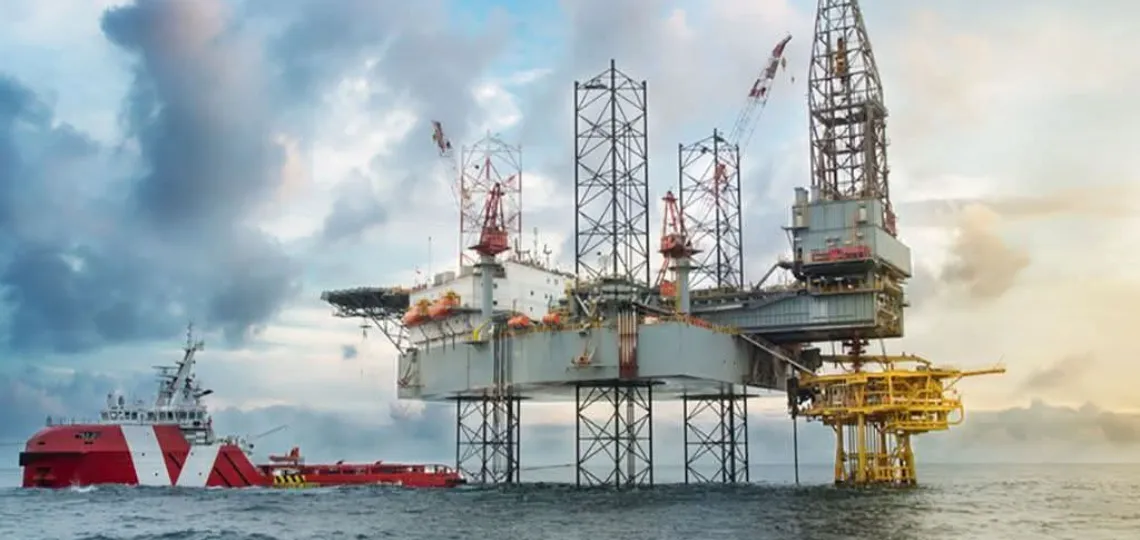
The Stella Energy 1 mobile production unit and the Kristina floating storage and offloading vessel are already secured at the site, demonstrating that surface assets are in place and awaiting first oil.
The field development plan includes two horizontal production wells, AK-1H and AK-2H, penetrating the H6 reservoir, along with an exploratory side track, AK-1P, drilled to probe deeper, untested layers. The exploration component is notable because its results may determine the long-term economics of the project.

If deeper reservoirs contain recoverable oil, the field’s life could be extended beyond the current plan, raising output potential at a time when small producers across the region are trying to build resilience against price downturns.
Expected initial output of approximately 15,000 barrels per day would place Benin among the smallest producers on the continent, but still mark a meaningful entry into a club historically dominated by Nigeria, Angola and Algeria. Across Africa, only about ten countries currently produce more than 50,000 barrels per day, and several, including Chad, Congo and South Sudan, are now struggling with depletion, pipeline disputes or a lack of reinvestment.
For Benin, even modest production can strengthen foreign exchange reserves, improve fiscal space and fund broader infrastructure priorities, especially if project timelines hold.
Read also: Inside Africa’s 2026 energy outlook: New gas hubs, funding gaps and the battle for power access
The revenue structure reflects a blend of foreign and domestic participation. Akrake Petroleum controls 76 percent of the block. The government of Benin owns 15 percent, while the remaining 9 percent sits with homegrown firm Octogone Trading. The mixed ownership aligns with a broader pattern in emerging African markets where national governments seek exposure to upstream revenues without carrying full development risk.
The timing of Benin’s re-entry into oil production intersects with changing conversations about energy transitions across Africa. While countries such as Kenya and Namibia are investing in wind and geothermal, and South Africa is working to scale solar, hydrocarbons remain a dominant fiscal driver for many economies.
In West Africa, oil and gas account for more than half of export earnings in Angola and Equatorial Guinea and nearly 80 percent in Nigeria. Even with international calls for cleaner energy, governments under budget strain continue to see near-term petroleum projects as lifelines.
For Benin, the true measure of success may not be the headline number of barrels pumped in the first months, but whether Seme can sustain output long enough to justify fresh exploration and possibly anchor a modest upstream services industry.
If the AK-2H well completes as planned and the deeper horizon proves productive, Seme could transform from a quietly dormant field into a strategic national asset, restoring Benin to the map of producing states and expanding the conversation about what an energy transition looks like for countries with limited but valuable resources.
Engage with us on LinkedIn: Africa Sustainability Matters