


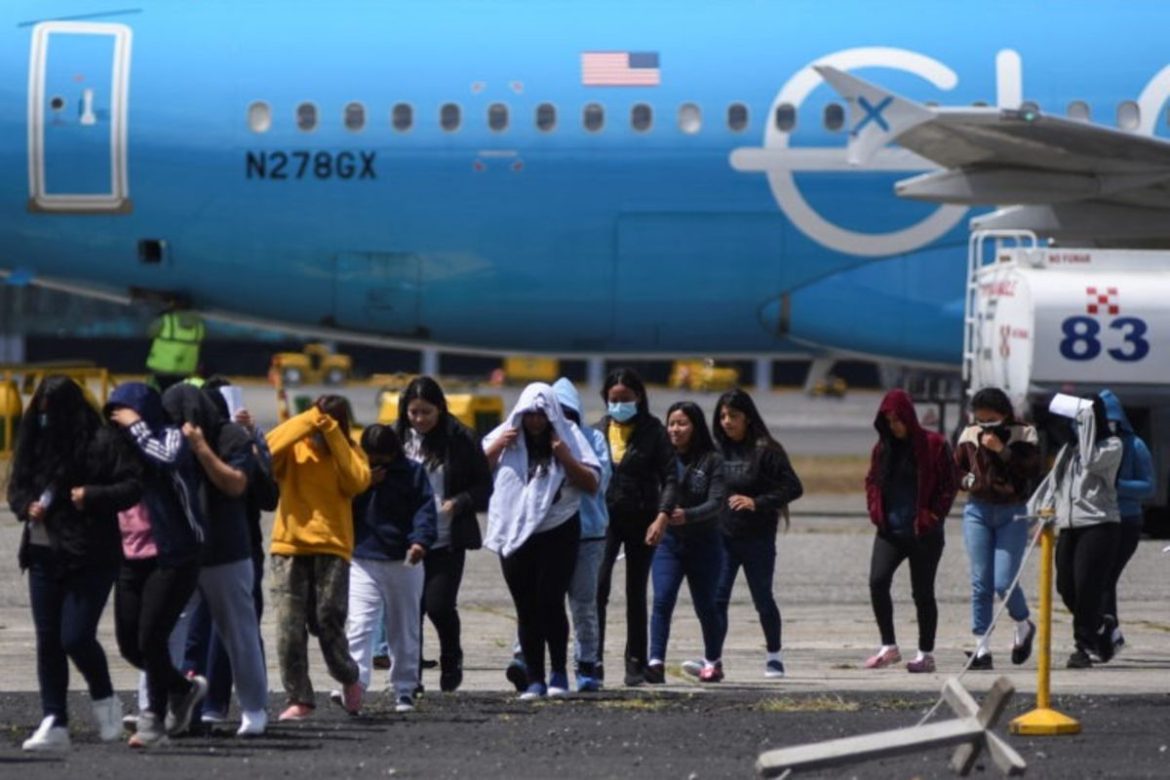
The Central African Republic (CAR) has agreed to accept third-country deportees from the United States under a reported bilateral arrangement reached during a recent visit by a US delegation to Bangui, according to Reuters. The agreement makes CAR the latest African nation to participate in Washington’s expanding deportation strategy, under which migrants and asylum seekers are transferred to countries other than their states of origin as part of broader efforts to tighten immigration controls.
Details of the arrangement, including the number of deportees, their nationalities and the timeline for transfers, have not been publicly disclosed. However, the reported agreement reflects a growing trend in which African countries are increasingly becoming partners in global migration management frameworks shaped by policy decisions made far beyond the continent’s borders.
The arrangement emerges against the backdrop of intensified US immigration enforcement measures that have relied on third-country deportation agreements to relocate migrants whose return to their home countries may be legally, diplomatically or logistically difficult. Legal experts and human rights advocates have argued that such agreements can create indirect pathways for asylum seekers and migrants to eventually return to countries from which they initially fled, raising concerns about compliance with international refugee and human rights obligations.
 According to migration analysts, third-country deportation arrangements have become an increasingly important component of migration governance in several regions. African states have featured prominently in these discussions due to their strategic diplomatic relationships, development financing needs and geographic positions within broader migration corridors linking Africa, Europe and North America.
At least eight African countries, including Eswatini, the Democratic Republic of the Congo (DRC), Ghana and Sierra Leone, have reportedly accepted deportees from the United States under various arrangements. These agreements are often accompanied by financial assistance, logistical cooperation or broader diplomatic engagements, although the specific terms are rarely made public.
The issue has become increasingly contentious within Africa’s policy and human rights landscape. Last week, rights organisations filed a complaint before the African human rights system against Equatorial Guinea, alleging that deportees transferred to the country were subsequently returned to their countries of origin in ways that may have violated international protections. The case has intensified scrutiny of how receiving states manage deported individuals and whether adequate legal safeguards are in place.
Read also:
For the Central African Republic, the agreement arrives at a time when the country continues to face significant governance, development and security challenges. Despite progress in stabilisation efforts in recent years, CAR remains one of the world’s most fragile economies, with substantial reliance on international aid, peacebuilding support and external financing. Any new migration-related responsibilities may require administrative, legal and institutional capacity that remains limited in many parts of the country.
The broader implications extend beyond migration policy. The management of deportees requires functioning identity systems, border controls, legal frameworks, social services and security oversight. These institutional requirements intersect directly with governance capacity and public expenditure priorities, particularly in lower-income countries where resources are already stretched across competing development needs.
Migration governance is increasingly becoming an economic and development issue as much as a humanitarian one. Governments receiving deportees may face additional demands on housing, healthcare, legal services and social protection systems. In contexts where public institutions already face capacity constraints, such responsibilities can create fiscal pressures and administrative challenges that require careful management.
At the same time, migration cooperation has become an important component of international diplomacy. Wealthier countries are increasingly seeking partnerships with developing nations to manage migration flows, while receiving countries may view such agreements as opportunities to strengthen bilateral relationships, attract development assistance or secure economic cooperation. The balance between these strategic interests and the protection of human rights remains a central point of debate among policymakers and civil society organisations.
For Africa, the expansion of third-country deportation agreements raises important questions about the continent’s evolving role within global migration systems. African states are no longer viewed solely as countries of origin or transit for migrants; they are increasingly becoming actors within broader international migration management frameworks. This shift carries implications for sovereignty, institutional capacity and regional cooperation.
The issue also intersects with Africa’s own migration dynamics. According to international organisations, most African migration occurs within the continent itself, driven by labour mobility, trade, education and displacement linked to conflict and climate-related pressures. Policymakers therefore face the challenge of balancing international migration commitments with domestic and regional migration priorities.
 As governments across Africa continue to engage with external partners on migration issues, transparency and institutional accountability are likely to remain key considerations. The effectiveness of such agreements will ultimately depend not only on diplomatic arrangements but also on the ability of participating countries to uphold legal obligations, manage social impacts and maintain public confidence in migration governance systems.
The reported agreement between the United States and the Central African Republic illustrates how migration policy is increasingly interconnected with development, diplomacy and governance. For African countries navigating complex economic and institutional realities, decisions surrounding migration cooperation are becoming part of a broader conversation about state capacity, international partnerships and the continent’s role in an evolving global policy landscape.


