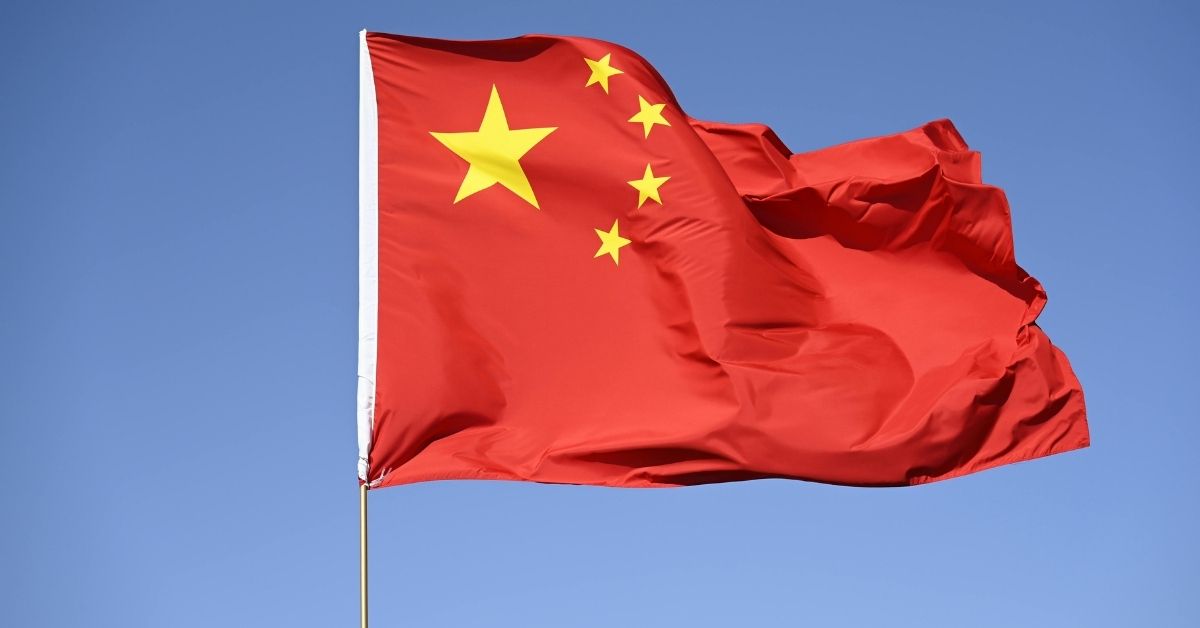

China has released its first national corporate climate disclosure standard, setting in motion a regulatory shift that is expected to reshape how companies report climate risk and emissions across global supply chains, including those that run deep through Africa’s energy, mining, agriculture and infrastructure sectors.
Announced by China’s Ministry of Finance on January 6, the new framework aligns with the International Sustainability Standards Board and is designed to move gradually from voluntary adoption to mandatory compliance, covering listed and unlisted firms, large enterprises and small businesses.
While the policy applies formally within China, its reach is not confined by geography. China is Africa’s largest trading partner, with bilateral trade exceeding $280 billion in 2023, and Chinese firms are embedded across African economies, from copper mines in Zambia and cobalt processing in the Democratic Republic of Congo to cement plants in Nigeria, railways in Kenya and power projects across Southern Africa.

As climate disclosure becomes a core requirement for Chinese corporates, the demand for verifiable emissions data and transition plans will increasingly extend to African operations and suppliers. The standard mirrors the structure of the ISSB’s climate framework, requiring companies to disclose governance arrangements, climate strategy, risk management, and metrics and targets.
What sets it apart is its requirement for companies to report not only on how climate risks affect financial performance, but also on how business activities impact the climate itself. This distinction matters for Africa, where much of China’s economic engagement is tied to resource extraction, heavy industry and large-scale infrastructure, sectors that are emissions-intensive and increasingly scrutinised by global investors.
Read also: 360 days to climate disclosure: Inside Kenya’s accelerated implementation
In practical terms, a Chinese state-owned mining company operating in the Copperbelt can no longer treat its African subsidiary as a reporting blind spot. Emissions from extraction, processing, power use and logistics will need to be measured, documented and consolidated into group disclosures. The same applies to cement plants supplying China-backed construction projects, or agribusinesses sourcing commodities from African producers.
For African firms in these value chains, climate data is no longer an abstract sustainability exercise but a condition of commercial relevance.
This shift arrives at a moment when African economies are already navigating tightening climate-related trade rules. The European Union’s Carbon Border Adjustment Mechanism will begin applying full charges in 2026, affecting African exports of cement, steel, aluminium and fertilizers.
China’s disclosure framework does not impose a border tax, but it introduces a different pressure point: access to Chinese capital and contracts increasingly tied to climate transparency.
Chinese policy banks and commercial lenders have financed more than $170 billion in African energy and infrastructure projects since 2000, according to Boston University’s Global Development Policy Center.
As climate reporting becomes embedded in China’s financial system, those lenders will require clearer emissions baselines, transition pathways and risk disclosures. African project developers seeking Chinese financing will need to show not only technical feasibility, but climate credibility.

The implications extend to Africa’s carbon markets and nature-based solutions. China’s framework places emphasis on impact reporting and discourages vague or unsubstantiated climate claims. This aligns with growing global scrutiny of carbon credits, many of which originate from African forestry, agriculture and land-use projects.
For African hosts, this could raise standards and improve market integrity, but it also increases the burden of monitoring, verification and data management in regions where technical capacity is uneven.
Across the continent, regulatory readiness varies. South Africa has begun aligning corporate reporting with ISSB standards through the Johannesburg Stock Exchange and National Treasury. Nigeria’s Securities and Exchange Commission has issued sustainability disclosure guidelines, and Kenya and Egypt are moving in similar directions.
Read also: EU prepares new recycled plastic import rules for 2026 to protect domestic recycling industry
In many other African markets, climate reporting remains voluntary or fragmented. The effect of China’s move is to accelerate convergence, not through regulation imposed by African governments, but through market expectation.
There is also a strategic dimension. China’s climate disclosure standard is explicitly framed as a tool to support its industrial transformation and “dual carbon” goals of peaking emissions before 2030 and reaching carbon neutrality by 2060. For Africa, this intersects with its role as a supplier of transition minerals such as copper, lithium, manganese and graphite.
As Chinese manufacturers of electric vehicles, batteries and renewable technologies face stricter disclosure obligations, the sustainability profile of African mineral supply chains becomes more consequential. The story unfolding is not one of regulation imposed from afar, but of economic gravity. Climate disclosure is becoming the language through which capital, trade and industrial partnerships are negotiated.
In that sense, a regulatory decision taken in Beijing now sits squarely within Africa’s sustainability conversation, not as an external policy choice, but as part of the evolving architecture of global commerce.
Engage with us on LinkedIn: Africa Sustainability Matters