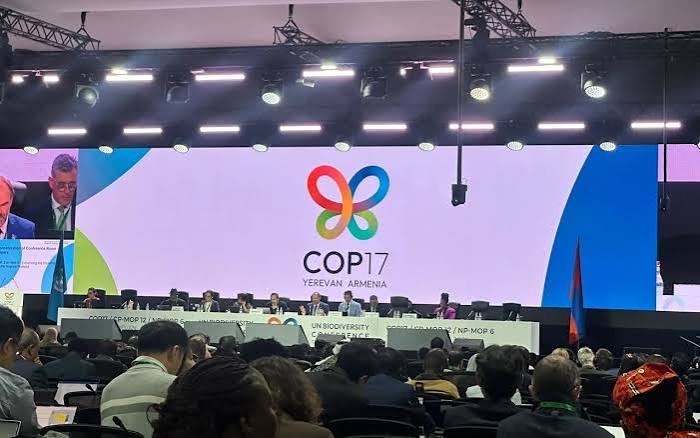
Governments have reached agreement at the 17th Conference of the Parties to the Convention on Biological Diversity (COP17) in Yerevan, Armenia, following negotiations that extended beyond the scheduled conclusion, but the outcomes have exposed persistent gaps in biodiversity financing, ocean protection and implementation of global conservation commitments. The summit, which concluded on 31 October 2026, produced consensus on key decisions under the Kunming-Montreal Global Biodiversity Framework, while Quito, Ecuador, was selected to host COP18 in 2028.
The meeting marked the first global review of progress towards the framework adopted in 2022, which commits countries to halt and reverse biodiversity loss by 2030. The review provided an assessment of how far governments have progressed in translating national commitments into measurable action. While the adoption of the Yerevan Pathway and agreement on resource mobilisation and the Global Review kept multilateral negotiations moving, conservation organisations and campaigners warned that the pace of implementation remains insufficient to meet the framework’s targets within the four years remaining.
The outcome reflects a wider challenge facing international biodiversity policy: governments have established shared targets, but the financing, institutional coordination and practical measures required to achieve them remain uneven. The negotiations in Armenia therefore shifted attention from the adoption of global commitments to the capacity of countries to implement them, particularly in areas where nature loss is accelerating and funding remains limited.

Steven Guilbeault, former Canadian Minister of Environment and Climate Change, who helped negotiate the Kunming-Montreal Global Biodiversity Framework, said the Yerevan Pathway offered an important step forward but fell short of the scale of action required. He identified finance, harmful subsidies and benefit-sharing from the use of digital sequence information on genetic resources as areas where further progress is needed. The continued difficulty in securing meaningful contributions to the Cali Fund, which is intended to support benefit-sharing associated with digital sequence information, raised questions about whether international biodiversity cooperation can deliver on its commitments to equity.
The financing challenge was a recurring concern throughout the summit. Governments agreed on key aspects of resource mobilisation, but conservation organisations argued that the resources available remain far below what is required to protect and restore ecosystems. Catherine Weller, Global Policy Director at Fauna & Flora, said agreement on the Global Review and resource mobilisation had prevented the negotiations from ending without consensus, but stressed that decisions reached in Yerevan must now translate into action at local level.
Weller also pointed to the need to reduce and redirect subsidies that contribute to nature loss. Although the final language represented progress in recognising the issue, she argued that governments must move beyond commitments and implement changes across public spending and economic incentives. She called for greater contributions from governments, businesses, philanthropy and nature markets, with funding reaching Indigenous Peoples and local communities responsible for managing and protecting important ecosystems.
The scale of the financing gap is also reflected in concerns about declining international support for protected and conserved areas. Brian O’Donnell, Director of Campaign for Nature, cited research showing that international funding for protected and conserved areas fell for the second consecutive year, from more than US$1.2 billion in 2023 to US$1 billion in 2025. He also noted that only 12% of the ocean is on track for protection by 2030, well below the global target of 30%.
The gap between ambition and delivery was particularly evident in ocean conservation. The Kunming-Montreal Global Biodiversity Framework calls for at least 30% of land and sea areas to be effectively conserved and managed by 2030, but current levels of marine protection remain far below that threshold. Estimates cited by campaigners indicate that approximately 10% of the ocean is currently protected or conserved, while existing national commitments would increase that figure to only around 12% by 2030.
For Pacific Island communities, the implications are immediate. Brianna Fruean, a Samoan climate and ocean activist and Together for the Ocean ambassador, said the slow pace of international negotiations was disconnected from the pressures facing communities experiencing coral bleaching, declining marine life, rising seas and intensifying storms. She also criticised the failure to secure stronger recognition of the High Seas Treaty, arguing that the protection of marine areas beyond national jurisdiction must become a central part of global biodiversity action.
The High Seas Treaty, formally known as the agreement on the conservation and sustainable use of marine biological diversity of areas beyond national jurisdiction, presents an opportunity to expand protection in international waters. Rebecca Hubbard, Director of the High Seas Alliance, said only 1.5% of the high seas is currently protected. She described the treaty as an important mechanism for closing the gap towards the 30% ocean protection target, while calling on governments to demonstrate stronger commitments at the first High Seas Treaty Conference of the Parties scheduled for January.
The relationship between biodiversity governance under the Convention on Biological Diversity and the new High Seas Treaty remains an important implementation question. Tom Pickerell, Global Director of the Ocean Program at the World Resources Institute, said governments had acknowledged that oceans receive less attention than land in biodiversity planning, but significant questions remain over how the two international frameworks will work together. He argued that ocean commitments must become more integrated into national biodiversity strategies, including protection, restoration and sustainable fisheries management.
The financing and governance discussions also highlighted the role of Indigenous Peoples and local communities. COP17 was the first biodiversity conference following the establishment of a formal body to strengthen their participation in decision-making under the Convention on Biological Diversity. Decisions adopted in Yerevan built on that recognition by establishing procedures intended to strengthen their involvement in global biodiversity governance.
For conservation organisations, the development represents progress, although concerns remain over whether participation will translate into meaningful influence over policy, resource allocation and implementation. Communities that depend directly on forests, oceans, wetlands and other ecosystems often hold practical knowledge essential to conservation, while also facing the consequences of biodiversity loss. Their involvement in decision-making and access to finance will therefore influence whether global targets produce equitable outcomes on the ground.
Linda Krueger, Global Director for Biodiversity and Infrastructure Policy at The Nature Conservancy, said the new participation arrangements were an important element of the decisions reached in Yerevan. She also warned that the role of scientific evidence must remain central to biodiversity policy, pointing to the importance of assessments conducted by the Intergovernmental Science-Policy Platform on Biodiversity and Ecosystem Services (IPBES). For Krueger, the Global Review demonstrates the need for a course correction, with governments required to accelerate implementation rather than treat consensus at the conference as sufficient progress.
The summit also drew attention to the economic importance of biodiversity beyond conservation policy. Carina Pimenta, Brazil’s National Secretary for Bioeconomy, said protecting nature is essential to food security, livelihoods and economic resilience. She cited Brazil’s reported restoration of 3.4 million hectares of native vegetation and a decline in Amazon deforestation to its lowest rate in more than a decade, while emphasising that isolated national progress would not be sufficient without stronger coordination between agriculture, environment and finance institutions.
This connection between nature and economic development is particularly relevant to African countries, where agriculture, fisheries, forestry and tourism depend heavily on functioning ecosystems. Biodiversity loss can affect food production, water availability, rural employment and the resilience of communities exposed to climate-related shocks. Financing conservation and restoration is therefore not only an environmental priority but also a consideration for long-term economic stability and development planning.
The summit’s conclusions also carry implications for the next round of international climate negotiations. COP31 is due to take place in Türkiye, where governments will again confront the relationship between climate change and nature loss. Weller argued that the Yerevan decisions provide a useful benchmark for discussions on the links between the biodiversity and climate conventions, noting that biodiversity targets cannot be achieved while climate pressures continue to intensify.

The two agendas are closely connected. Ecosystems such as forests, wetlands, mangroves and seagrass beds store carbon, regulate water systems and help communities adapt to climate impacts. Their degradation can weaken these functions while increasing vulnerability to extreme weather and other environmental pressures. Conversely, poorly designed climate interventions can also create risks for biodiversity if they fail to account for ecosystem integrity and community rights.
The selection of Quito as the host city for COP18 in 2028 provides the next milestone in the global biodiversity process. However, the immediate challenge lies in implementing the decisions reached in Armenia. Governments will need to mobilise additional public and private finance, address subsidies harmful to nature, strengthen national biodiversity plans and ensure that resources reach the institutions and communities responsible for conservation.
The Global Review has made the implementation gap more visible, but visibility alone will not close it. With only four years remaining before the 2030 deadline, the Yerevan Pathway will be judged by whether it leads to measurable improvements in ecosystem protection, restoration, ocean conservation and equitable financing. The next phase of global biodiversity action will depend less on the ability to negotiate new commitments and more on whether governments, businesses and financial institutions can deliver the changes already agreed.