


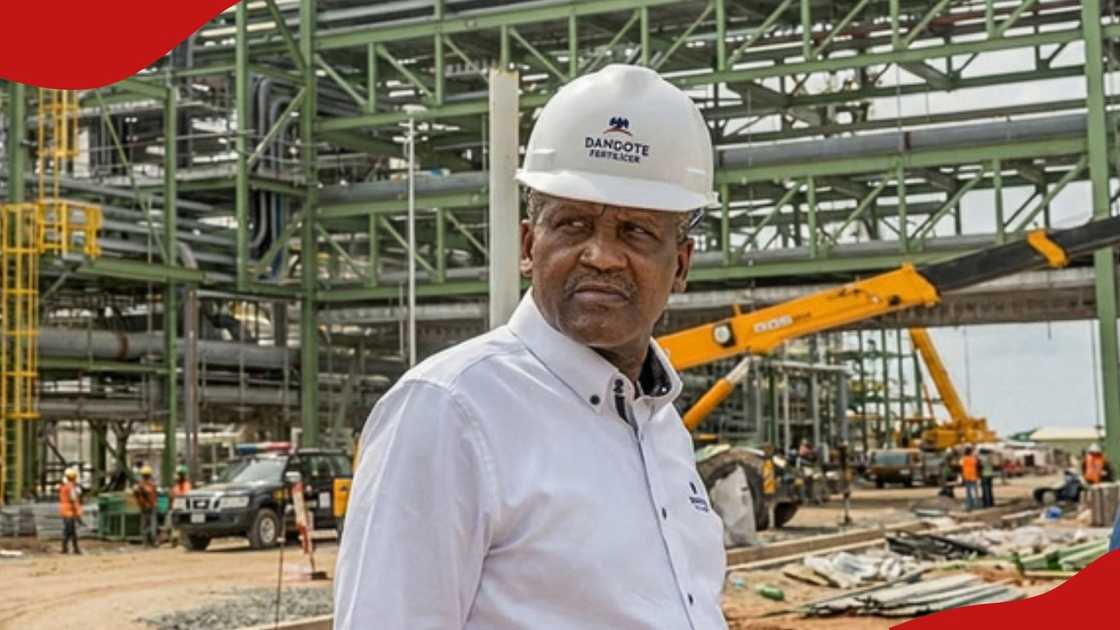
Dangote Group has awarded Engineers India Ltd. (EIL) a contract worth more than $450 million to provide project management and engineering, procurement and construction management services for its planned 700,000-barrel-a-day refinery and petrochemical complex in Lamu, Kenya, extending the Nigerian conglomerate’s refining ambitions from West Africa into the East African market.
Engineers India disclosed the contract on September 22, 2026, describing its mandate as project management consultancy and engineering, procurement and construction management for the greenfield development. The project is expected to increase refined petroleum production in East Africa, reduce the region’s dependence on imported petroleum products and create additional volumes for international markets once operational.
The proposed Lamu complex is expected to cost about $16 billion and will have a processing capacity of 700,000 barrels of crude oil per day. Dangote has said construction is expected to begin before the end of September, placing the project at the start of a development phase that could reshape the region’s refining and petroleum logistics landscape. Reuters reported in July that Dangote intended to finance the project through a combination of internal cash reserves, bond issuance and a planned initial public offering, while engineering and site preparation work had already begun.

The scale of the proposed facility is significant for East Africa, a region that has historically depended heavily on imported refined petroleum products. Kenya currently operates an import-oriented petroleum supply system, with the country’s coastal infrastructure serving as a major entry point for fuel distributed across domestic and regional markets. A large domestic refinery would therefore potentially alter the balance between imported refined products and locally processed fuel, while creating a new industrial anchor around Lamu.
For Dangote, the Kenyan project represents an expansion of a refining strategy that has already established a major presence in West Africa. The group’s 650,000-barrel-per-day refinery at the Lekki Free Zone in Nigeria has become the foundation of its petroleum refining operations, while the company is pursuing an expansion that would increase its refining capacity to 1.4 million barrels per day by 2029. EIL is involved in that expansion as well as having previously served as project management and engineering, procurement and construction management consultant for the original Lekki development.
The relationship between EIL and Dangote dates back to 2013, when Engineers India secured a $139 million engineering contract connected to the development of the refinery and polypropylene plant in Nigeria. The Nigerian project subsequently developed into the integrated Dangote refinery and petrochemical complex at Lekki, where EIL provided project management and EPCM services. Engineers India’s own reporting confirms its EPCM involvement in the 650,000-barrel-per-day refinery and 830,000-tonnes-per-year petrochemical complex.
The Lekki experience gives EIL a technical role that now extends across Dangote’s refining expansion in two major African markets. In Nigeria, the company is involved in the planned increase in refining capacity to 1.4 million barrels per day, while in Kenya it will support a new greenfield complex from its project-management and engineering position. The Kenyan project is also designed to process a wider range of crude oils, according to reporting on the contract.
The Lamu development also has a regional infrastructure dimension. Dangote plans to connect the refinery with a wider pipeline network that would link Lamu with Ethiopia and establish another connection between Djibouti and Ethiopia. The proposed network is expected to extend for about 4,000 kilometres and would connect landlocked markets with coastal infrastructure and petroleum supply routes.
Such infrastructure could have implications beyond Kenya’s domestic fuel market. Ethiopia, which does not have a coastline, relies on imported petroleum products transported through neighbouring countries and ports. A refinery and associated pipeline infrastructure centred on Lamu could provide an additional route into East African markets, although the eventual commercial role of the network will depend on the completion of the refinery, pipeline investments, regulatory arrangements and long-term supply agreements.
The project also places Lamu within a wider debate over the role of large fossil-fuel infrastructure in Africa’s industrial development. East African economies continue to require reliable supplies of transport fuels, aviation fuel and other petroleum products while simultaneously pursuing renewable energy and lower-carbon development pathways. The proposed refinery therefore sits within a complex energy landscape in which energy security, industrialisation, import costs and the longer-term transition away from fossil fuels intersect.
For Kenya, the potential economic effects extend beyond petroleum production. A refinery of this scale would require supporting storage, transport, port, water, power, engineering and logistics infrastructure. Its construction and operation could generate demand for technical services and skilled labour, while associated industrial activity could create opportunities for downstream petrochemical manufacturing and logistics businesses.
The location in Lamu also connects the refinery to the broader Lamu Port-South Sudan-Ethiopia Transport corridor concept, which has been designed to provide infrastructure links between Kenya’s northern coast and landlocked markets. The success of such an industrial hub would depend partly on how effectively energy infrastructure is integrated with transport and logistics systems serving the region.
At the same time, the size of the proposed investment means that execution and financing will remain important considerations. A $16 billion refinery requires long-term capital commitments, large-scale engineering and construction capacity, reliable crude supply and commercially viable markets for its refined and petrochemical products. Dangote’s proposed financing structure, combining internal funds, bonds and an IPO, reflects the scale of capital required to move the project from development into construction.
The experience of the Lekki refinery illustrates the complexity of such projects. Dangote’s Nigerian facility eventually entered operation in 2024 after years of development and investment, becoming a major source of refined petroleum products for Nigeria and international markets. Its subsequent expansion to 1.4 million barrels per day demonstrates the group’s continuing focus on increasing refining capacity rather than treating the original project as a standalone investment.
The Kenyan project could similarly become part of a broader African refining network. Dangote Group currently has operations in 17 African countries and has increasingly positioned industrial production, rather than commodity trading alone, as part of its continental expansion strategy. The company describes its vision around local production, industrial innovation and the development of essential products and services across Africa.
The involvement of Engineers India also highlights the growing role of international engineering companies in Africa’s industrial infrastructure development. EIL, which operates under India’s Ministry of Petroleum and Natural Gas, has built a portfolio of engineering and project-management assignments across the energy sector and its work with Dangote provides a link between Indian technical expertise and African industrial investment.
For the wider East African petroleum market, the central question will be how a 700,000-barrel-per-day refinery fits into existing regional demand, import infrastructure and fuel-trading arrangements. The facility would be considerably larger than Kenya’s historical refining requirements alone, meaning that regional exports and cross-border distribution would be important to its commercial model.
The project also raises questions about the future composition of East Africa’s energy infrastructure. While new refining capacity could reduce exposure to international refined-product supply disruptions and improve regional supply resilience, it also represents a long-lived investment in petroleum infrastructure at a time when African countries are expanding solar, wind, geothermal and other renewable energy systems.

For policymakers and investors, the Lamu project therefore represents more than an individual refinery. Its development brings together petroleum refining, petrochemicals, port infrastructure, regional trade, pipeline connectivity and industrial investment. Its eventual contribution to energy security will depend on whether these components develop as an integrated system.
The immediate milestone is the transition from engineering and project preparation to construction. With EIL now contracted to provide project management and EPCM services, Dangote’s planned start before the end of September would mark the beginning of one of the largest planned industrial investments in East Africa. The subsequent stages will determine how quickly the project can move through construction, financing, infrastructure development and commissioning.
If completed as planned, the Lamu refinery would give Dangote a major refining presence on both the Atlantic and Indian Ocean sides of the African continent, complementing its Nigerian operations while creating a potential new source of refined petroleum and petrochemical products for East African and international markets. The scale of the investment also means that its development will be closely linked to questions of regional infrastructure, energy security, capital mobilisation and the longer-term evolution of Africa’s energy system.


