


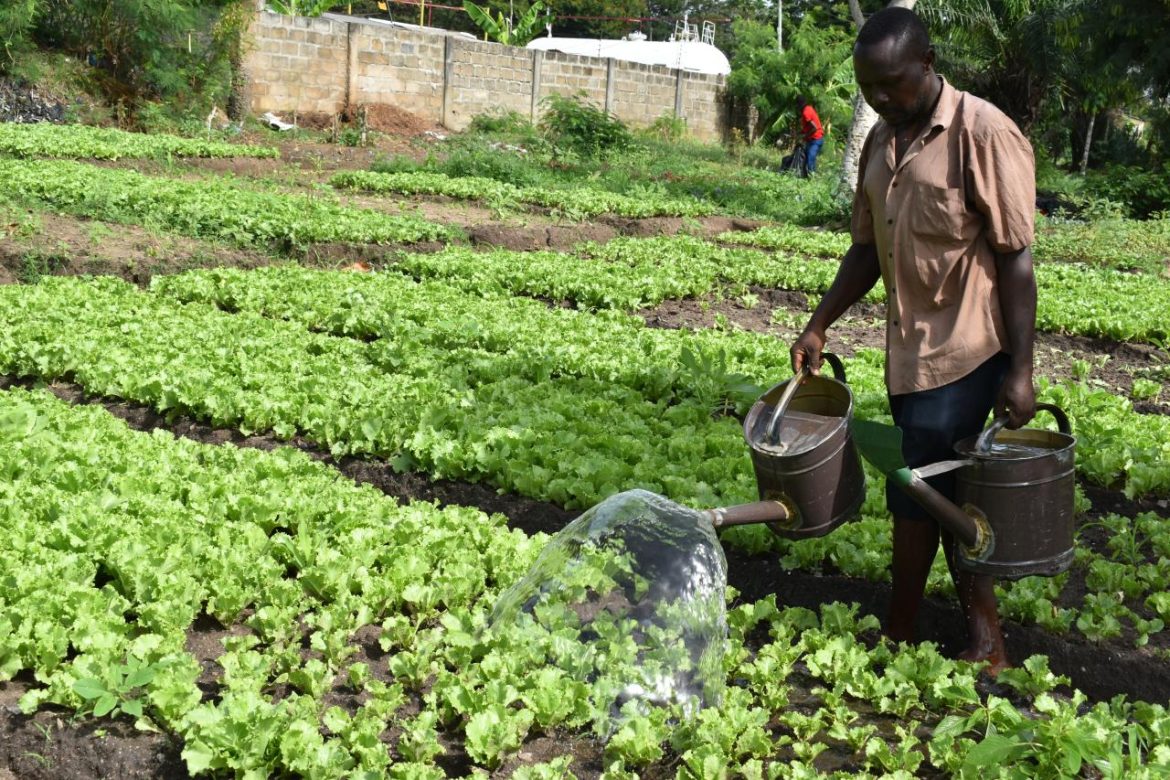
In a move that highlights the growing intersection between waste management, sustainable agriculture and climate resilience, the Green Africa Youth Organisation (GAYO) has distributed 180 bags of organic compost to more than 100 farmers in Accra, demonstrating how circular economy solutions can address both environmental and agricultural challenges in urban and peri-urban communities.
The initiative, implemented under GAYO’s Zero Waste Project, targeted farmers in the Airport Hills and Osu farming communities within the Ledzokuku Municipal Assembly (LEKMA) and the Korley Klottey Municipal Assembly (KOKMA). By converting organic waste into agricultural inputs, the programme seeks to reduce dependence on synthetic fertilisers while improving soil productivity and supporting local food production.
 The intervention comes at a time when African agricultural systems are facing mounting pressures from rising input costs, climate variability and soil degradation. Across the continent, fertiliser affordability remains a persistent challenge for smallholder farmers, particularly following global commodity market disruptions that have contributed to higher production costs and constrained access to agricultural inputs.
According to GAYO, the compost distributed to farmers is produced through the recovery and treatment of organic waste that would otherwise be disposed of in landfills. The approach reflects broader efforts to promote resource efficiency by transforming waste streams into economically productive assets. Rather than treating organic waste as an environmental burden, the initiative positions it as a resource capable of supporting agricultural productivity and reducing pressure on municipal waste management systems.
Emmanuel Grandison Adu-Gyamfi, Facility Manager at GAYO and Head of the organisation’s Material Recovery Facility, said the project is designed to create value from organic waste while simultaneously supporting farmers who continue to face rising production costs. The organisation argues that organic compost offers a practical alternative to conventional fertilisers, particularly for small-scale producers seeking to improve profitability while maintaining soil health.
Read also: https://ghanaiantimes.com.gh/gayo-supports-farmers-with-organic-compost/
The initiative also reflects a wider shift in agricultural policy discussions across Africa towards climate-smart farming practices that improve resilience while reducing environmental impacts. Organic soil amendments are increasingly recognised for their ability to enhance soil structure, improve water retention and support beneficial microbial activity. These characteristics are becoming increasingly important as African countries confront the effects of changing rainfall patterns, land degradation and growing pressure on food systems.
According to agricultural development experts, improving soil health remains one of the most cost-effective pathways for increasing agricultural productivity in many African economies. Healthy soils not only support higher yields but also enhance the ability of farming systems to withstand climate-related stocks such as droughts and erratic weather conditions. For countries seeking to strengthen food security while reducing environmental degradation, investments in sustainable soil management are gaining prominence within national agricultural strategies.
The project’s reported outcomes suggest that organic compost adoption may also carry direct economic benefits for farming households. GAYO indicated that assessments conducted following previous distributions showed improvements in crop yields and farmer incomes, encouraging greater acceptance of organic alternatives among producers who have traditionally relied on inorganic fertilisers. The organisation estimates that a growing number of farmers are now considering organic compost as their primary source of soil nutrients.
Officials from local government institutions have expressed support for the initiative. Agricultural authorities from both LEKMA and KOKMA indicated that extension officers would continue engaging with participating farmers to monitor application practices and maximise the effectiveness of the compost. Such collaboration between civil society organisations and local authorities reflects an increasingly integrated approach to sustainable development interventions.
Beyond its immediate agricultural impact, the programme illustrates how circular economy models can contribute to broader economic and environmental objectives. Waste recovery initiatives have become a growing area of interest across Africa as governments seek solutions to rising urban waste volumes while simultaneously creating employment opportunities and supporting resource efficiency. Organic waste represents a significant proportion of municipal waste streams in many African cities, making composting an increasingly attractive strategy for reducing landfill dependency and greenhouse gas emissions.
The initiative also underscores the expanding role of youth-led organisations in driving practical climate and sustainability solutions. Across Africa, younger generations are increasingly at the forefront of projects that link environmental protection with economic development, often filling critical implementation gaps through locally driven innovations.
 For Ghana, the programme aligns with national ambitions to strengthen food security, promote sustainable resource management and advance climate adaptation efforts. More broadly, it reflects continental priorities under the African Union’s Agenda 2063, which calls for environmentally sustainable and climate-resilient economies capable of supporting inclusive growth.
As African countries seek pathways to build more resilient food systems, initiatives that connect waste management, agricultural productivity and climate adaptation may become increasingly important. The Accra compost programme demonstrates how relatively simple interventions can generate multiple benefits, supporting farmers, reducing environmental pressures and contributing to more sustainable urban and agricultural economies.


