


Residents across Eastern Accra and parts of the Tema Metropolitan area are facing recurring water shortages after operational disruptions at Ghana Water Ltd’s (GWL) Kpong Water Treatment Plant reduced production capacity, highlighting the growing vulnerability of urban utility systems to energy instability and environmental pressures in one of West Africa’s fastest-growing urban corridors.
The utility provider announced on 27 April 2026 that unstable electricity supply to treatment facilities and booster stations, combined with significant accumulations of aquatic weeds at the Kpong raw water intake point, had disrupted water production and distribution to thousands of households and businesses. The challenges have affected communities that depend heavily on the Kpong system, a critical component of Ghana’s urban water infrastructure serving the Greater Accra Region.
 According to Ghana Water Ltd, continuous electricity supply remains essential for the operation of water treatment facilities, pumping stations, transmission systems and distribution networks. Interruptions in power supply directly affect the utility’s ability to abstract, treat and distribute water, reducing overall output and creating supply inconsistencies across connected service areas.
The operational difficulties have been compounded by an increase in aquatic weed growth at the Kpong intake facility. GWL attributed the surge to recent heavy rainfall within the Akosombo catchment area, which has accelerated the movement and concentration of floating vegetation into water abstraction zones. The resulting blockage of intake screens has constrained the volume of raw water entering treatment systems, further reducing production capacity.
The company said technical teams have been deployed to clear the affected intake structures while discussions continue with key energy sector institutions, including the Volta River Authority (VRA), Ghana Grid Company and the Electricity Company of Ghana (ECG), to address the power supply challenges affecting water operations.
The disruptions illustrate the increasing interdependence between energy and water systems across Africa’s urban economies. Water utilities depend on reliable electricity to maintain production and distribution, while energy infrastructure itself often relies on stable water resources for generation and cooling processes. Failures within either system can rapidly cascade across sectors, affecting households, businesses, healthcare facilities and public services.
For Ghana, the situation highlights broader infrastructure resilience challenges emerging as urban populations expand and climate variability intensifies. Greater Accra remains one of the country’s most economically significant regions, contributing substantially to national output through commerce, manufacturing, logistics and services. Reliable water supply is therefore not only a public service issue but also an economic imperative affecting productivity, investment confidence and urban competitiveness.
According to urban development experts, climate-related pressures are increasingly influencing water infrastructure performance across African cities. Extreme rainfall events, changing hydrological patterns, invasive aquatic vegetation and environmental degradation within catchment areas are placing additional stress on systems originally designed under different climatic conditions. These challenges often require higher operational expenditure, increased maintenance costs and greater investment in adaptive infrastructure.
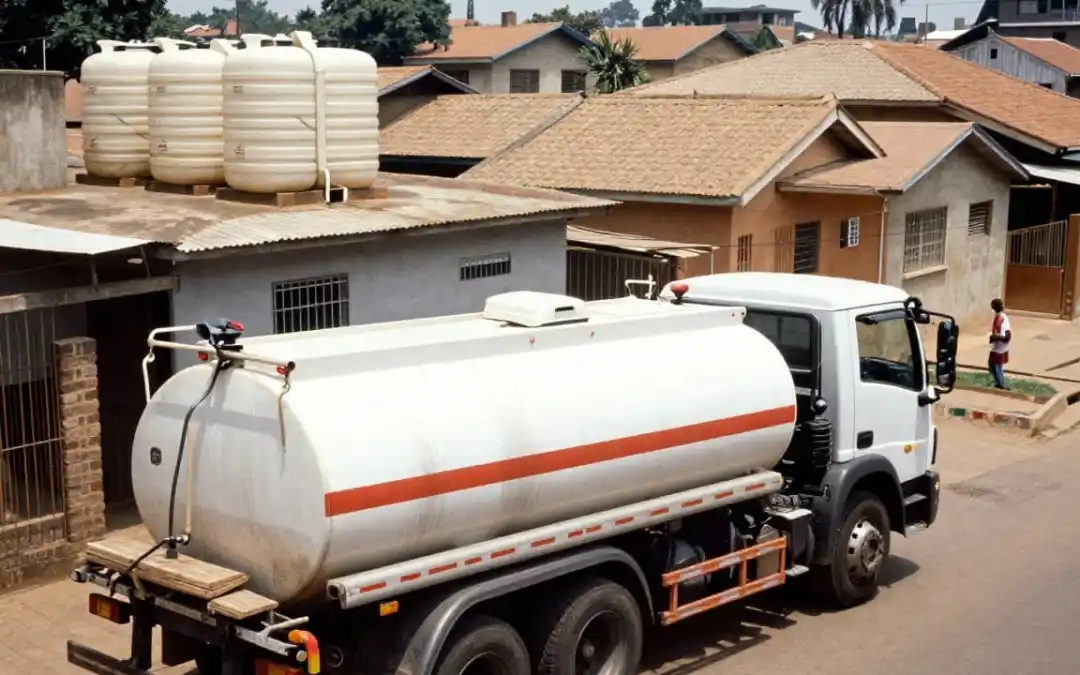
The financial implications extend beyond utility operators. Water shortages can increase operating costs for businesses that depend on private storage, trucking services or alternative supply arrangements. Households frequently face higher expenses when forced to purchase water from informal vendors during supply interruptions, while healthcare facilities, schools and public institutions may experience service delivery constraints.
The events at Kpong also underscore the importance of integrated resource management approaches that recognise the links between water security, energy reliability and environmental stewardship. Across the continent, policymakers are increasingly prioritising investments in climate-resilient infrastructure capable of withstanding environmental shocks while maintaining essential service delivery.
 Within the framework of the African Union’s Agenda 2063, strengthening resilient infrastructure and expanding access to reliable basic services remain central components of sustainable urban development. The ability of African cities to maintain dependable water and energy systems is expected to play a significant role in determining economic competitiveness, public health outcomes and long-term climate adaptation capacity.
While Ghana Water Ltd works to restore stable operations, the disruptions offer a reminder that the sustainability of urban growth increasingly depends on infrastructure systems capable of adapting to both environmental change and operational risks. As African cities continue to expand, ensuring the resilience of interconnected water and energy networks is likely to become an increasingly important policy and investment priority.


