


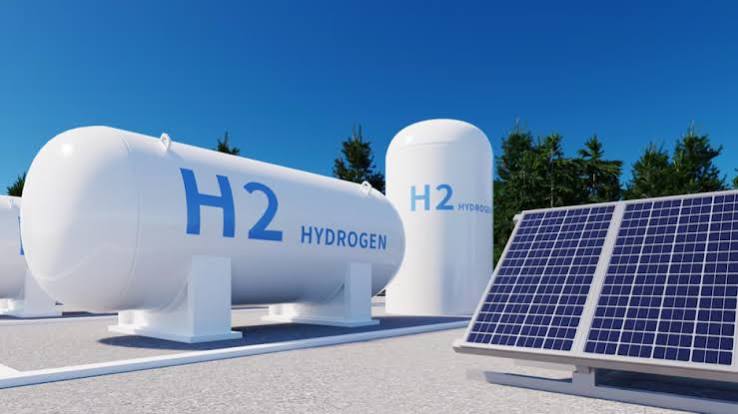
The Green Climate Fund has approved $140 million in catalytic financing for industrial decarbonisation projects in South Africa and Namibia, aiming to mobilise additional private investment into green hydrogen, ammonia, methanol and other low carbon industrial infrastructure. Approved on October 27 at the fund’s 46th board meeting in Songdo, South Korea, the financing will be channelled through Climate Fund Managers’ Climate Investor Three facility, with $84 million allocated to South Africa’s SA-H2 Fund and $56 million to Namibia’s SDG Namibia One Fund.
The investment forms part of the Southern African Industrial Decarbonisation Facility, which the Green Climate Fund describes as its first financing platform dedicated to decarbonising industrial value chains in Africa. The programme aims to use public climate finance to reduce investment risks during project development and construction, stages at which capital-intensive industrial projects can struggle to secure commercial funding.
According to the Development Bank of Southern Africa, which will oversee the programme as the fund’s accredited entity, the financing is intended to help Climate Investor Three mobilise capital towards a broader $1.2 billion investment target. The facility expects to finance between 30 and 40 projects, support the installation of about 1.52 gigawatts of renewable energy capacity and avoid an estimated 24.2 million tonnes of greenhouse gas emissions. These are programme targets rather than results already achieved.
The allocation reflects different stages of project financing in the two countries. Of Namibia’s $56 million, $15 million will support early-stage project development and $41 million will provide construction equity. South Africa’s $84 million will be directed to the construction equity tranche of the SA-H2 Fund. The distinction matters because industrial projects often require substantial expenditure before they generate revenue, while technical, regulatory and construction risks can make early investment difficult to secure.
Climate Investor Three uses a blended-finance model that combines public and private capital. In this structure, concessional or catalytic funding is deployed to absorb part of the risk that would otherwise deter commercial investors. The approach is intended to make projects more investable without requiring public institutions to finance the entire cost of development.
For South Africa and Namibia, the financing comes as both countries seek to expand renewable energy and develop industrial uses for hydrogen produced with renewable electricity. Green hydrogen can be used directly or converted into products such as ammonia and methanol, while renewable energy and new production processes could reduce emissions in sectors where replacing fossil fuels is technically and commercially difficult.
The economic case extends beyond emissions reduction. Green ammonia could supply lower carbon feedstock for fertiliser production, while green methanol and iron production could support emerging industrial value chains. If projects progress to construction and commercial operation, they could create demand for engineering, equipment, transport, maintenance and specialised technical services. The scale of these benefits will depend on whether projects reach financial close, secure customers and develop viable routes to domestic and export markets.
Several projects have already entered the development pipeline. In South Africa, the SA-H2 Fund has signed development funding agreements for Hive Hydrogen’s proposed green ammonia project at Coega and a wastewater-to-green-methanol facility being developed by Green eFuels Producers. In Namibia, SDG Namibia One has signed agreements with the Hyphen green hydrogen project, HyIron’s Oshivela green iron project, the Zhero Molecules Walvis Bay green ammonia project and the Dâures green fertiliser project. These agreements indicate progress in project preparation, but they do not mean that all the facilities are financed, built or operating.
The financing also builds on earlier commitments to the two investment platforms. In August 2026, the SA-H2 Fund reached an initial close of 3 billion South African rand, equivalent to about $182 million, with commitments from the Public Investment Corporation on behalf of the Government Employees Pension Fund, Sanlam Life, the Industrial Development Corporation of South Africa and the Development Bank of Southern Africa. Climate Investor Three’s development tranche also received initial commitments of €150 million from Invest International and the European Commission under the European Union’s Global Gateway initiative.
For African governments, the central issue is whether this financing model can translate climate commitments into competitive industrial capacity. Many low carbon industries require more than renewable electricity: they also need transmission infrastructure, water supplies, port and transport facilities, reliable regulation, skilled workers and buyers willing to pay for products with lower emissions. Where these systems are not developed in parallel, financing for individual plants may not be enough to establish a viable industrial value chain.
Namibia has substantial renewable energy resources and has been pursuing green hydrogen and related industries as part of its longer-term economic development strategy. South Africa, meanwhile, has an established industrial base and significant demand for energy-intensive products, but faces constraints from electricity reliability, infrastructure bottlenecks and the cost of transitioning existing industrial assets. The two markets therefore offer different starting points, even as they compete for investment in emerging low-carbon industries.
The use of catalytic finance could help reduce some project-level risks, but it cannot eliminate uncertainty around construction costs, future demand, electricity prices or the international market for green hydrogen derivatives. Export-oriented projects will also need to demonstrate that production costs and transport arrangements can compete with alternative suppliers. If anticipated demand develops more slowly than expected, investors and public institutions could face pressure to revise project timelines or financing assumptions.
There are also questions about how much of the value created will remain in the two economies. The development of green hydrogen projects can attract international capital and technology, but the wider economic benefits will depend on local procurement, skills development, employment conditions, infrastructure access and participation by domestic businesses. Governments will need to assess these outcomes alongside emissions reductions when evaluating the public value of climate-financed investment.
The programme’s reliance on blended finance also raises questions about accountability for public resources. Transparent reporting on project selection, capital mobilised, construction progress, emissions performance and local economic benefits will be necessary to determine whether the public contribution is attracting additional private investment and delivering results that would not otherwise have occurred. Monitoring will be particularly important where public funding absorbs risks that commercial investors are unwilling to take.

The Green Climate Fund’s approval gives the Southern African Industrial Decarbonisation Facility a substantial financing commitment, but the next phase will be measured by the projects it brings to operation. For South Africa and Namibia, the outcome will depend on whether early stage proposals can become commercially viable industrial assets, whether domestic firms and workers participate in the emerging value chains, and whether the expected emissions reductions can be demonstrated. The wider significance for Africa is whether concessional climate finance can help build industries that are not only lower-carbon, but also economically productive and capable of competing in markets where emissions performance increasingly shapes investment and trade.


