


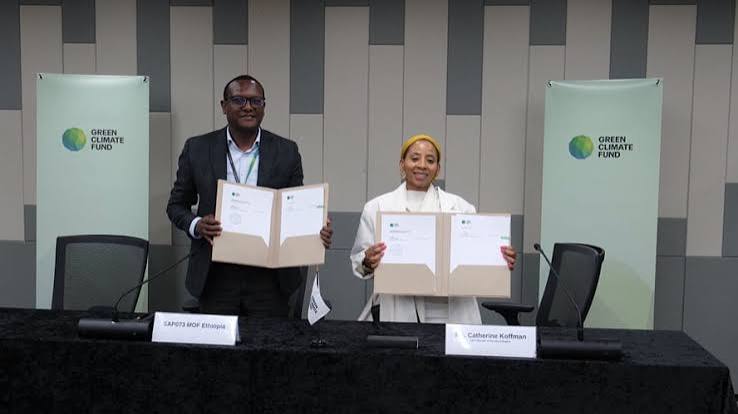
The Green Climate Fund (GCF) has approved nearly $2 billion in climate financing for 21 projects across developing countries, taking its total approvals for 2026 to a record $3.3 billion, as the UN-backed institution expands investment in climate resilience and low carbon development. Announced on 2 November, the approvals include initiatives across Africa, Asia–Pacific, Europe, Central Asia, the Middle East and Latin America, with African projects spanning forest conservation, industrial decarbonisation and regional climate financing. The latest commitments bring the fund’s portfolio to 379 projects and programmes, supported by $22.3 billion in GCF financing.
The approvals come as African governments face growing pressure to finance climate adaptation, energy infrastructure and economic resilience while managing debt burdens and competing public spending priorities. Although the fund’s latest allocation is global, several approved programmes are directly relevant to Africa’s efforts to mobilise capital for climate-related investment, including the Africa Sovereign Climate Facility, a regional industrial decarbonisation initiative in Southern Africa and a forest conservation programme in Cameroon.

According to ESG Today, the new approvals cover 44 developing countries and follow changes to the fund’s balance sheet management introduced earlier in 2026. The GCF said the reforms increased its capacity to finance new projects by making more capital available for investment. The fund estimated that the revised approach could make approximately $5.65 billion available for new programmes and projects over the following two years, compared with $1.37 billion under its previous approach.
The expansion of financing capacity comes as developing countries continue to seek greater access to climate finance. The GCF, established under the United Nations Framework Convention on Climate Change, is mandated to support low emission and climate-resilient development. Its financing is intended to help countries implement climate priorities that may be difficult to fund through domestic budgets or commercial lending alone, particularly where projects have long investment periods, uncertain revenue streams or substantial adaptation benefits.
For Africa, the significance of the latest approvals lies partly in the range of investments being supported. The Africa Sovereign Climate Facility, developed with Africa Finance Corporation, is intended to strengthen climate financing at the sovereign level. Its regional approach could be relevant to governments seeking to incorporate climate considerations into public investment and fiscal planning, although the practical effect will depend on project selection, financing terms and implementation capacity.
The Southern African Industrial Decarbonization Facility, developed with the Development Bank of Southern Africa, addresses a different challenge: reducing emissions from industrial activity while maintaining the productive capacity of economies whose electricity systems and manufacturing sectors remain exposed to fossil fuels. Industrial decarbonisation can require substantial investment in energy efficiency, cleaner production technologies and infrastructure. The availability of concessional or blended finance may help reduce the cost of those investments, particularly where businesses face limited access to long-term capital.
The approved forest programme in Cameroon also reflects the connection between climate finance, land management and local economic systems. Forest conservation can contribute to emissions reduction and ecosystem protection, but implementation requires coordination among public institutions, communities and economic actors whose livelihoods depend on land and forest resources. Financing arrangements therefore need to address governance, monitoring and the distribution of benefits, rather than relying solely on conservation targets.
The fund’s wider portfolio also includes a second tranche of financing for the Green Cities Facility, implemented with the European Bank for Reconstruction and Development. Urban climate investment has growing relevance across African countries, where rapid population growth is increasing demand for transport, housing, water systems, waste management and electricity. The ability to finance resilient infrastructure will influence the cost and reliability of essential services, as well as the exposure of cities to flooding, heat and other climate related risks.
However, the scale of approved financing should not be confused with the amount of capital already disbursed or the results achieved on the ground. Project approvals establish a financing commitment, while implementation depends on conditions, procurement, institutional readiness and the ability to manage funds. The economic and environmental benefits will therefore emerge over time and will vary across projects and countries.
The GCF’s record approvals also come against a wider backdrop of constrained public finances across much of Africa. Governments face pressure to invest in climate resilience while meeting debt obligations, maintaining infrastructure and supporting essential services. Climate finance can help address these competing demands, but its development value depends on whether funding is accessible on terms that countries can sustain and whether projects are aligned with national priorities.
The challenge extends beyond mobilising capital. African countries need project preparation capacity, reliable climate data, transparent procurement and institutions capable of monitoring investment outcomes. These requirements are particularly important for projects involving multiple countries or sectors, where coordination can affect delivery and accountability. Financing structures that bring together development institutions, governments and private investors may expand available resources, but they also require clear responsibilities and risk-sharing arrangements.
The GCF’s record year comes as climate finance remains a central issue in international negotiations ahead of COP31. Developing countries continue to argue that the cost of climate impacts and the investment required for adaptation exceed the resources currently available. For African economies, where climate shocks can affect agricultural production, public infrastructure, water supply and fiscal stability, the gap between financing commitments and actual implementation remains a critical concern.

The latest approvals provide additional resources for projects intended to address those pressures, but they do not resolve the broader financing challenge. Their significance for Africa will depend on how much funding reaches the continent, how quickly projects move into implementation and whether investments strengthen the systems that support economic resilience. The record announced by the fund marks an expansion of its financing activity; the next measure will be whether that capital translates into durable infrastructure, stronger institutions and climate-resilient livelihoods across the countries it serves.


