
Table of Contents
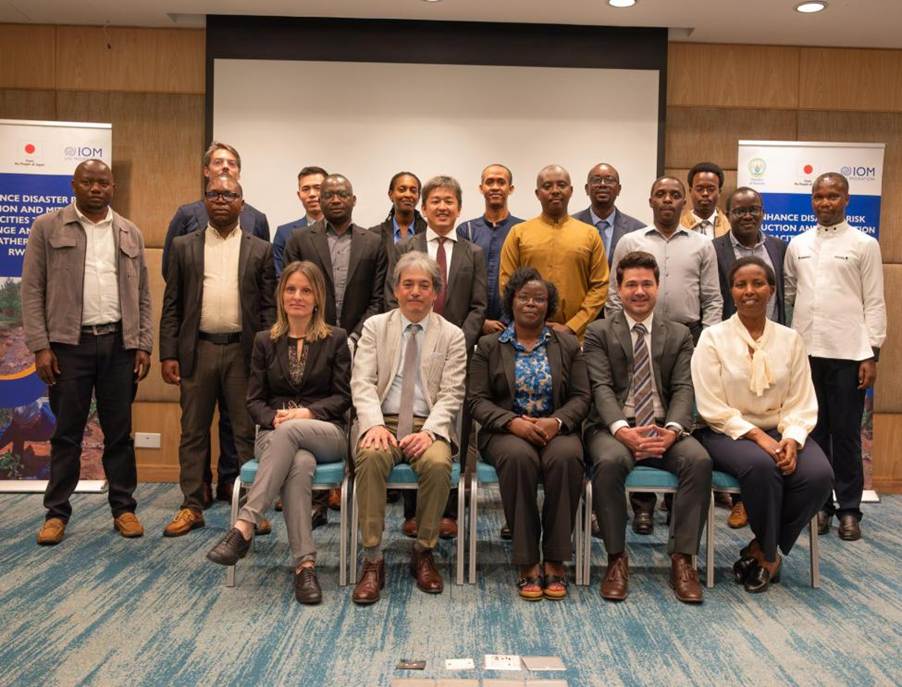
In a significant step forward for climate action in East Africa, the Government of Japan and the International Organization for Migration (IOM) officially launched a new 12-month climate resilience initiative in Kigali on March 31, 2026. The project, titled “Enhancing Climate Resilience through Local Innovation in Disaster Risk Reduction and Clean Energy Access” aims to prevent climate-related displacement and strengthen Rwanda’s preparedness systems through locally driven, community-level interventions.
The initiative forms part of a broader, ongoing collaboration between Japan and IOM in Rwanda and builds on a preceding programme focused on early warning systems and cleaner energy solutions.
According to IOM Rwanda, Japan pledged USD 1 million to support IOM’s disaster risk reduction efforts in the country, funding approved in the lead-up to the Ninth Tokyo International Conference on African Development (TICAD 9) as part of Japan’s commitment to leveraging its technology and private-sector expertise to address urgent socio-economic and climate challenges across Africa.
The launch was attended by senior officials from theJapan Embassy in Kigali, IOM Rwanda leadership, and key representatives from the Rwanda Environment Management Authority (REMA) and the Ministry in Charge of Emergency Management (MINEMA). The gathering underscored the multi-institutional commitment required to address climate risks that now affect almost every corner of this East African nation.
Why this initiative matters: Rwanda’s worsening climate threat
Rwanda is among East Africa’s most climate-vulnerable nations. The World Bank notes that over 80% of Rwanda’s disaster impacts are linked to climate change, with the frequency and severity of floods, landslides, and droughts having escalated significantly since the early 2000s.
The devastating floods and landslides of May 2023 alone resulted in 131 fatalities, 104 injuries, and over 18,000 people left homeless, with total damages and losses estimated at USD 187 million, a catastrophe that directly informed the design of current resilience programming.
In 2026 alone, the toll has continued to mount. IGIHE reported that between January 1 and March 11, 28 people were killed by climate-related disasters including 14 struck by lightning, three each in floods and landslides, and five in fires.
Beyond the human toll, the disasters destroyed crops on 220 hectares of land, damaged 14 roads, 22 bridges, 22 electricity lines, and 8 school classrooms. The Rwanda Dispatch further reported that between 2025 and early 2026, disasters killed 297 people and destroyed 2,268 hectares of crops with lightning accounting for 183 of those deaths.
Read also: Bottom Trawling threatens food security and coastal economies in Kenya and Ghana, new report warns
Rwanda’s topography particularly its steep, densely populated hillsides makes it especially susceptible to landslides triggered by heavy rainfall. The World Bank estimates that approximately 40% of Rwanda’s population lives in high-risk highland areas prone to landslides. Meanwhile, the Rwanda Climate Change Portal warns that rainy seasons are becoming shorter and more intense, particularly in the northern and western provinces precisely the areas where the new Japan-IOM initiative is focused.
| “We are grateful for the generous support from the people of Japan. This funding will significantly enhance Rwanda’s capacity to mitigate and adapt to the impacts of climate change. Continuing to develop partnerships with the private sector will not only bring valuable innovation, expertise and technology to our efforts, but also ensure a safer and more resilient future for the people of Rwanda.” ~ Ash Carl, Chief of Mission, IOM Rwanda |
What the project will do: Four pillars of action

The initiative is structured around four interconnected areas of intervention, each addressing a specific dimension of Rwanda’s climate vulnerability. First, the project will support community-based disaster management through risk mapping, contingency planning, and first-responder training.
This ground-level capacity building is critical in a country where disaster impacts are often felt most acutely in communities far from national response infrastructure. Coverage from both KT Press and IOM Rwanda confirms that the approach is explicitly designed to be locally driven, recognising that sustainable resilience must be built from the community upward.
Second, the programme will install lightning protection systems in public institutions located in high-risk areas; a critically needed intervention given that lightning was the single largest cause of disaster-related deaths in Rwanda in both 2025 and early 2026.
This work will be carried out by Otowa Electric Co., Ltd., a Japanese firm with specialist expertise in lightning protection technology, working under the coordination of MINEMA and REMA. The deployment of proven Japanese engineering solutions into community infrastructure represents a practical model of South-South and triangular technology cooperation.
Third, the initiative will expand access to clean energy solutions, a dual benefit that simultaneously reduces household energy poverty and lowers climate-linked risks. Jibu Gas One Ltd., a Japanese company providing liquefied petroleum gas (LPG) cooking equipment, will deliver cleaner cooking alternatives to reduce reliance on wood fuel, a major driver of both indoor air pollution and deforestation.
According to IOM Rwanda, Rwanda experienced a significant increase in fire alerts from May to August due to conditions exacerbated by seasonal climate patterns, making the clean energy component particularly timely.
Fourth and perhaps most strategically important, the initiative aims to prevent climate-related displacement addressing the growing phenomenon of people being forced to abandon their homes and livelihoods due to climate hazards. This aligns directly with IOM’s broader mandate on migration and climate change, which holds that migration should be a choice, not a necessity.
By building resilience at source, the project aims to keep communities viable and intact. This connects to Rwanda’s commitments under the Kampala Ministerial Declaration on Migration, Environment and Climate Change, a 2022 framework signed by 15 African countries.
Read also:
| “The Embassy of Japan is pleased to contribute to enhancing Rwanda’s climate-adaptation and mitigation efforts. This collaboration embodies Japan’s commitment to human security, focusing on protection, empowerment and solidarity.” ~ Embassy of Japan in Rwanda |
Building on a Track Record: Prior Japan-IOM Collaboration
The new initiative is not starting from scratch. It builds on an existing Japan-funded programme “Enhancing Adaptation and Mitigation Capacities to Climate Change and Extreme Weather Events in Rwanda” which has supported early warning system rollouts, improved evacuation site management, and expanded access to cleaner energy solutions. This layered approach to climate investment, where each phase strengthens the foundations laid by the last, reflects best practice in development programming.
Japan’s engagement in Rwanda’s resilience agenda extends beyond the IOM partnership. In February 2026, KT Press reported that Japan and UNICEF jointly launched a USD 1.3 million project to strengthen health and water services in Rwanda’s Western Province, an area severely affected by floods, landslides, and disease outbreaks. Together, these investments reflect Japan’s sustained commitment to human security in Rwanda, a concept that places people rather than states at the centre of security and development policy.
These bilateral efforts are complemented by multilateral support. In September 2025, theWorld Bank approved a USD 141 million Disaster Risk Management Development Policy Financing operation for Rwanda, anchored on three pillars: strengthening disaster risk governance, improving resilience investments, and enhancing emergency preparedness. Rwanda also maintains an ambitious NDC 3.0 climate action plan, which commits to a 38% reduction in greenhouse gas emissions by 2030 and a carbon-neutral economy by 2050.
What It Means for Rwanda and for Africa
For Rwanda, this initiative addresses a deeply felt gap. Despite significant progress Rwanda Dispatch reported that homes destroyed by disasters fell by a remarkable 78.59% between 2021 and 2024 the country remains highly exposed.
The Western Province alone lost over 15,780 homes to disasters between 2020 and 2024, with Rubavu district accounting for nearly half. The Japan-IOM initiative directly targets these most-vulnerable communities, combining structural protection (lightning systems), energy access (LPG stoves), and governance capacity (disaster risk management training) into a coherent package.
For Africa more broadly, the initiative models a replicable approach to climate-private sector partnerships in which bilateral donor funding is channelled through specialist UN agencies and delivered via private-sector technology providers.
This triangular structure of government, international organisation, and Japanese companies has the potential to be scaled or adapted across the continent’s many high-risk communities. As Nature Health journal noted in a 2026 paper, Rwanda is already among the most proactive nations globally in integrating climate change into health and social systems and initiatives like this reinforce that leadership.
Engage with us on LinkedIn: Africa Sustainability Matters