


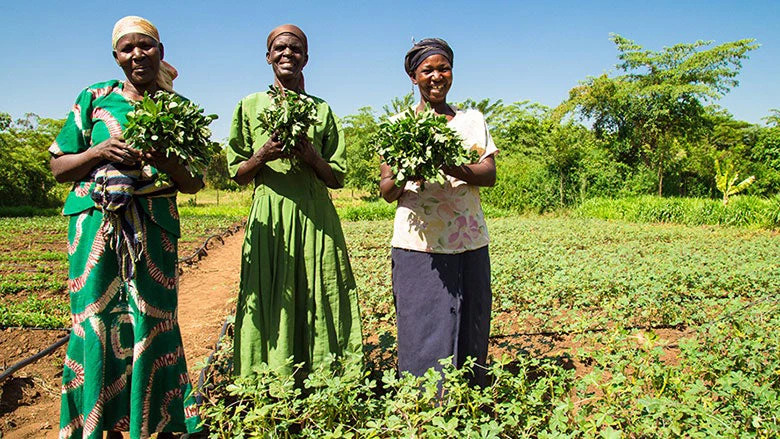
Kenya has renewed its call for increased investment in climate-smart agriculture, warning that escalating climate shocks are placing growing pressure on food production systems across Africa and threatening global food security.
Speaking at the 3rd Climate Change Global Business Summit on Africa held in Nairobi in March 2026, Kenya’s Cabinet Secretary for Agriculture and Livestock Development, Mutahi Kagwe, urged investors, development finance institutions and international partners to accelerate funding for agricultural transformation, arguing that Africa possesses the resources and potential to become a major contributor to global food security if supported with adequate investment.
Kagwe’s remarks come at a time when African countries are grappling with the increasing impacts of climate change, including prolonged droughts, erratic rainfall patterns, floods and rising temperatures that are disrupting agricultural production and undermining rural livelihoods.
“Climate shocks are no longer future risks, they are present disruptions. If agriculture in Africa fails, global food systems will feel the shock,”Kagwe said, highlighting the interconnected nature of global food supply chains and the importance of strengthening resilience within Africa’s agricultural sector.
Agriculture remains a cornerstone of Kenya’s economy, contributing significantly to employment, export earnings and food security. However, much of the country’s agricultural production continues to depend on rainfall, leaving farmers vulnerable to increasingly unpredictable weather conditions.
The situation reflects a broader continental challenge. Across Africa, climate-related disruptions are becoming more frequent and severe, affecting crop yields, livestock production and water availability. The consequences extend beyond rural communities, influencing food prices, economic growth and social stability.
Kagwe argued that addressing these challenges requires a fundamental shift in how climate adaptation and agricultural development are financed. While international climate discussions often focus on emissions reduction, he stressed that greater attention must be given to supporting practical adaptation measures that help farmers withstand climate-related risks.
According to the Cabinet Secretary, Africa should not be viewed merely as a beneficiary of global climate policies but as a critical partner in designing and implementing solutions. He emphasized the need for locally driven approaches that reflect the realities faced by farmers and communities on the frontlines of climate change.
“Africa must be part of shaping the solutions rather than simply receiving them,”Kagwe said, noting that sustainable adaptation strategies are most effective when informed by local knowledge, agricultural practices and environmental conditions.
The Cabinet Secretary also renewed calls for developed economies to honour their climate finance commitments, citing the principle that countries and industries responsible for the majority of historical greenhouse gas emissions should contribute more substantially to financing climate adaptation and resilience efforts in vulnerable regions.
He advocated for stronger implementation of the “polluter pays” principle, arguing that climate finance should be predictable, transparent and commensurate with the scale of the challenge facing developing countries.
Climate finance remains a contentious issue in international negotiations, with many African governments arguing that funding commitments made under global climate agreements have not been fully met. Development experts have repeatedly warned that inadequate financing is slowing efforts to build climate resilience across key sectors, including agriculture.
Kagwe noted that Kenya has already secured approximately $250 million in climate-related financing to support programmes aimed at strengthening resilience and promoting sustainable agricultural practices. These initiatives include investments in irrigation infrastructure, climate-smart technologies, improved seed systems and adaptive farming techniques designed to help farmers cope with changing environmental conditions.
Despite this progress, he acknowledged that significantly greater investment will be required to achieve meaningful transformation across the agricultural sector.
Kenya has increasingly positioned agriculture as an investment opportunity by introducing policy reforms aimed at attracting private capital and encouraging innovation. Government efforts have focused on improving productivity, expanding irrigation coverage and supporting the adoption of technologies that enhance resilience while reducing environmental impacts.

Climate-smart agriculture has emerged as a central pillar of these efforts. The approach integrates productivity improvements with climate adaptation and environmental sustainability, enabling farmers to increase yields while managing risks associated with climate variability.
Experts argue that scaling up climate-smart practices will be essential to meeting future food demand as Africa’s population continues to grow. The continent is projected to account for a significant share of global population growth over the coming decades, increasing the urgency of building agricultural systems capable of producing more food under increasingly challenging climatic conditions.
Kagwe maintained that with adequate investment, Africa could transform its agricultural sector from one characterized by vulnerability into one defined by opportunity, innovation and resilience.He pointed to the continent’s vast agricultural resources, expanding markets and youthful population as key advantages that could position Africa as a global leader in sustainable food production.
The call for increased climate-smart agriculture financing also aligns with the ambitions of the African Union’s Agenda 2063 framework, which identifies climate resilience, food security and sustainable economic development as critical pillars of the continent’s long-term development strategy.

https://www.aecweek-registration.com/2026/checkrobot?redirect=%2F2026%2F
As governments, investors and development institutions seek solutions to growing climate and food security challenges, Kenya’s appeal underscores the importance of directing greater financial resources toward agricultural adaptation. For African policymakers, the challenge is not only to protect existing food systems from climate-related disruptions but also to unlock the continent’s potential as a major driver of sustainable agricultural growth in the decades ahead.


