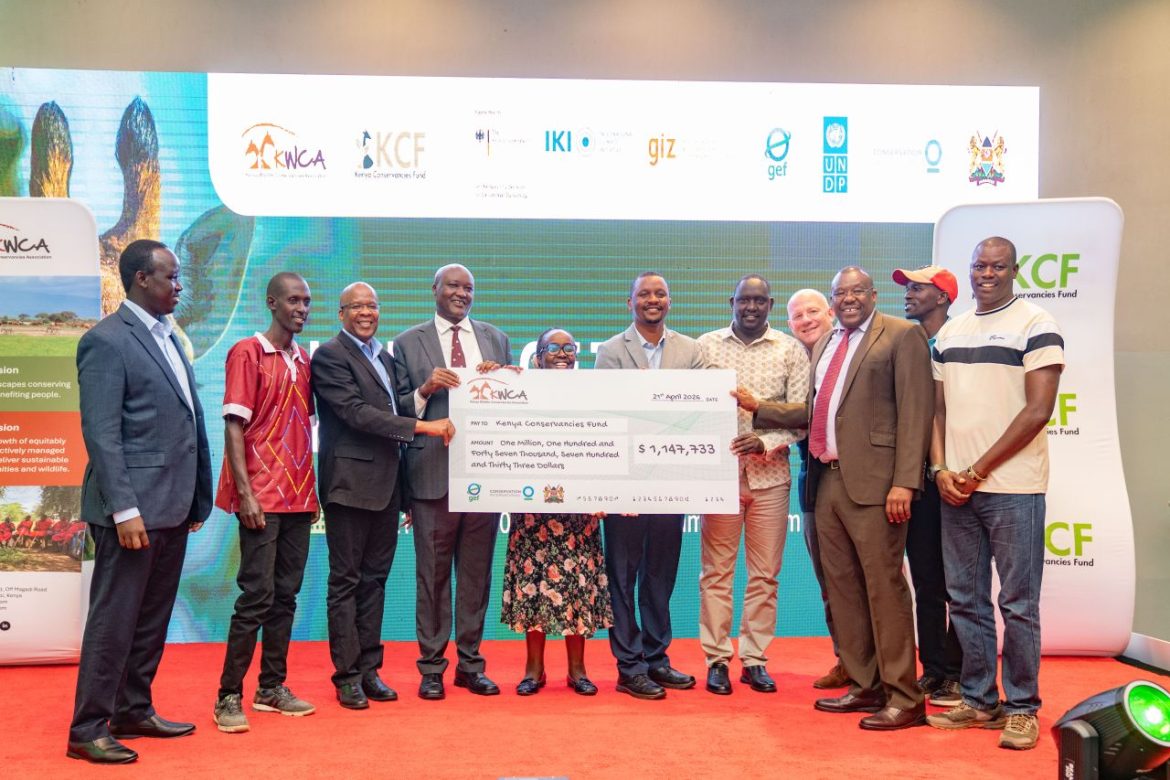
The Kenya Wildlife Conservancies Association (KWCA) has launched a new financing mechanism aimed at transforming community conservancies from donor-dependent projects into financially sustainable conservation enterprises, in a move aligned with Kenya’s ambitions to expand protected landscapes and strengthen climate resilience.

The newly unveiled Kenya Conservancies Fund (KCF) is designed to provide catalytic grants and technical support to community and private conservancies at early stages of development, helping them build governance systems, diversify income streams, and strengthen biodiversity protection. The initiative reflects a broader shift in conservation finance across Africa, where stakeholders are increasingly focusing on long-term economic viability rather than short-term project funding.
Kenya has made significant progress in expanding conservation areas over the past decade, particularly through community conservancies that now play a central role in wildlife protection, tourism, and rural livelihoods. Yet financing constraints remain a persistent barrier. According to KWCA, only a small fraction of the country’s more than 200 registered conservancies generate enough revenue to sustain operations independently.
Read also: Kenya strengthens livestock disease detection to safeguard farmers, food security and public health
The new fund seeks to address this gap by investing in the systems that enable conservation areas to thrive as economic enterprises. Rather than financing isolated activities, the facility will support institutional capacity, climate-smart enterprises, and governance reforms that position conservancies to attract private investment and generate long-term income.
Initial financing commitments signal growing international support for locally led conservation models. The fund has already secured contributions from global climate and biodiversity partners, including the German government’s International Climate Initiative and the Global Environment Facility, channelled through conservation organizations working in Kenya.
Over the next 18 months, the facility will support a cohort of selected conservancies to strengthen management structures, improve ranger capacity, and develop sustainable livelihood initiatives such as ecotourism, livestock management, and nature-based enterprises.
The launch comes at a critical moment for Kenya and other African countries seeking to meet global biodiversity commitments, including the target to conserve 30 percent of land and marine ecosystems by 2030 under the Global Biodiversity Framework.
Experts say achieving this goal will depend not only on expanding conservation areas but also on ensuring they are financially viable. Community conservancies often operate in regions facing competing land uses such as agriculture and settlement, making economic sustainability essential for long-term conservation success.
The KCF model reflects a growing emphasis on locally led climate and biodiversity action. By directing funding to community institutions rather than external project implementers, the initiative aims to strengthen ownership and accountability while delivering tangible benefits to local populations.
The fund will support activities ranging from habitat restoration and wildlife monitoring to governance training and infrastructure development, including ranger posts and eco-tourism facilities. It will also prioritize projects that promote participation by women and youth and generate income linked to conservation outcomes.
Grants are structured to provide early-stage support that helps conservancies transition toward investment readiness. Funding levels vary depending on the maturity of the conservancy, with catalytic grants typically ranging from approximately $5,000 to $120,000 to address critical operational and capacity needs. (KWCA)
In addition to financial support, recipients will receive technical assistance to strengthen management systems, financial accountability, and long-term planning—areas widely recognized as essential for scaling community-based conservation.
The creation of the Kenya Conservancies Fund also reflects a broader trend in conservation financing across Africa, where governments and development partners are exploring blended finance models that combine grants, loans, and private investment.
Such approaches are increasingly viewed as necessary to close the financing gap for nature-based solutions, particularly in regions where conservation areas provide ecosystem services such as carbon storage, water regulation, and climate adaptation.
Community conservancies have emerged as key actors in this landscape, supporting wildlife corridors, reducing human-wildlife conflict, and creating jobs in rural economies. However, many remain financially fragile due to limited access to capital and technical expertise.
By establishing a dedicated financing mechanism, KWCA and its partners aim to build a pipeline of resilient, investment-ready conservation enterprises capable of sustaining operations beyond donor cycles.
How to apply for the Kenya Conservancies Fund
Applications to the Kenya Conservancies Fund are open periodically through competitive funding calls announced by the Kenya Wildlife Conservancies Association.
Eligible applicants include:
- Legally registered community or private conservancies in Kenya
- Conservancies with clear governance structures and community participation
- Organizations demonstrating conservation significance and operational readiness
Application process:
- Monitor funding calls announced on the KWCA website and official communication channels
- Download and complete the required Concept Note template
- Submit the application via email to the grants management team
- Shortlisted applicants will be invited to submit a full proposal for final evaluation
Applications are reviewed through a structured, merit-based process that assesses governance capacity, conservation impact, and sustainability potential. Funding periods typically last up to two years, depending on project scope.
For prospective applicants, the official entry point for submissions and inquiries is:
- Email: grants@kwcakenya.com
- Organization: Kenya Wildlife Conservancies Association
- Programme: Kenya Conservancies Fund
As conservation finance evolves, initiatives like the KCF are expected to play a pivotal role in redefining how community-led conservation is funded—shifting the focus from dependency to long-term sustainability across Kenya’s landscapes.
Find more information, here.