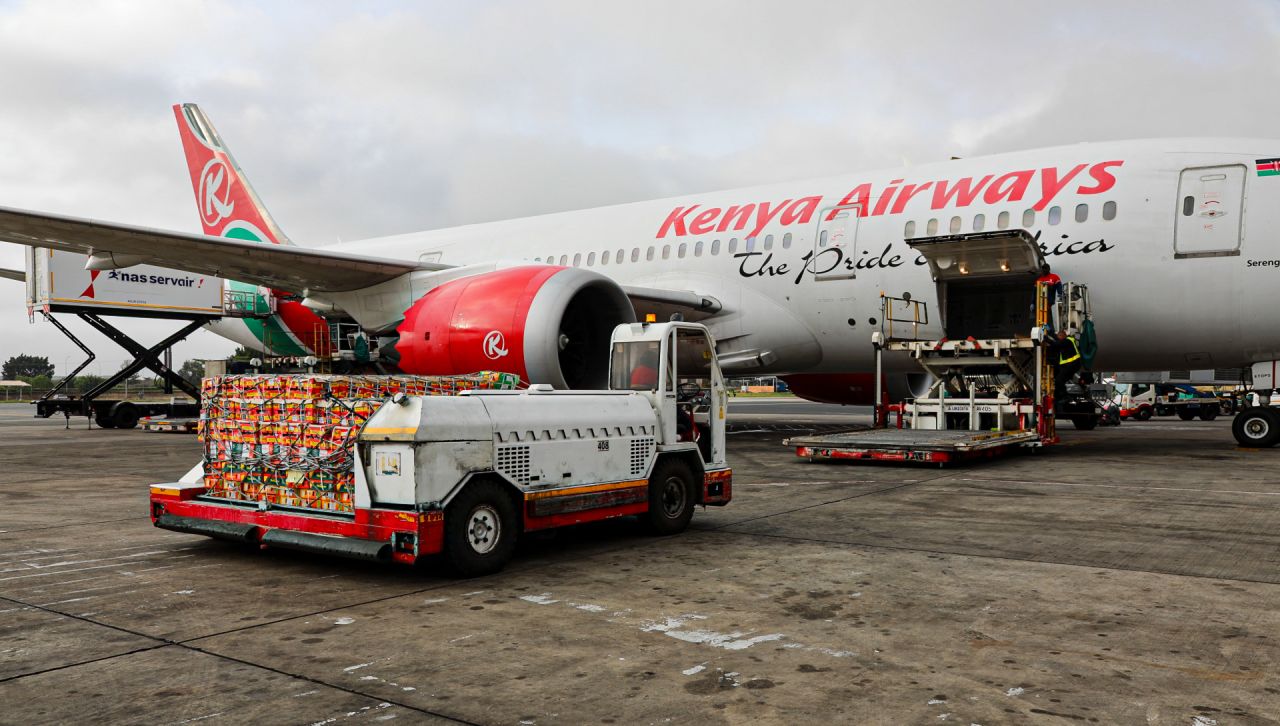

Kenya has officially shipped its first-ever consignment of Apple mangoes to the United Kingdom, marking a major breakthrough for the country’s horticultural sector and a fresh opportunity for smallholder farmers to access a high-value global market.
The pilot shipment, flagged off at Jomo Kenyatta International Airport (JKIA), brings into focus the convergence of agricultural innovation, trade facilitation, and standards compliance that has long constrained Kenya’s tropical fruit exports.
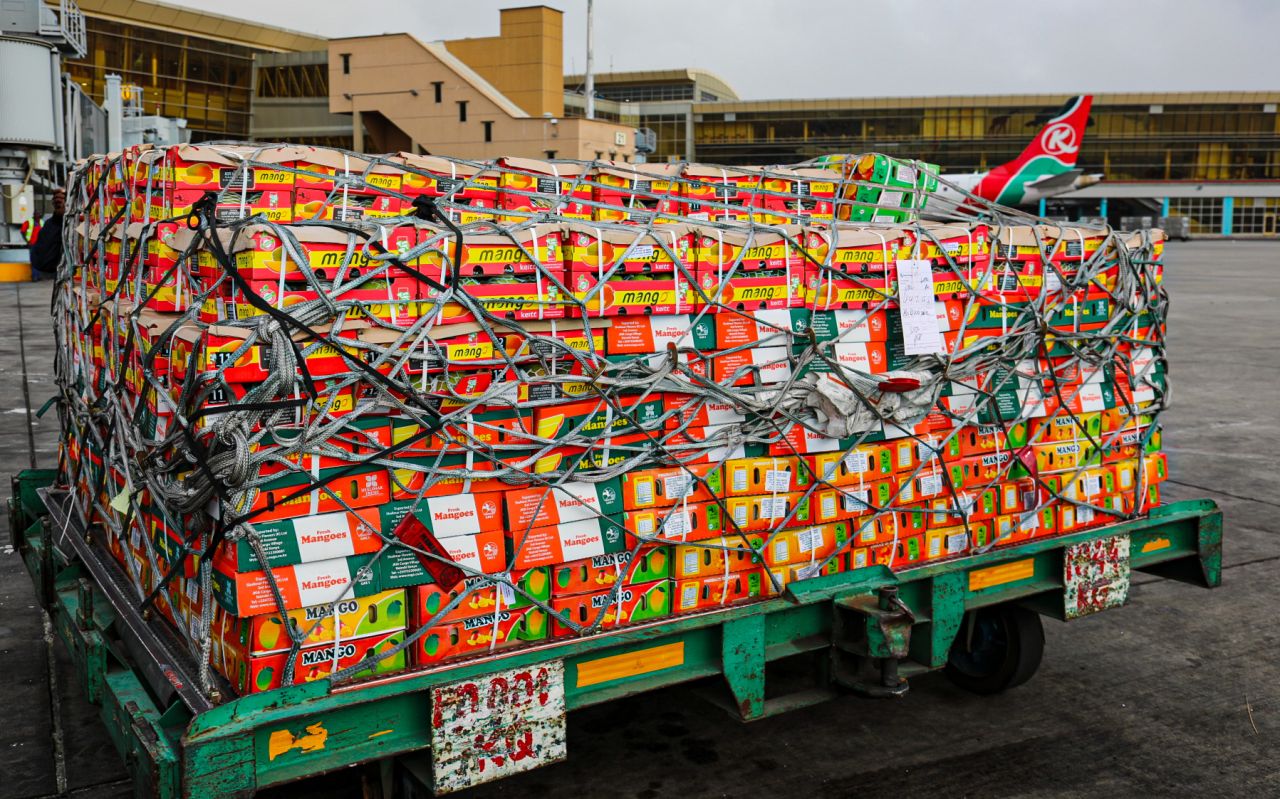
Image source: Kenya Airways
The inaugural consignment was dispatched under a coordinated effort involving the Kenya Export Promotion and Branding Agency (KEPROBA), TradeMark Africa, Kenya Airways, the Fresh Produce Consortium, and the Federation of Produce Exporters Association of Kenya (FPEAK), alongside government regulators and industry stakeholders.
Speaking at the flag-off, Floice Mukabana, KEPROBA Chief Executive Officer, highlighted the importance of quality-led market access, noting that the shipment represents Kenya’s readiness to meet stringent international standards while supporting higher incomes for farmers in key mango-growing regions.
Read also: Kenya Airways flies first African route, from Nairobi to Cape Town, on sustainable fuel
Apple mangoes, a variety widely grown in Kenya’s Makueni County, account for more than 80 percent of the country’s mango production. Known for their uniform size, reddish-yellow skin, low fiber content, and sweet, juicy flesh, the fruit has gained international recognition for premium quality.
The UK market, which imported approximately 81,000 tones of fresh mangoes in 2023, had long remained largely inaccessible to Kenya due to phytosanitary and compliance challenges, particularly fruit fly infestations that led to a self-imposed export ban between 2010 and 2014.
Since the ban was lifted, Kenya has invested heavily in the horticultural value chain, implementing national fruit fly surveillance, mandatory orchard and packhouse registration, enhanced residue testing, and robust cold-chain logistics. These interventions have strengthened traceability, improved post-harvest handling, and allowed local exporters to meet the rigorous food safety standards required by European markets.

The UK pilot shipment, therefore, serves as a litmus test for both regulatory compliance and commercial viability under the UK–Kenya Economic Partnership Agreement.
“Resuming Apple mango exports gives us a competitive edge and directly benefits smallholder farmers while demonstrating our capacity to compete in demanding global markets.” British High Commission Economic Counsellor Daniel Wilcox added that the shipment reflects progress in overcoming trade barriers under the Kenya–UK Strategic Partnership, which seeks to double bilateral trade by 2030.
Read also: Africa’s Cocoa, Coffee and Timber exports face new EU timeline under EU Deforestation Rules
The pilot comes at a time when Kenya’s mango sector contributes significantly to the national economy, producing an average of 650,000 tonnes annually, valued at over Sh10 billion. The majority of production is driven by smallholder farmers, with women and youth forming a substantial portion of the workforce.
The expansion into high-value markets like the UK not only diversifies revenue streams but also strengthens rural livelihoods, encourages investment in orchard management, and incentivizes adherence to global quality standards.
Apple mangoes are harvested twice annually, providing a consistent supply window that aligns with peak demand in international markets during the Northern Hemisphere festive season. For Kenyan exporters, access to the UK market offers an opportunity to move beyond volume-driven strategies toward premium, quality-led competitiveness, a shift that aligns with the National Export Development Strategy and broader continental goals of enhancing agribusiness value addition.
The trial shipment is being monitored closely for supply chain performance, including cold-chain integrity, logistics efficiency, and market acceptance. Industry stakeholders anticipate that if the pilot proves successful, it could pave the way for regular commercial volumes, reinforcing Kenya’s reputation as a reliable supplier of tropical fruit.
For British retailers and wholesalers, the initiative provides greater choice, consistent quality, and a trusted sourcing partner in East Africa.

The pilot was facilitated under the UK-funded Regional Economic Development and Trade Investment Programme, implemented by TradeMark Africa in partnership with the Government of Kenya and local industry players. Its success could have wider implications for African horticultural exports, demonstrating how strategic investment in compliance, infrastructure, and stakeholder collaboration can unlock premium markets for smallholder farmers.
Kenya’s entry into the UK Apple mango market illustrates a broader trend in African agricultural exports, where adherence to global standards, value chain modernization, and public-private partnerships increasingly determine competitiveness.
For local farmers, the shipment is more than a commercial transaction; it represents a concrete pathway to higher earnings, strengthened livelihoods, and integration into global trade networks.
Engage with us on LinkedIn: Africa Sustainability Matters
Engage with us on LinkedIn: Africa Sustainability Matters