


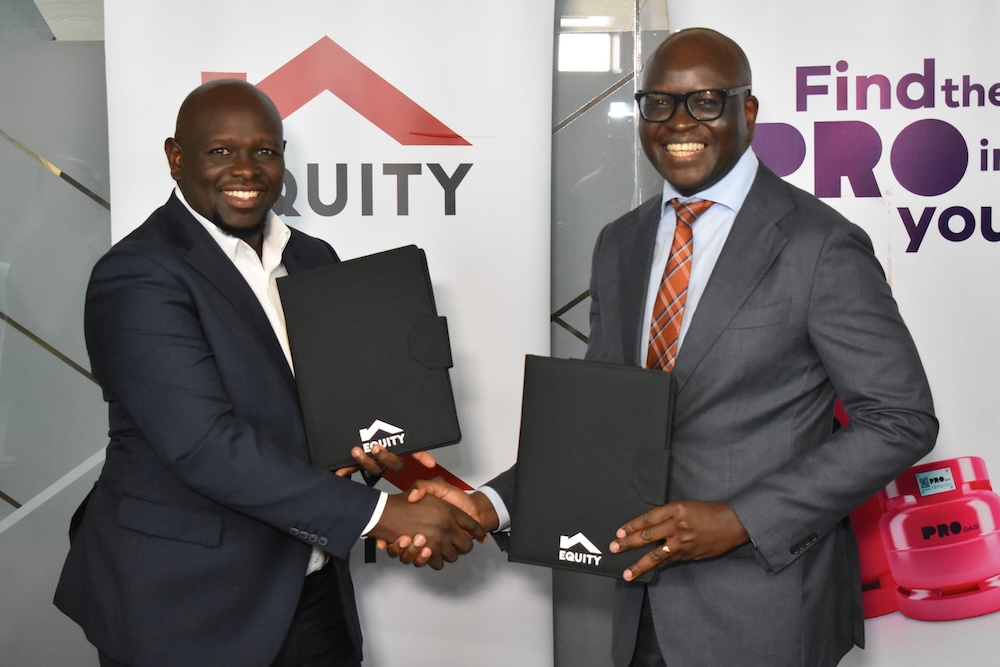
Proto Energy and Equity Bank have partnered to finance the conversion of vehicles and institutions to liquefied petroleum gas (LPG), seeking to address the upfront cost of equipment and infrastructure that has slowed adoption of the fuel in Kenya’s transport and institutional sectors. The partnership introduces an Autogas Conversion Loan for motorists and fleets and an Institutional LPG Conversion Loan for schools, colleges, universities and other organisations.
The agreement comes as Kenya attempts to expand access to cleaner cooking and alternative fuels while reducing reliance on more polluting energy sources. Under the arrangement, Equity Bank will provide financing, while Proto Energy will supply technical expertise, conversion services and LPG infrastructure through its OTOGAS brand.
The companies are targeting 40,000 vehicle conversions, double the approximately 20,000 vehicles that had been converted to Autogas by the end of 2024, according to the information provided by the companies. The financing model is intended to allow motorists, taxi and ride-hailing operators, public service vehicle owners, small businesses and corporate fleets to spread the cost of conversion rather than paying the full amount upfront. That financing component addresses a wider challenge in Kenya’s energy transition. The cost of acquiring new equipment or modifying existing infrastructure can prevent consumers and businesses from adopting cleaner technologies even where the longer-term operating economics are favourable.
According to the Energy and Petroleum Regulatory Authority (EPRA), national LPG consumption increased by 15% from 360,594 metric tonnes in 2023 to 414,861 tonnes in 2024. Per-capita consumption reached 7.9 kilograms, while the government has set a target of 15 kilograms per person by 2030. The government has also established an LPG Growth Strategy, approved by Cabinet in October 2023, with the objective of increasing LPG penetration and consumption. The strategy includes measures targeting households and public institutions, while the Ministry of Energy and Petroleum has been pursuing programmes to expand LPG use in learning institutions.
For institutions, the Proto Energy-Equity Bank arrangement could therefore address a different investment problem. The Institutional LPG Conversion Loan is designed to cover infrastructure, equipment and installation costs for organisations moving to LPG or expanding existing LPG systems. Schools and other institutions that depend on biomass fuels can face significant operational costs as well as challenges associated with storage, cooking efficiency and indoor air pollution. Kenya’s Ministry of Energy has identified the transition towards cleaner cooking as a national priority, with the government targeting universal access to clean cooking solutions by 2028.
The economic case for LPG is closely linked to affordability. Kenya’s National Cooking Transition Strategy recognises the need to address the cost of clean cooking technologies and fuels while also developing local value chains, employment and investment opportunities. The strategy also identifies potential benefits including lower dependence on traditional fuels, greenhouse-gas reductions and opportunities for carbon projects. For transport, the policy environment is becoming more complicated. Kenya is simultaneously promoting LPG adoption and electric mobility as it seeks to reduce the environmental and economic costs associated with petroleum-dependent transport.
EPRA has identified transport as a major consumer of imported petroleum products and has highlighted electric mobility as part of the country’s climate response. The government launched a National Electric Mobility Policy in 2026, reflecting a longer-term move towards electrification. Autogas therefore occupies a different position in the transition. Rather than replacing internal-combustion vehicles, LPG conversion allows existing eligible vehicles to operate on a dual-fuel system. This could provide an intermediate pathway for vehicle owners who cannot yet afford electric vehicles or operate in segments where charging infrastructure remains limited.
The commercial viability of the model will depend on several factors, including LPG prices, conversion costs, vehicle compatibility, availability of refuelling infrastructure and financing terms. Safety and regulatory compliance will also remain important as the Autogas market expands. EPRA maintains a licensing and regulatory framework covering LPG storage, transport and retail, including Autogas dispensing stations. The regulator has also emphasised consumer protection, safe handling and compliance as LPG use expands.
Proto Energy Managing Director Joel Kamau said the partnership was intended to combine financing with technical support and reliable supply, creating an end-to-end route for customers adopting LPG. Equity Bank Managing Director Moses Nyabanda said financing could help customers overcome the initial cost of switching to LPG. Equity confirms Nyabanda’s role as Managing Director of Equity Bank Kenya. The partnership also illustrates a broader role for commercial banks in Kenya’s energy transition. Financing is often the missing link between policy ambitions and actual adoption. Government strategies can establish targets, while energy companies can provide technologies, but consumers and businesses still require capital to make the initial investment.
For Kenya, the implications extend beyond individual vehicle conversions or institutional kitchens. Greater LPG adoption could support demand for storage, distribution, installation, maintenance and related services, creating opportunities across the energy value chain. At the same time, LPG remains a fossil fuel and should be considered within the context of Kenya’s broader transition towards renewable energy and electrification. Its role is therefore likely to depend on where it can provide practical emissions and efficiency improvements while the country develops longer-term alternatives.
The immediate test for the Proto Energy and Equity Bank partnership will be whether financing can translate into sustained adoption rather than simply increasing access to loans. For motorists, institutions and businesses, the calculation will ultimately depend on total conversion costs, fuel savings, reliability and safety. If those conditions align, the partnership could help expand Kenya’s LPG market while demonstrating how private finance can remove one of the practical barriers to energy transition: the upfront cost of changing how energy is used.


