


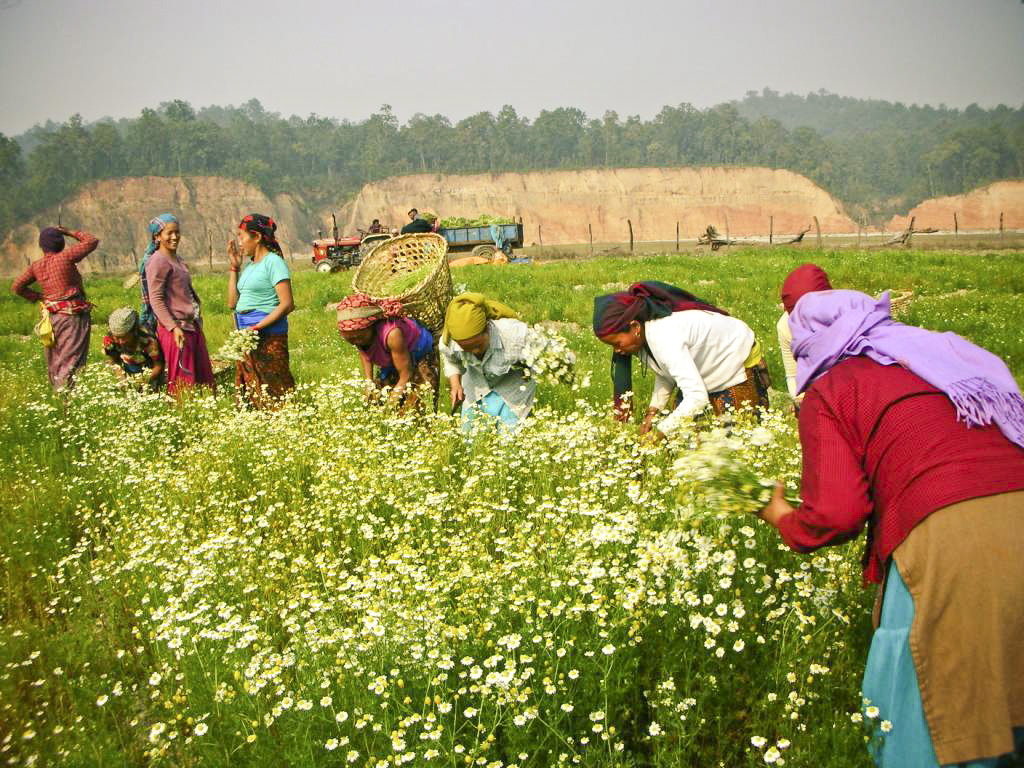
The Government of Luxembourg and the Global Landscapes Forum (GLF) have opened applications for impact funds to join the first cohort of Rio Changemakers, an AI-enabled marketplace designed to connect investors with locally led climate, biodiversity and nature projects across emerging markets and developing economies, with Africa among its priority regions.
Impact funds have until September 26, 2026, to apply for priority consideration, although applications will continue to be assessed on a rolling basis. The initiative is targeting both established funds and first-time or emerging fund managers investing in climate and nature solutions, particularly those supporting Indigenous Peoples, local communities, women, youth and other grassroots organisations.
The fund call represents the second side of the marketplace being assembled ahead of the planned unveiling of Rio Changemakers’ minimum viable product at the United Nations Climate Change Conference, COP31, in Antalya, Türkiye, in November. A separate call for climate and nature projects was launched in July, meaning the first cohort is now being assembled from both project developers and potential financing partners.
The initiative addresses a persistent problem in sustainable finance: capital and credible projects often exist but struggle to find one another efficiently. GLF has previously said that less than 15% of climate finance reaches locally led initiatives in the Global South, highlighting the gap between global financial commitments and capital reaching communities implementing projects on the ground.
Rio Changemakers is intended to address part of that problem by combining artificial intelligence, scientific information and investment data to make climate and nature opportunities easier for funds to identify, assess and compare. The platform is being developed by Luxembourg and GLF as a global marketplace connecting investors, funds and projects working across climate, biodiversity, landscapes and seascapes.
“The problem is not simply a shortage of capital or credible projects. Investors often struggle to efficiently find, assess and compare suitable opportunities,” John Colmey, Strategic Adviser and Co-founder of GLF and Senior Director at Landscape Alliance, said in announcing the fund call.
For African markets, the proposed platform could become particularly relevant as governments, development institutions and private investors seek to expand financing for restoration, regenerative agriculture, sustainable forestry, blue economy projects and community-based conservation.
Africa faces a combination of high climate vulnerability and significant investment needs, while many locally led projects remain too fragmented or small to attract conventional institutional capital. A digital marketplace that improves visibility and comparability could potentially reduce some of the transaction costs that have historically made such investments difficult to structure.
The challenge, however, extends beyond discovering projects. Investors often require reliable information on governance, financial performance, land tenure, climate impact, biodiversity outcomes and implementation capacity before committing capital. Rio Changemakers is therefore being positioned not simply as a project directory, but as an infrastructure layer intended to improve how opportunities are presented, assessed and matched with different forms of finance.
The platform’s developers say selected funds will be able to create fund profiles, access a growing pipeline of climate and nature projects, test matching and discovery functions and provide feedback on how the marketplace should evolve.
That feedback will be particularly important for emerging-market investment. Financing criteria developed primarily around developed-market assumptions can overlook the realities of African and other Global South markets, including informal land-use systems, community governance structures, currency risks, smaller transaction sizes and limited project-preparation capacity.
By involving funds before the platform is fully launched, Luxembourg and GLF are seeking to test whether the marketplace can reflect the practical requirements of capital providers while maintaining locally led decision-making.
“A marketplace is only useful if it reflects how capital is actually deployed,” Kamal Prawiranegara, Director of the Global Landscapes Forum, said. “Bringing funds into this first cohort is essential to ensuring the marketplace can create stronger pathways between investors and locally-led climate and nature solutions.”
Africa has been explicitly identified alongside Asia, the Pacific, Latin America and the Caribbean as a priority region for the first cohort. This gives African project developers and fund managers an opportunity to participate in the design of a financing platform before it moves beyond its pilot stage.
The potential significance for Africa is broader than climate finance alone. Nature-based investments can intersect with agricultural productivity, rural employment, water security, ecosystem restoration, tourism and local enterprise development. Better connections between projects and capital could therefore help move nature finance from predominantly grant-funded interventions towards a wider mix of concessional finance, impact investment and commercial capital.
At the same time, the use of artificial intelligence introduces a separate governance challenge. A platform that determines which projects become more visible to investors could influence where capital flows. Its algorithms, data sources and assessment criteria will therefore matter as much as the volume of capital it attracts.

The developers have indicated that the platform will emphasise trusted information, science-guided assessment and human involvement in decision-making. Technical partners STX Next and Bdub.digital are supporting the development of the marketplace, including its platform architecture, data and matching systems, user experience and governance workflows.
Rio Changemakers was launched at COP30 in Belém, Brazil, in November 2025 and entered a planned 12-month pilot phase. It is also positioned as a flagship initiative under Luxembourg’s Climate Nexus Investment Programme, which has committed €320 million over five years to scaling high-integrity, locally led nature-based solutions.
The next test will be whether the marketplace can move beyond improving visibility and actually convert that visibility into investment. For Africa, where climate and nature projects frequently face a combination of financing, preparation and risk barriers, that distinction will be critical.
If Rio Changemakers can demonstrate that better data, AI-enabled matching and stronger project visibility reduce the friction between local initiatives and global capital, it could offer a model for a more decentralised approach to climate and nature finance. Its success will ultimately be measured not by the number of projects listed on the platform, but by whether more capital reaches credible initiatives and communities delivering measurable results on the ground.


