


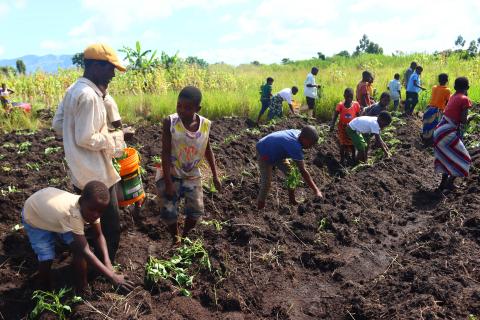
In Namibia’s Omaheke Region, Morukutu Primary School is using a school garden to combine agricultural education, nutrition support and environmental awareness, offering a practical example of how schools can contribute to broader development objectives beyond traditional classroom instruction. Located in the Epukiro Constituency, the initiative enables learners to gain hands-on experience in food production while supporting the school’s efforts to improve access to nutritious meals, according to local reports.
The project functions as an outdoor learning environment where pupils participate directly in planting, maintaining and harvesting crops under the guidance of teachers. By connecting theoretical agricultural science lessons with practical field experience, the school aims to strengthen learners’ understanding of crop production systems, natural resource management and sustainable farming practices. According to educators involved in the programme, experiential learning has helped improve student engagement and deepen comprehension of agriculture-related subjects by allowing learners to observe production processes first-hand.
 The initiative reflects a growing recognition across Africa that practical skills development can play an important role in strengthening education outcomes while preparing young people for future economic opportunities. Agriculture remains a significant source of employment across the continent, contributing substantially to livelihoods, food systems and rural economies. Yet many education systems continue to face challenges in linking classroom learning with real-world applications. School-based agricultural projects are increasingly being viewed as one way to bridge this gap.
Beyond its educational role, the Morukutu garden contributes to food support within the school community. Produce grown by learners is used to supplement meals, particularly for pupils residing in hostel facilities. In rural regions where food insecurity and nutritional challenges can affect educational outcomes, school gardens can provide an additional source of fresh produce while promoting awareness of healthy diets and local food production systems.
The initiative also carries broader environmental implications. Through participation in gardening activities, learners are introduced to concepts related to soil management, water conservation and sustainable agriculture. These lessons are becoming increasingly relevant across southern Africa, where climate variability, drought conditions and land degradation continue to place pressure on agricultural productivity and rural livelihoods. Developing environmental literacy among younger generations may help strengthen future resilience to these challenges.
However, the project also highlights the structural constraints facing many rural educational institutions. According to teachers involved in the programme, limited irrigation infrastructure, water shortages and insufficient access to gardening tools and agricultural inputs continue to affect the garden’s productivity. These challenges mirror wider constraints facing small-scale agricultural producers across Namibia and other African countries, where access to water and farming resources remains a key determinant of production capacity.
From a development perspective, the Morukutu initiative illustrates how relatively modest investments in school-based agriculture can generate multiple benefits across education, nutrition and skills development. Such programmes can strengthen learner engagement, support food security and expose young people to sectors that remain critical to national economies. They may also help cultivate interest in agriculture among younger generations at a time when many African countries are seeking to modernise agricultural systems and improve food self-sufficiency.
 The project aligns with Namibia’s broader priorities around education, agricultural development and school feeding programmes. It also reflects wider continental objectives under the African Union’s Agenda 2063, which emphasises youth empowerment, food security, sustainable livelihoods and skills development as foundations for long-term economic transformation.
As African governments continue to address challenges related to food security, youth unemployment and climate resilience, initiatives such as the Morukutu Primary School garden demonstrate how education institutions can contribute to development outcomes beyond academic instruction. By integrating practical agricultural learning with nutritional support and environmental awareness, the project offers a local example of how schools can help build human capital while strengthening community resilience.


