


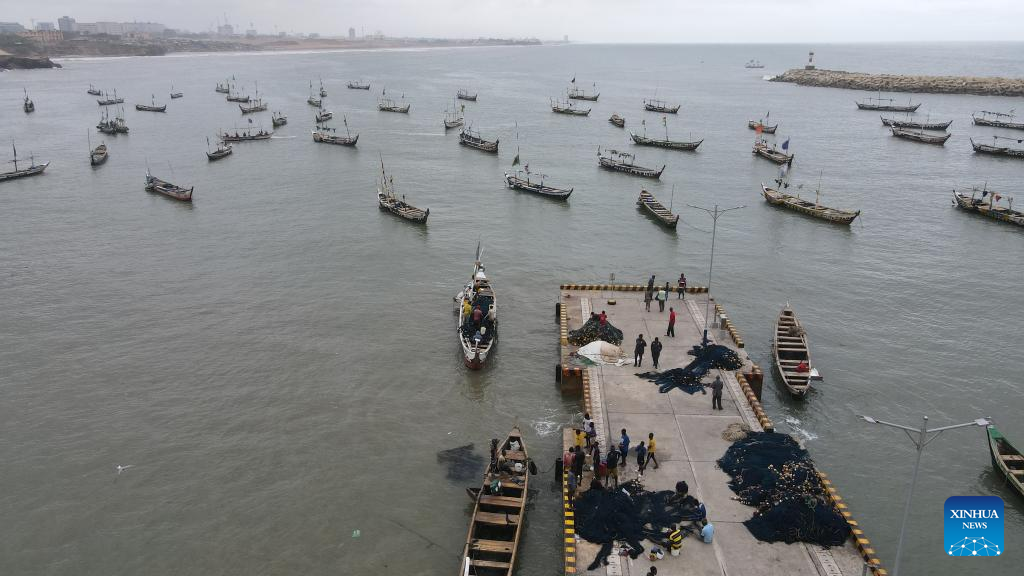
Ghana is moving forward with plans to develop a modern fishing port in the Shama District of the Western Region as part of a broader effort to modernize its fisheries sector, improve seafood handling infrastructure and support the sustainable management of marine resources amid declining fish catches.
The project, announced by Minister for Fisheries and Aquaculture Emelia Arthur on June 10, is expected to enhance fish landing and processing operations, create employment opportunities and stimulate economic activity in coastal communities that depend heavily on the fishing industry.
Although government officials have yet to disclose the project’s total investment value or construction timeline, preparations are said to be at an advanced stage. The proposed facility is expected to become a strategic addition to Ghana’s maritime infrastructure, reinforcing the Western Region’s position as one of the country’s most important fisheries hubs.
Ghana remains one of West Africa’s leading fishing nations alongside countries such as Senegal, Mauritania, Nigeria and Guinea. The fisheries sector plays a vital role in national food security, employment and livelihoods, supporting hundreds of thousands of people directly and indirectly through fishing, processing, transportation and trade.
According to Arthur, the Shama fishing port is intended to strengthen the economic prospects of coastal communities while improving operational efficiency across the fisheries value chain.
“We are determined to develop employment opportunities in the fishing sector and improve living conditions in coastal communities,” the minister said.
The Western Region already accounts for a significant share of Ghana’s fisheries infrastructure. Data from the Fisheries Commission indicate that the region hosts approximately one-third of the country’s fish landing sites and a quarter of its fisheries port infrastructure. The addition of a modern fishing port is expected to further enhance the region’s role in supporting domestic fish production and seafood distribution.
The project comes at a critical time for Ghana’s fisheries sector, which has experienced a prolonged decline in fish landings over the past two decades. According to data from the Food and Agriculture Organization (FAO), national fish catches have fallen from a peak of 496,770 tonnes in 1999 to approximately 384,370 tonnes in 2023, representing a decline of more than 22%.
Industry experts attribute the downturn to a combination of factors, including overfishing, increasing fishing pressure from expanding fleets and the continued prevalence of illegal, unreported and unregulated (IUU) fishing activities. Climate change has further intensified these challenges by altering marine ecosystems, affecting fish migration patterns and reducing the productivity of coastal waters.
The decline has raised concerns about the long-term sustainability of fish stocks and the livelihoods of communities that depend on marine resources. Fisheries remain one of the most important sources of animal protein in Ghana, making the sector’s health a critical component of national food security.
One of the structural challenges facing fisheries management in Ghana is the fragmented nature of fish landing operations. The artisanal fishing sector dominates national production and is dispersed across hundreds of landing sites along the coastline, making monitoring and enforcement more difficult. According to the Fisheries Commission, Ghana’s fishing fleet consists of approximately 14,323 active vessels, of which artisanal operators account for roughly 97%. These vessels currently operate across an estimated 263 landing sites spread throughout the country’s four coastal regions.

The widespread distribution of landing points has complicated efforts to regulate fishing activities, monitor catches and combat illegal practices. Fisheries experts argue that modern centralized infrastructure can play a key role in improving oversight, strengthening data collection and supporting more sustainable resource management.
Against this backdrop, the proposed Shama fishing port represents more than a logistics investment. It is also part of a broader effort to strengthen governance within the fisheries sector by creating infrastructure that enables better monitoring, improved traceability and enhanced compliance with fisheries regulations.
Modern fish landing facilities can contribute to sustainability objectives by improving catch handling, reducing post-harvest losses and creating more efficient supply chains. Better infrastructure also supports quality assurance standards that are increasingly important for domestic markets and export opportunities.
Beyond its environmental and operational benefits, the project is expected to deliver significant socio-economic gains. Fishing remains a major source of employment in Ghana’s coastal regions, and investments in port infrastructure often generate opportunities across multiple sectors, including construction, transportation, processing, cold storage and retail trade.
The development aligns with Ghana’s broader efforts to strengthen the blue economy and unlock greater value from marine resources while ensuring their long-term sustainability. As competition for marine resources intensifies and environmental pressures continue to grow, investments in modern fisheries infrastructure are becoming increasingly important for balancing economic development with conservation objectives.

https://www.aecweek-registration.com/2026/
For Ghana, the Shama fishing port could become a critical asset in revitalizing a sector that remains central to livelihoods, nutrition and economic activity. By improving operational efficiency, supporting sustainable fisheries management and creating new opportunities for coastal communities, the project has the potential to play a significant role in shaping the future of the country’s maritime economy.
As preparations advance, stakeholders will be watching closely to see how the initiative contributes to reversing declining fish production trends while strengthening the resilience and competitiveness of Ghana’s fisheries sector in the years ahead.


