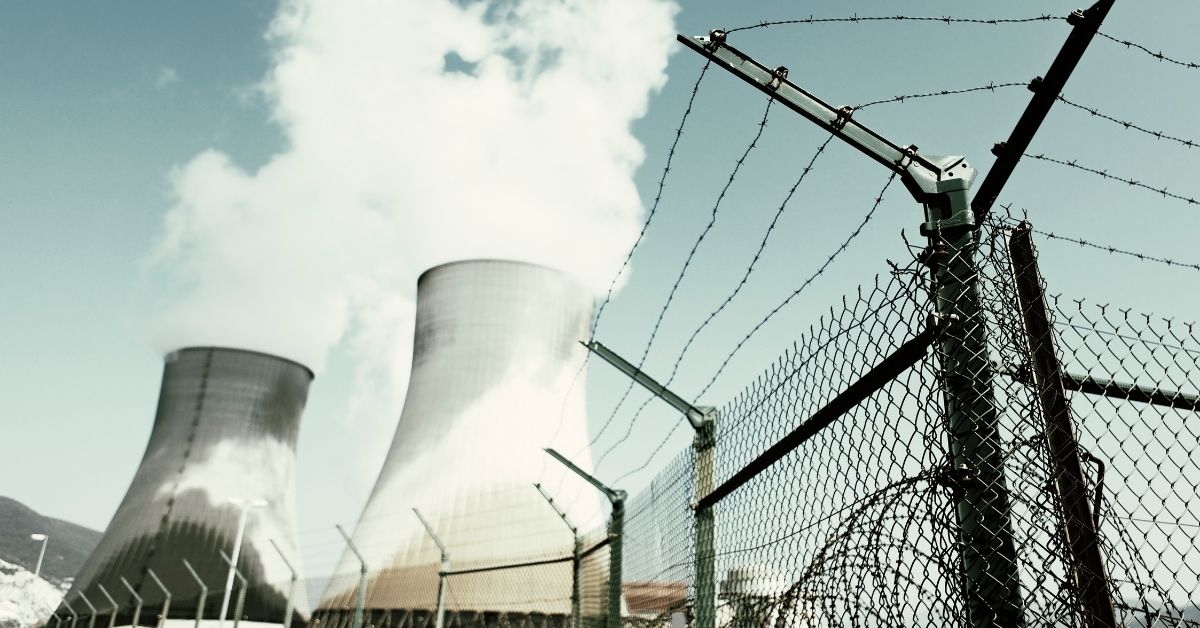

The UK government has formally designated nuclear power as eligible for green financing from November 27, a decision that recalibrates the definition of sustainable energy and is expected to influence which technologies attract green capital and how governments and multilateral lenders steer long-term energy investments as global electricity demand continues to rise.
Though the policy originates in London, it carries implications for developing regions, particularly Africa, where energy deficits collide with climate obligations and where the World Bank has now ended a 60-year prohibition on nuclear lending.
By allowing green gilt and green savings bond proceeds to support nuclear projects, the UK places nuclear alongside renewable energy and efficiency programmes that have historically dominated sovereign green spending. The shift breaks with decades of caution in global finance circles, where nuclear has struggled to gain green credentials because of waste management concerns, long construction timelines and the cost of mega projects.
The reaction has been mixed. Some investment banks have already warned that the step may deepen divisions among environmental groups and institutional investors who continue to reject nuclear as an appropriate use of green-labelled capital. However, the move reflects a broader change in the energy landscape.
After years of hesitancy, governments are confronting the reality of rising electricity demand driven by electrification, population growth and the surge in energy-hungry data centers. Nuclear power, despite its challenges, offers round-the-clock low-carbon generation at a time when many countries are revisiting their assumptions about baseload supply. That reassessment is not isolated to Europe. At COP28, a coalition of countries from North America, Asia, Europe and the Middle East endorsed a commitment to triple global nuclear capacity by mid-century.

Financial institutions have been quietly recalibrating as well. During Climate Week NYC last year, 14 major banks, including Bank of America, Barclays, BNP Paribas, Citigroup and Goldman Sachs, signaled support for expanded nuclear deployment. Their rationale rests on a combination of energy security concerns and the view that keeping global temperature rise below 1.5°C will require a broader mix of technologies than wind and solar alone can deliver at their current pace.
Even so, confidence in the economics of nuclear remains fragile. A recent analysis by the Atlantic Council warned that cost overruns and decade-long construction timelines could still deter commercial lenders. Most nuclear facilities historically required heavy state participation precisely because private capital struggled to manage the risk profile. This uncertainty has prompted renewed interest in small modular reactors, which promise shorter build times and potentially lower capital requirements.
European development financiers are now revisiting their own restrictions. The European Bank for Reconstruction and Development, long wary of involvement beyond safety and decommissioning programmes, has announced that it is open to supporting SMR projects if credible demand emerges.
The most dramatic shift came from the World Bank earlier this year. After maintaining an institutional embargo on nuclear lending for six decades, its board adopted an “all of the above” energy strategy that now allows nuclear projects to be financed alongside solar, wind, hydroelectricity, geothermal systems and natural gas.
The policy change followed sustained diplomatic pressure from the United States, which argued that developing economies cannot meet rising demand with intermittent renewables alone. World Bank president Ajay Banga framed the decision as an acknowledgement that reliable power remains a binding constraint on development and that nuclear must be part of the available toolkit.
For African countries, the ripple effects are immediate. The continent’s electricity shortfall is well documented: hundreds of millions lack basic access, and grid reliability issues hinder industrialization and digitalization. Nuclear energy has been discussed in pockets across the continent, from South Africa’s long-standing ambitions to Kenya, Ghana and Rwanda exploring SMR partnerships, but financing has been the decisive hurdle. With the World Bank’s policy reversal and the UK’s green financing update, options that were once off-limits are now part of mainstream energy planning conversations.
Still, the politics of nuclear remain sensitive, and the economics even more so. Many African governments are prioritizing modular and scalable technologies that match their fiscal space and grid constraints. SMRs, which require smaller sites and can be integrated into weaker grids, are likely to draw more interest than traditional large reactors. But any nuclear deployment will demand rigorous regulatory frameworks, specialized skills training, and long-term waste management strategies, none of which can be developed overnight.

The UK’s decision signals that lines once considered fixed in sustainable finance are being redrawn. It suggests that green-labelled capital will increasingly follow pragmatic energy strategies rather than ideological boundaries.
Whether this shift produces a durable market for nuclear finance will depend on how investors reconcile climate ambition with cost, construction risk and public acceptance. But the momentum is clear: governments and lenders are preparing for an energy future in which nuclear is no longer peripheral but part of the central conversation about decarbonization.
Engage with us on LinkedIn: Africa Sustainability Matters
Engage with us on LinkedIn: Africa Sustainability Matters