


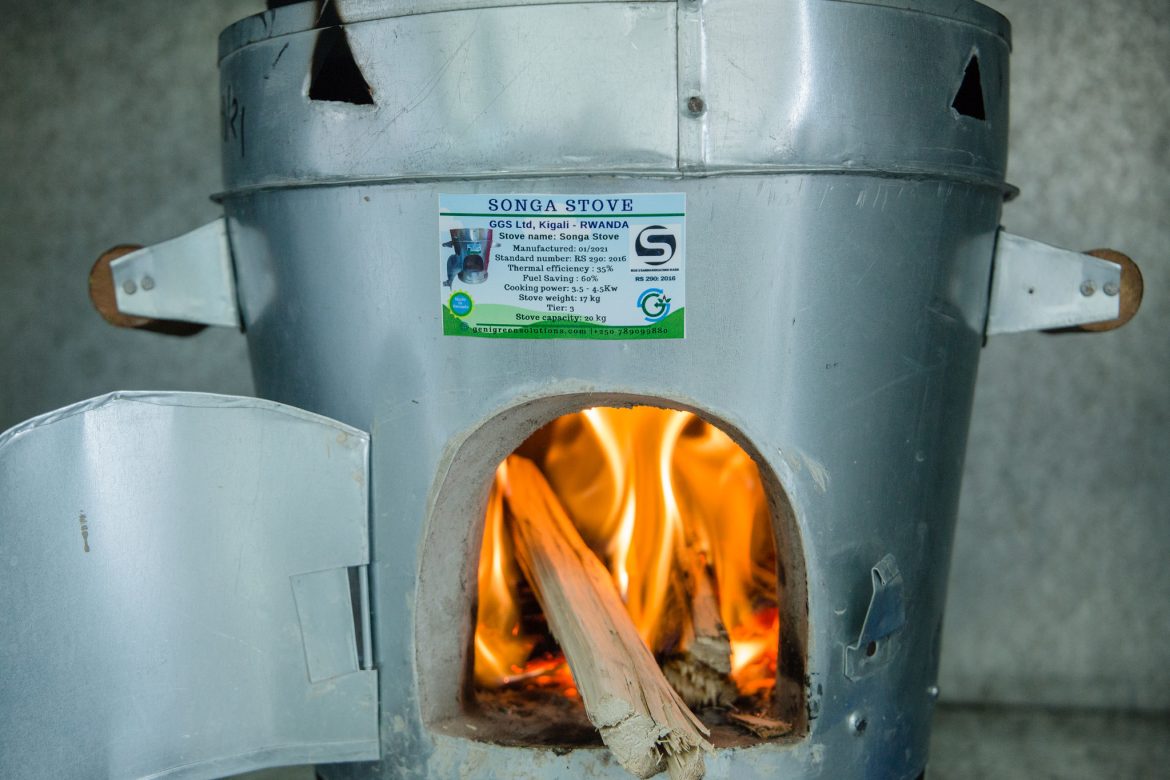
Rwanda has authorised up to 1.77 million tonnes of carbon dioxide equivalent from an improved cookstove project to advance towards eligibility under the Carbon Offsetting and Reduction Scheme for International Aviation (CORSIA), strengthening the country’s participation in international carbon markets while linking household energy improvements with global demand for emissions reductions.
The Rwanda Environment Management Authority (REMA) issued the Letter of Authorization on July 28, 2026, for the Rwandan Improved Cookstove Project, developed with project partner Likano and registered under Verra’s Verified Carbon Standard as Project 2984. The authorisation allows the approved mitigation outcomes to progress through the requirements needed for potential use under CORSIA, subject to meeting the scheme’s remaining eligibility conditions.
The development is significant because CORSIA requires airlines participating in the international aviation scheme to use eligible emissions units from approved programmes and projects. The International Civil Aviation Organization (ICAO), which administers CORSIA, has established eligibility requirements intended to ensure that units used by airlines represent credible emissions reductions and meet safeguards around environmental integrity and accounting.
Rwanda’s authorisation also introduces an important element of Paris Agreement accounting. The country will apply a corresponding adjustment to the authorised emissions reductions, with the adjustment to be reflected in its Biennial Transparency Report under Article 13 of the Paris Agreement. This is designed to prevent the same emissions reduction from being counted both towards an international transfer and Rwanda’s own climate target.
That accounting requirement is increasingly important as African countries seek to monetise emissions reductions through international carbon markets. Carbon credits can generate additional financing for climate and development projects, but international transfers also create the risk of double counting if national governments and foreign buyers claim the same reduction.
Under Article 6 of the Paris Agreement, countries participating in international cooperation on mitigation outcomes are required to maintain accounting arrangements that provide greater clarity over the ownership and use of transferred reductions. Rwanda’s use of a corresponding adjustment therefore places the cookstove project within a wider framework of national carbon accounting and international climate-market governance.
The project’s potential CORSIA pathway comes as airlines face an expanding requirement for eligible carbon units. IATA has estimated that airlines could require more than 200 million eligible units during CORSIA’s first phase, while market data cited in the original report indicates that only about 38 million to 40 million units were tagged for that phase. The difference highlights the importance of projects that have secured host-country approval and can satisfy the additional requirements for international aviation use.
However, Rwanda’s authorisation should not be interpreted as meaning that all 1.77 million tonnes are immediately available to airlines. Government authorisation is an important step, but units must still satisfy CORSIA’s applicable eligibility requirements and the rules governing the underlying carbon-credit programme before they can be used for compliance.
The project’s registration under Verra’s Verified Carbon Standard provides another layer of project-level assessment and accounting. Verra has publicly listed the Rwandan Improved Cookstove Project as Project 2984, bringing the project into an established carbon-crediting framework. The interaction between Verra’s project methodology, Rwanda’s national authorisation and CORSIA’s international requirements illustrates the increasingly complex regulatory chain through which carbon assets must pass before reaching international buyers.
The underlying technology also has significance beyond carbon markets. Improved cookstoves are intended to reduce the quantity of fuel required for cooking compared with less efficient traditional cooking methods. Where projects achieve genuine fuel savings, they can reduce associated greenhouse gas emissions while potentially lowering pressure on biomass resources.
Clean cooking remains an important development issue across Africa. The International Energy Agency estimates that hundreds of millions of people in sub-Saharan Africa continue to lack access to clean cooking solutions, leaving households dependent on traditional biomass, charcoal or other polluting fuels. The resulting energy burden has implications for household expenditure, forest resources, indoor air pollution and time spent collecting fuel.
For Rwanda, integrating clean cooking with carbon finance provides a potential mechanism for expanding investment in improved household energy technologies. Revenue associated with carbon credits can help finance project development and distribution, although the financial viability of such programmes depends on the quality of the credits, market prices, project costs and the ability to demonstrate actual emissions reductions.
The environmental integrity of these projects will therefore remain important. Carbon finance creates economic value only when emissions reductions can be measured with reasonable confidence. For improved cookstoves, this can involve establishing credible baselines for previous cooking practices, measuring fuel consumption and demonstrating that reported savings are attributable to the intervention.
The issue is particularly relevant because carbon markets have faced scrutiny over the quality and additionality of credits. A cookstove project may generate substantial volumes of credits on paper, but the climate value depends on whether the technology is actually used, whether fuel consumption falls as expected and whether the resulting emissions reductions are accurately measured.
Rwanda’s national oversight provides an additional governance layer. REMA’s authorisation means the government retains a role in determining which mitigation outcomes can be transferred internationally. This is increasingly important as African governments seek to ensure that carbon markets support national climate strategies rather than operating independently from domestic emissions accounting.
The development also reflects Rwanda’s broader efforts to strengthen its carbon-market architecture. The country has been developing institutional arrangements for Article 6 cooperation and carbon-market participation as governments across Africa seek to attract additional climate finance through international mitigation transactions.
For African economies, this emerging market could become particularly relevant in sectors where conventional climate finance remains insufficient. Agriculture, forestry, renewable energy, waste management and clean cooking all have potential to generate emissions reductions, but converting that potential into finance requires credible measurement systems, strong regulation and access to international buyers.
CORSIA creates a specialised demand channel because airlines need units that meet the scheme’s requirements. The aviation sector has limited options for rapidly eliminating all emissions from international flights, making high-integrity carbon units part of the mechanism designed to address emissions growth under the scheme.
ICAO has established CORSIA in phases, with the first phase running from 2024 to 2026 for participating states, followed by a second phase from 2027 to 2035. The scheme’s implementation therefore creates a continuing market for eligible units, although the volume and type of credits that can qualify depend on ICAO’s eligibility rules and subsequent decisions.

Rwanda’s project is consequently relevant not only because of its size but also because it demonstrates the connection between domestic development interventions and specialised international carbon demand. A household energy project can potentially generate internationally tradable climate assets if it meets national and international accounting requirements.
There are also broader implications for Rwanda’s climate finance strategy. The country’s ability to authorise mitigation outcomes while applying corresponding adjustments can help establish institutional credibility with international buyers. For investors and project developers, clarity over national approval procedures can reduce regulatory uncertainty, although project-specific environmental and social risks will continue to require assessment.
The same experience may provide lessons for other African countries developing Article 6 frameworks. Governments need to establish clear rules governing project approval, carbon ownership, monitoring, reporting, verification, corresponding adjustments and the relationship between internationally transferred mitigation outcomes and national climate targets.
The challenge will be ensuring that carbon-market development produces measurable economic and environmental benefits. If revenues remain concentrated among intermediaries or project developers without sufficient investment in local communities and clean-energy access, the development impact may be limited. Conversely, well-designed projects could provide additional resources for household energy improvements while strengthening national climate-finance systems.
Rwanda’s improved cookstove authorisation therefore represents more than a regulatory milestone for a single carbon project. It illustrates how African governments are increasingly positioning domestic climate interventions within global carbon markets, while attempting to retain control over national emissions accounting and the international transfer of mitigation outcomes.
The next stage will be determining whether the authorised reductions can satisfy all remaining CORSIA requirements and ultimately generate demand from airlines. For Rwanda, the process will test the effectiveness of its carbon-market institutions and the ability of a domestic clean-cooking intervention to meet the increasingly demanding standards of international climate finance.
For Africa more broadly, the development highlights a central question for carbon markets: whether international demand for emissions reductions can be converted into reliable financing for projects that address both climate objectives and development needs. Rwanda’s approach, combining national authorisation, corresponding adjustments, carbon-credit standards and international aviation rules, provides one example of how that system is beginning to take shape.


