


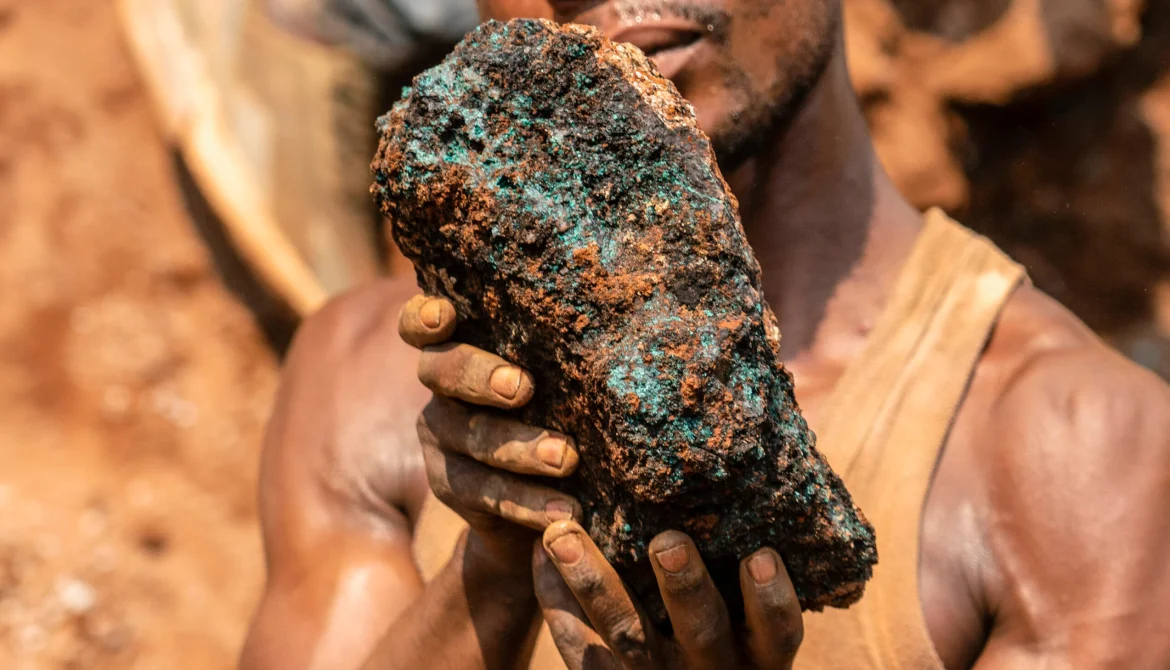
Critical metals are becoming increasingly important to the global energy transition, digital economy and advanced manufacturing, placing resource-rich African countries at the centre of a rapidly changing strategic market. Lithium, cobalt, nickel, rare earth elements, platinum-group metals and other critical minerals are essential to batteries, renewable energy technologies, electric vehicles, electronics and advanced industrial applications, but their growing economic value is also exposing weaknesses in supply chains, environmental governance and resource management that African governments will need to address if mineral wealth is to translate into durable development.
The significance of these metals extends beyond their role as inputs into emerging technologies. Lithium is central to rechargeable batteries used in electric vehicles and grid-scale energy storage, while cobalt and nickel are important components of several battery chemistries. Neodymium and other rare earth elements are used in high-performance permanent magnets, including those required for electric motors and wind turbines. Platinum-group metals, meanwhile, have applications ranging from industrial processes to clean-energy technologies.
Demand for these materials is being driven by overlapping transitions in energy, transport and digital infrastructure. As countries seek to reduce carbon emissions and strengthen electricity systems, investment in renewable generation, battery storage and electric mobility is increasing the strategic importance of minerals needed to manufacture these technologies. At the same time, demand from electronics, defence, aerospace and advanced manufacturing is adding further pressure to supply chains.
For Africa, the shift creates both an economic opportunity and a governance challenge. The continent possesses significant deposits of several minerals considered critical to the global energy transition, including cobalt in the Democratic Republic of Congo, lithium in Zimbabwe, manganese in South Africa and Gabon, platinum-group metals in South Africa and Zimbabwe, and graphite in countries including Mozambique, Tanzania and Madagascar. The ability to convert these resources into broader economic value, however, will depend on how countries manage extraction, processing, environmental impacts, taxation and local participation.
The traditional model of exporting unprocessed minerals leaves producing economies exposed to volatile commodity prices while limiting opportunities for industrial development. A more strategic approach would place greater emphasis on processing, refining, recycling and the development of supporting industries. Such a shift could allow African countries to capture more value from mineral supply chains while creating skilled employment and expanding domestic industrial capacity.
Recycling is becoming particularly relevant as governments and companies seek to reduce pressure on primary mineral production. Recovering critical materials from batteries, electronic equipment and other industrial products could provide an additional source of supply while reducing waste. For African economies, developing recycling capacity could eventually create opportunities in urban mining, manufacturing and circular-economy industries, although these markets require appropriate infrastructure, technical expertise and regulatory systems.
Read also: https://link.springer.com/chapter/10.1007/978-3-032-29064-9_2
The environmental costs of mineral extraction remain a significant constraint. Mining can generate large quantities of waste, consume substantial volumes of water and affect land, forests and surrounding communities. Poorly managed operations can also expose workers and residents to hazardous substances. The risks are particularly important in regions where mining takes place close to agricultural land, water systems or densely populated communities.
Some of the metals themselves can present occupational and environmental risks. Neodymium, for example, has limited biological utility and exposure to certain forms of its dust or compounds can cause irritation and potentially affect respiratory and other systems at sufficiently high exposure levels. Such risks underline the importance of occupational health standards, environmental monitoring and proper handling throughout the mineral value chain rather than focusing regulation solely on the point of extraction.
The governance challenge is complicated by the strategic competition surrounding critical minerals. Governments in the United States, Europe, China and elsewhere are seeking to secure supply chains for materials considered essential to energy security, industrial competitiveness and national security. African mineral producers therefore have greater leverage in negotiations with international investors, but they also face pressure to make decisions quickly as global demand for resources intensifies.
For African governments, the central policy question is increasingly how to attract investment without weakening environmental safeguards or allowing mineral development to reproduce longstanding patterns of economic dependency. Predictable licensing regimes, transparent contracts, credible taxation systems, community consultation and enforceable environmental standards are important not only for public accountability but also for investor confidence.
Scenario analysis can provide one mechanism for managing these uncertainties. Governments and companies can assess how changes in mineral prices, technological innovation, geopolitical tensions, environmental regulations, recycling rates and demand for electric vehicles could affect national economies and individual projects. Such analysis can help policymakers prepare for different supply and demand conditions rather than basing mineral strategies on a single expected trajectory.
Technological change is particularly important. Battery chemistries can evolve, new materials can emerge and manufacturers can reduce their reliance on particular minerals. A mineral that is strategically important today may face weaker demand if a commercially viable substitute becomes available. Conversely, new applications in aerospace, medical technology, renewable energy and advanced engineering could create unexpected demand for other materials.
This uncertainty makes long-term mineral governance more complex than simply increasing extraction. African countries will need institutions capable of monitoring markets, assessing emerging technologies and adjusting policies as conditions change. Geological data, digital monitoring systems and stronger cooperation between governments, universities and industry could improve the ability of policymakers to make decisions based on evidence.
Regional cooperation could also become more important. Many African mineral supply chains cross national borders, while infrastructure required for processing and exporting minerals can be expensive for individual countries to develop. Coordinated investment in railways, ports, electricity systems and processing facilities could improve the economics of regional mineral value chains and strengthen Africa’s bargaining position in global markets.
The African Continental Free Trade Area provides a broader framework through which mineral-producing countries could seek to develop regional value chains rather than operating primarily as exporters of raw materials. Linking mineral extraction with manufacturing, engineering services and renewable energy infrastructure could help translate resource demand into wider industrial development.
The strategic importance of critical metals therefore extends beyond the mining sector. Their development affects public revenues, infrastructure investment, energy security, employment, manufacturing competitiveness and foreign investment. It also creates long-term environmental liabilities if extraction is poorly managed or abandoned sites are not properly rehabilitated.
For investors, ESG considerations are increasingly becoming part of the commercial equation. Environmental damage, unsafe working conditions, community disputes or opaque ownership structures can create operational and reputational risks that affect financing and market access. For African producers seeking international capital, credible environmental and social safeguards can therefore serve as an economic asset rather than simply a regulatory requirement.
 The challenge for Africa is to use the current critical-minerals cycle to build productive capacity that survives beyond the commodity boom. That means strengthening geological institutions, improving infrastructure, developing processing and recycling industries, enforcing environmental and labour standards, and ensuring that mineral revenues are managed transparently.
Critical metals will remain important to the development of low-carbon technologies, but their importance does not guarantee development for the countries that possess them. The economic gains will depend on the institutions governing extraction, the infrastructure connecting resources to markets, the capacity to process minerals locally and the ability to manage environmental and social risks. For Africa, the emerging critical-minerals economy is therefore not simply a question of how much the continent can extract, but how effectively it can convert finite resources into diversified economies, stronger institutions and sustainable long-term value.


