


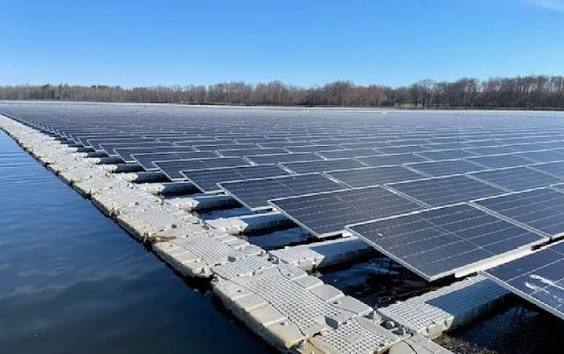
Rwanda has invited private power developers to bid for a 200-megawatt floating solar power plant on Lake Sake in the Eastern Province, alongside an 800-megawatt-hour battery storage system, as the government seeks to expand electricity generation and increase the contribution of renewable energy to its power mix. The project, being procured by the state-owned Energy Development Corporation Limited (EDCL), will be developed under a proposed public-private partnership, with applications for prequalification due by 12 November 2026. The selected developer is expected to finance, build and operate the facility under a 25-year power purchase agreement.
The proposed plant would represent a substantial addition to Rwanda’s electricity system. According to Afripoli’s 20 October report, the country has about 473 MW of installed generation capacity, while solar contributes approximately 4.2% of electricity generation. A 200 MW facility would therefore be equivalent to around 42% of the country’s current installed capacity, although the actual contribution to electricity supply would depend on solar output, storage operations and grid integration.
The project combines floating photovoltaic panels with battery storage designed to retain electricity generated during daylight hours and make it available when demand rises, including in the evening. The proposed 800 MWh storage capacity, paired with a 200 MW battery system, would provide up to four hours of discharge at full rated output. This could help manage the variability of solar generation and reduce the mismatch between daytime production and periods of higher electricity demand.
The inclusion of storage is significant for Rwanda and other African power markets seeking to integrate more renewable electricity without compromising supply reliability. Solar generation can reduce exposure to imported fossil fuels and diversify the power mix, but its output fluctuates with weather and daylight. Batteries can help shift electricity to periods when it is needed, although their effectiveness depends on system design, operating costs, charging patterns and the availability of adequate transmission infrastructure.
For Rwanda, the investment forms part of a broader effort to expand generation capacity as electricity demand grows. The government has set a target of reaching 1,066 MW of installed capacity by 2034, according to Afripoli. Delivering that expansion will require more than new generating assets: transmission and distribution networks must be able to accommodate additional power, while tariffs and power purchase agreements must support investment without creating unsustainable costs for the public sector or consumers.
The procurement model places much of the project’s development responsibility on the private sector. Under the proposed arrangement, the successful independent power producer will be responsible for design, financing, construction and long-term operation. Such a structure can help governments mobilise capital and technical expertise, but it also makes the terms of the power purchase agreement important to the project’s long-term affordability. The allocation of construction, operating, currency and performance risks will influence the price at which electricity is supplied and the extent to which the investment delivers value for the national power system.
The project also raises questions about how large renewable-energy investments can generate domestic economic benefits. Local companies could potentially participate in civil works, electrical installation, transport, maintenance and other supporting services. Training and supplier development arrangements could help build local capabilities in floating solar technology and battery storage, sectors that may become increasingly relevant as African countries modernise their energy systems. The scale of such participation, however, will depend on procurement requirements, technical standards and the extent to which the winning developer uses local suppliers and workers.
Floating solar offers a different land use option from conventional ground-mounted solar, particularly in countries where available land competes with agriculture, settlement and other economic activities. But installing panels on a lake does not remove environmental risks. Project planning will need to account for the lake’s ecological conditions, water quality, fishing and other local uses, as well as the effects of construction and maintenance on surrounding communities. Monitoring arrangements and clear environmental safeguards will be important to ensure that electricity generation does not undermine other uses of the water body.
Grid connection will be another determining factor. The procurement notice includes associated infrastructure to evacuate the electricity generated by the plant and connect it to the national network. Without sufficient transmission capacity and coordinated system planning, new generation can face constraints that limit how much electricity reaches consumers. The project’s economic value will therefore depend not only on the plant’s construction but also on the readiness of the wider electricity system to absorb and distribute its output.
The investment reflects a wider challenge facing African countries: expanding electricity access and supporting industrial development while managing the financial and technical demands of the energy transition. Reliable power is essential for manufacturing, digital services, health facilities, education and small businesses, yet the cost of building generation, storage and grid infrastructure can place pressure on utilities and public finances. Private investment can help bridge part of that gap, provided that contractual obligations, environmental risks and consumer affordability are carefully managed.
Rwanda’s proposed Lake Sake plant will now depend on the prequalification and procurement process, the ability of developers to secure financing, and the commercial and technical terms ultimately agreed with the project sponsor. If implemented as planned, the facility could expand the country’s renewable energy capacity while adding storage to support a more flexible power system. Its broader significance will be measured by whether the investment delivers dependable electricity at a manageable cost and builds lasting domestic capacity alongside the infrastructure itself.


