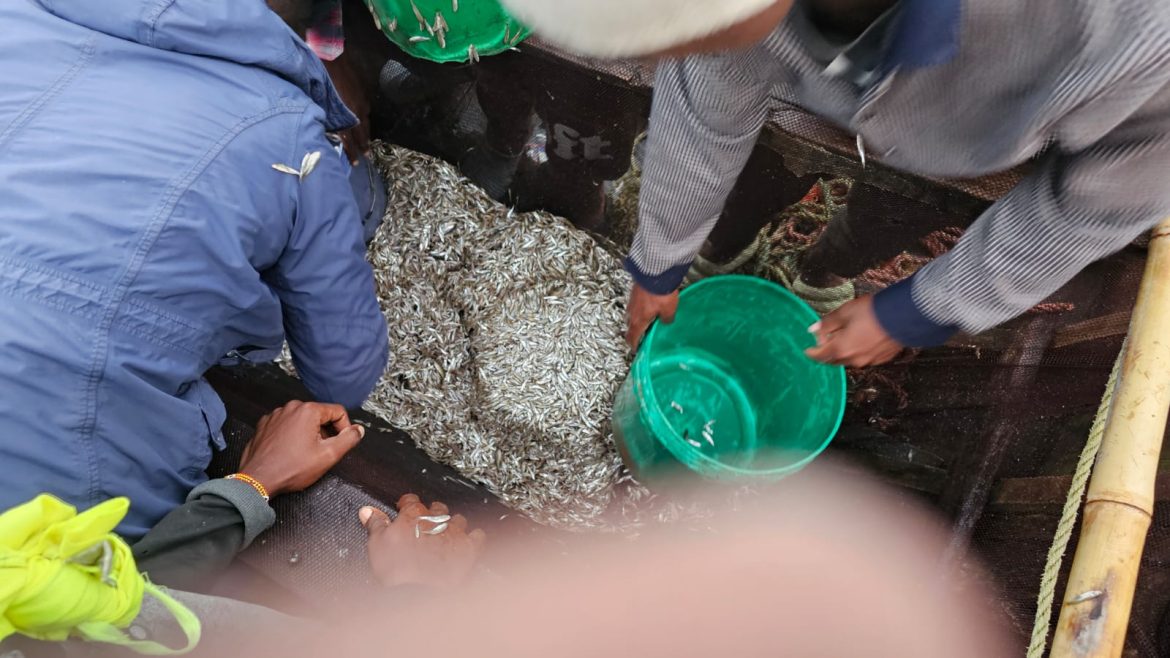
TradeMark Africa, the Mastercard Foundation and the African Continental Free Trade Area (AfCFTA) Secretariat are targeting at least US$100 million in additional trade in fish and fish products and more than 242,000 job opportunities for women and young people by 2028, as a new safeguarding assessment highlights the social and environmental risks that could undermine the sector’s expansion in East Africa.
The five-year Women and Youth Economic Empowerment in Fisheries Programme is designed to expand cross-border trade while improving access to skills, finance and markets for people who remain underrepresented in higher-value parts of the fisheries value chain. An assessment commissioned by TradeMark Africa and conducted by RSK Africa examined safeguarding conditions in Kenya, Tanzania and Uganda, identifying barriers that could prevent women and young people from benefiting fully from the anticipated growth.
The programme’s targets reflect the economic importance of fisheries to African food systems, employment and regional commerce. TradeMark Africa estimates that Africa’s annual fish market is worth about US$22 billion and could nearly double by 2030. Yet women and young people frequently operate in lower-return activities, including fish processing and informal cross-border trade, where limited access to productive assets, credit, market information and reliable infrastructure can restrict business growth. The AfCFTA framework offers an opportunity to connect markets across national borders, but the benefits will depend on whether smaller traders can meet regulatory requirements and access trade opportunities on fairer terms.

The safeguarding assessment found that women’s contribution to fisheries is not matched by equal access to ownership, decision-making or protection at work. According to the Food and Agriculture Organization of the United Nations (FAO), women accounted for approximately 24% of fishers and fish farmers globally, while representing about 62% of workers in the post-harvest sector in 2022. Their concentration in processing and trading makes them central to getting fish from landing sites to consumers, but it can also leave them dependent on others for access to catches, equipment and commercial opportunities.
Naphca Kuboja, Senior Social Consultant at RSK Group, said the assessment examined the laws and policies governing worker protection, cultural factors contributing to exclusion and exploitation, available reporting and redress systems, and the environmental and social risks associated with expanding fisheries activity. The work is intended to provide TradeMark Africa and its implementing partners with evidence to strengthen safeguards as the programme grows.
One of the clearest structural inequalities concerns ownership of fishing vessels on Lake Victoria. The assessment cites FAO research from 2019 indicating that more than 90% of fishing vessels on the lake were owned by men, compared with just 0.1% owned by women. Many women traders therefore depend on male boat owners to obtain fish for sale, a relationship that can expose them to exploitation, including gender-based violence and sexual exploitation, abuse and harassment.
The report also identifies gaps between the formal availability of support services and their accessibility in fishing communities. Kenya, Tanzania and Uganda have national helplines, police gender desks and one-stop centres for survivors, but the assessment found that services are concentrated in urban centres and larger towns. For traders operating at remote landing sites and along cross-border routes, distance and limited local support can make reporting abuse and obtaining assistance difficult.
Cultural norms compound these challenges by restricting women’s participation in fishing and decision-making, while financial barriers limit their ability to establish independent businesses. Limited collateral, small savings and credit products that do not reflect their circumstances can prevent women from investing in boats, equipment, storage or larger trading volumes. Research on women’s participation in small-scale fisheries has similarly highlighted how unequal access to resources and decision-making can limit economic opportunities.
The programme’s response includes financial literacy training, inclusive finance partnerships and stronger market linkages. However, the assessment suggests that financial interventions will have limited impact if women remain exposed to harassment or cannot access fishing resources and markets safely. Economic empowerment therefore requires both commercial opportunities and systems that reduce the risks associated with participation.
Among the proposed measures are “Safe Trade” and “Men Against Violence” campaigns intended to engage men and boys in preventing gender-based violence. The assessment also recommends confidential, multi-channel reporting systems, trained safeguarding focal persons at landing sites, and anti-harassment procedures along border corridors. These interventions would extend protection beyond training venues to the places where traders buy, transport and sell fish.
The report identifies practical improvements at landing sites and markets, including better lighting, sanitation, safeguarding signage and secure spaces. Such measures can be relatively inexpensive compared with major infrastructure investments, yet may improve safety, particularly after dark. The assessment points to examples in Tanzania and Kenya that could inform similar improvements elsewhere. Over the longer term, widening women’s access to boat ownership, fishing gear and business assets could reduce the dependency that leaves some traders vulnerable to exploitation.
TradeMark Africa’s Business Competitiveness Director, Anataria Uwamariya, said the programme aims to ensure that women and young people have the skills, finance and market connections needed to build competitive and sustainable businesses. She emphasised that expanding trade must also mean making it safer, with social and environmental safeguards incorporated into activities ranging from training and market access to landing sites and border crossings.
Environmental protection is another component of the assessment. Fisheries operate in sensitive aquatic ecosystems, where growing commercial activity can increase pressure on resources and create risks for workers and surrounding communities. In Lake Victoria and other waters, the presence of crocodiles and hippos can also expose people working near the shoreline to physical danger. RSK’s assessment highlights the need for safety measures that account for human-wildlife interactions alongside broader conservation concerns.
The recommendations include environmental screening, training on responsible fishing, food safety and waste management. These measures are important because poor handling, contamination and waste can undermine fish quality, raise public-health risks and contribute to environmental degradation. If trade volumes rise without appropriate management, increased economic activity could intensify pressure on local ecosystems and weaken the natural resource base on which fishing communities depend.
The initiative is being delivered with implementing partners Lattice Aquaculture, Kilimo Trust and MicroSave Consulting, alongside service providers WorldFish and the Eastern African Sub-Regional Support Initiative for the Advancement of Women. Their roles span fisheries and aquaculture development, enterprise support, financial inclusion, research and women’s economic empowerment. The programme’s wider implementation footprint extends beyond the three countries covered by the safeguarding assessment.

The US$100 million trade target and 242,000-job ambition will ultimately depend on whether interventions translate into sustained business growth, safer working conditions and more equitable participation in fisheries markets. Job opportunities may include new positions as well as improved or expanded existing livelihoods, so progress will need to be measured transparently to establish the nature and durability of the employment created.
For regional trade, the assessment highlights a broader challenge facing implementation of the AfCFTA: removing border barriers is only one part of building inclusive markets. Traders also need access to finance, productive assets, reliable infrastructure and effective protection from exploitation. In fisheries, those requirements are closely connected to environmental sustainability because income, food security and community livelihoods depend on healthy aquatic ecosystems.
As the programme moves towards its 2028 targets, its impact will be judged not only by the value of additional fish trade or the number of people reached, but also by whether women and young people can participate on safer and more equal terms. Embedding safeguards into the growth strategy could help ensure that expanding regional commerce strengthens livelihoods without increasing the social and environmental costs borne by the communities that sustain the sector.