


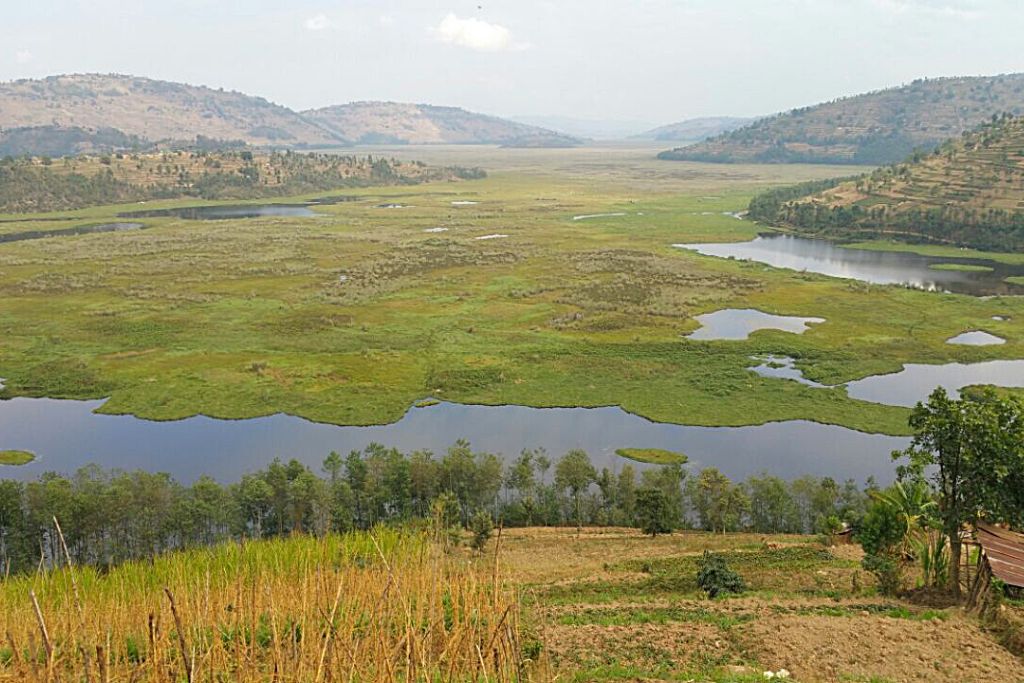
Rwanda’s Rugezi Marshland is facing renewed wildfire risks as a prolonged dry spell raises the vulnerability of its vegetation, prompting the Rwanda Environment Management Authority (REMA) to strengthen community precautions around the protected wetland. The warning comes as Meteo Rwanda forecasts continued dry conditions through August, with national rainfall expected to range between 5 and 100 millimetres, putting pressure on an ecosystem that supports water security, biodiversity and livelihoods in Northern Rwanda.
REMA officials have urged communities around Rugezi to prevent fires and avoid activities that could further degrade the marshland, including uncontrolled grazing and grass cutting. Virginie Mugororeyimana, Director of the Advocacy and Multilateral Environmental Agreements Monitoring Unit at REMA, said the dry grass covering parts of the wetland could make it particularly susceptible to fire during the current period of limited rainfall.
The concern is not without precedent. Rugezi has experienced damaging fires in the past, illustrating the risks that prolonged dry conditions can pose to protected ecosystems. For conservation authorities, the immediate challenge is therefore preventative: reducing the likelihood of fires before they spread across dry vegetation and cause damage that could take years to reverse.
Rugezi’s importance extends beyond biodiversity. The Ramsar-protected marshland is the main source of water for Rwanda’s twin lakes of Burera and Ruhondo, linking its ecological condition directly to the country’s water systems. Damage to the wetland could therefore affect environmental services that support communities and economic activity beyond the boundaries of the protected area.
That connection has become increasingly important as African countries confront more variable rainfall patterns and growing pressure on water resources. Wetlands act as natural components of water regulation systems, while also providing habitats for species and supporting local economic activities. Their degradation can increase pressure on infrastructure and public resources needed to compensate for lost ecosystem functions.
Read also: https://allafrica.com/stories/202608050479.html
Rwanda has made progress in protecting Rugezi in recent years, with officials attributing improvements to sustained conservation awareness and stronger community engagement. Mugororeyimana pointed to initiatives such as the Umusambi Tournament, which uses sport to communicate environmental messages and encourage communities to participate in conservation.
The approach reflects a broader shift in conservation policy across Africa, where governments and environmental organisations increasingly recognise that enforcement alone may not be sufficient to protect ecosystems on which local communities depend. Community participation can reduce pressure on protected areas when residents understand both the environmental value of ecosystems and the economic consequences of their degradation.
In Burera District, conservation has also become linked to tourism. Theophile Mwanangu, the district’s Vice Mayor in charge of Social Affairs, said residents were benefiting from visitors attracted by Rugezi’s biodiversity, including its population of grey-crowned cranes. Tourism income has helped some households improve their living conditions, providing an economic incentive for communities to maintain the wetland and protect its wildlife.
The grey-crowned crane, an endangered species, has become one of the most visible indicators of Rugezi’s conservation efforts. Its presence has attracted visitors while strengthening awareness of the value of the marshland. Deo Ruhagazi, Deputy Chief Executive Officer of the Rwanda Wildlife Conservation Association, said community participation had contributed to a reduction in poaching and the capture of cranes.
According to Ruhagazi, reports of injured cranes, once more common, have become increasingly rare. Conservation awareness campaigns delivered through football and cycling events have formed part of these efforts, extending environmental messaging beyond traditional conservation programmes.
The changing relationship between communities and Rugezi can also be seen in the experiences of older residents. Theresa Nyirangwabije, an 84-year-old resident, recalled a period when households routinely collected grass and firewood from the wetland without fully understanding the wider ecological consequences. Her experience illustrates how the economic use of natural resources can evolve as communities gain greater awareness of their long-term environmental value.
The current dry spell nevertheless exposes the limits of conservation gains when ecosystems face climate and weather pressures. Improved awareness and reduced poaching cannot by themselves eliminate the risk posed by dry vegetation, particularly when human activities continue around protected landscapes.
For Rwanda, the issue has implications for water security as well as environmental management. Protecting Rugezi helps preserve the natural systems that feed Burera and Ruhondo, while maintaining the ecological assets that support tourism and local livelihoods. A deterioration in the wetland could place additional demands on public institutions responsible for water management, conservation and disaster response.
The situation also illustrates a wider challenge for African governments seeking to reconcile environmental protection with economic development. Protected ecosystems frequently support multiple forms of economic activity, from agriculture and tourism to water supply and fisheries. Managing them effectively requires coordination among environmental agencies, local governments, conservation organisations, private operators and communities.
Rwanda’s experience demonstrates the potential value of linking conservation to visible economic benefits. Tourism associated with the grey-crowned crane gives surrounding communities a financial stake in maintaining biodiversity, while public awareness initiatives help translate environmental policy into behaviour at the local level. But the persistence of wildfire risk shows that these gains remain vulnerable to climatic conditions and require continuous monitoring and preparedness.
The current warning comes as African countries place greater emphasis on climate resilience and sustainable management of natural resources under the African Union’s Agenda 2063. Goal 7 calls for environmentally sustainable and climate-resilient economies and communities, placing ecosystem protection within a broader development framework rather than treating it solely as a conservation issue.
 For Rugezi, the immediate test is whether existing conservation systems can withstand a prolonged period of dry weather without significant ecological damage. The outcome will depend not only on national environmental authorities but also on the capacity of local administrations and communities to prevent fires, regulate activities within the wetland and maintain the conservation practices that have helped restore the ecosystem.
The stakes are practical. Rugezi is simultaneously a biodiversity reserve, a water source and an economic asset for communities around it. Protecting those functions during periods of climatic stress will determine whether Rwanda can preserve the environmental gains made in recent years while maintaining the natural systems that underpin local livelihoods and national resilience.


