


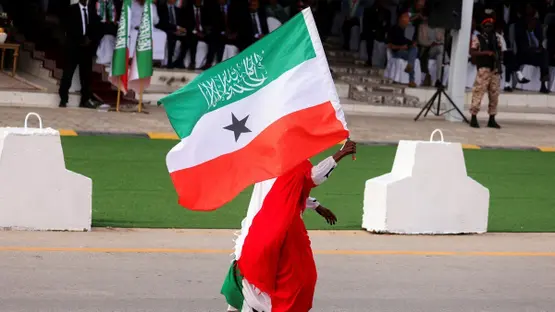
Thousands of people gathered in Hargeisa on Monday as Somaliland marked its Independence Day with renewed calls for international recognition, months after Israel became the first country to formally recognize the self-declared republic, a move that has intensified diplomatic debate over sovereignty, regional stability and geopolitical influence in the Horn of Africa.
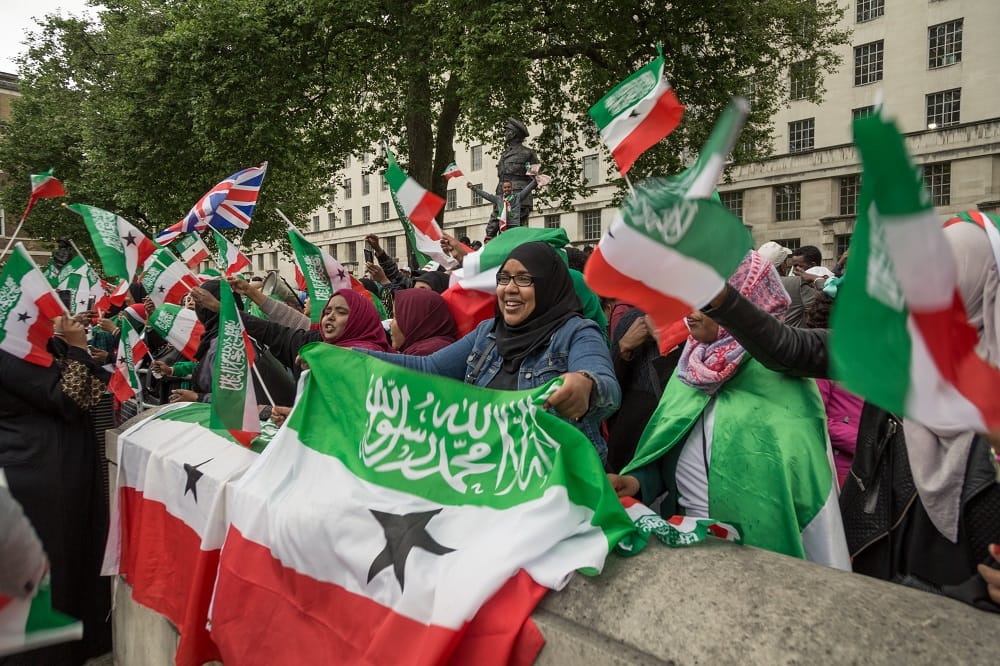
During military parades and national celebrations in the Somaliland capital, President Abdirahman Mohamed Abdullahi said the territory had fulfilled the conditions expected of a functioning democratic state, citing relative political stability, institutional development and internal governance structures established since Somaliland declared independence from Somalia in 1991.
The Republic of Somaliland has fulfilled all the requirements of a responsible, peaceful, law-abiding, and democratic nation,” Abdullahi said, urging the international community to move beyond questions over Somaliland’s legitimacy and address the issue of formal recognition.
The renewed diplomatic campaign comes at a sensitive moment for the Horn of Africa, a region increasingly shaped by competition over trade corridors, maritime access, security partnerships and infrastructure investment. Somaliland’s strategic position along the Gulf of Aden, one of the world’s busiest shipping routes, has heightened international interest in the territory despite its continued lack of broad diplomatic recognition.
Israel’s decision earlier this year to recognize Somaliland marked a significant departure from decades of international policy that has largely supported Somalia’s territorial integrity. While the move was welcomed by many Somaliland officials and supporters as validation of the region’s long-standing statehood ambitions, it also exposed internal and regional divisions. Some residents expressed concern that recognition by a single country without wider international backing could heighten geopolitical tensions or complicate relations with neighbouring states and regional institutions.
Somalia’s federal government continues to reject Somaliland’s claim to independence, viewing the territory as part of sovereign Somali territory. The African Union (AU) and the United Nations (UN) have historically maintained support for Somalia’s territorial unity, reflecting longstanding concerns that recognition of breakaway regions could encourage separatist movements elsewhere on the continent.
For African policymakers, the Somaliland question extends beyond diplomacy and identity politics. It also intersects with broader issues of governance, investment, trade, and regional security. Somaliland has developed its own currency, parliament, judiciary and security institutions over the past three decades, while maintaining relative stability compared with other parts of Somalia that have experienced prolonged conflict and insecurity.
According to regional analysts, Somaliland’s stability has increasingly attracted investor interest in sectors such as logistics, telecommunications, livestock exports and port infrastructure. The expansion of Berbera Port through partnerships involving international investors and Gulf-backed logistics companies has strengthened Somaliland’s position within regional trade networks linking East Africa, the Middle East and global shipping markets.
At the same time, the territory’s unresolved legal status continues to constrain access to international financing, development support, and multilateral engagement. Without broad recognition, Somaliland remains excluded from many international financial institutions and formal bilateral agreements that could support infrastructure development, public investment, and economic integration.
The recognition debate also carries implications for regional diplomacy across the Horn of Africa, where governments are balancing economic cooperation with sensitive territorial and security considerations. Ethiopia’s recent interest in securing maritime access through agreements involving Somaliland has already triggered tensions with Somalia and raised concerns among regional actors about shifting political alignments.
Analysts note that unresolved sovereignty disputes can influence investment risk assessments, infrastructure planning and cross-border trade flows, particularly in strategically important regions with expanding transport and logistics ambitions. For countries seeking to strengthen economic integration under frameworks such as the African Continental Free Trade Area, political stability and diplomatic predictability remain central considerations.
Somaliland’s leadership argues that continued exclusion from international recognition overlooks the territory’s governance record and institutional continuity. Critics, however, caution that recognition without broader regional consensus could deepen political fragmentation in an already volatile region.
For many residents in Hargeisa, the annual Independence Day celebrations reflect more than symbolic nationalism. They also represent a continuing effort to secure international legitimacy that supporters believe could unlock economic opportunities, expand diplomatic engagement and strengthen access to development finance.
More than three decades after declaring independence, Somaliland remains caught between de facto statehood and diplomatic isolation. While Israel’s recognition has altered the political conversation surrounding the territory, the broader international response suggests that questions over sovereignty, regional balance and African diplomatic consensus will continue to shape Somaliland’s uncertain path toward wider acceptance on the global stage.


