


European Union Ambassador to Lesotho, Mette Sunnergren, held talks with Matjato Moteane aimed at deepening cooperation on infrastructure development, governance systems and long-term economic transformation, as Lesotho seeks to strengthen public service delivery and national connectivity through international partnerships.
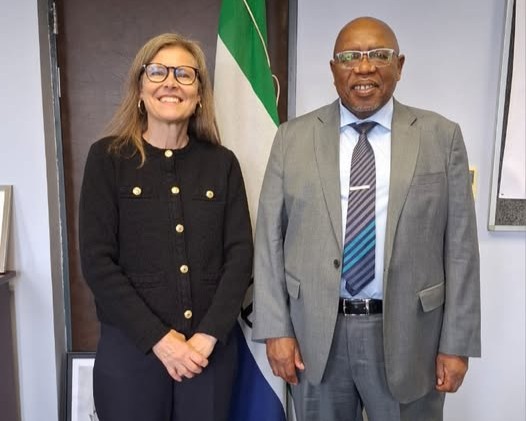
The courtesy meeting focused on expanding practical cooperation between the European Union and the Kingdom of Lesotho, with discussions centred on transport infrastructure, sustainable development and innovation-driven planning aligned with the country’s national development priorities.
Both sides emphasised the importance of translating bilateral cooperation into measurable outcomes for communities, particularly in areas linked to economic growth, mobility and public sector modernisation.
Transport infrastructure emerged as a central issue during the discussions, reflecting its growing importance within Lesotho’s development agenda as the country seeks to improve road connectivity and strengthen access between rural and urban areas.
Officials noted that efficient transport systems remain critical to supporting trade, labour mobility and access to essential services, particularly in geographically challenging regions where infrastructure gaps continue to constrain economic activity and social inclusion.
Minister Moteane outlined ongoing government priorities focused on improving road networks and enhancing national mobility systems, while the EU delegation expressed interest in supporting sustainable and resilient transport initiatives through technical cooperation and long-term planning support.
The discussions also explored how innovation and modern infrastructure planning can improve resilience against environmental and economic pressures, an increasingly important consideration as African countries face growing climate-related risks affecting infrastructure systems and public investment planning.
Analysts note that infrastructure development remains a major challenge across many smaller African economies, where limited fiscal space, high capital costs and vulnerability to climate shocks continue to slow progress in transport and logistics modernisation.
For Lesotho, improved infrastructure is viewed as central to broader economic diversification efforts, regional integration and public service efficiency, particularly given the country’s dependence on transport corridors linking it to neighbouring South Africa.
The meeting also highlighted broader efforts to align development cooperation with innovation-focused approaches aimed at modernising governance systems and strengthening institutional capacity.
Ambassador Sunnergren reaffirmed the European Union’s commitment to supporting Lesotho’s long-term development agenda through targeted partnerships designed to address structural challenges while supporting sustainable growth.
Officials stressed that effective international cooperation requires stronger coordination between development partners and national institutions to ensure that investments align with local priorities and produce lasting developmental impact.
The engagement reflects the European Union’s wider strategy of deepening development partnerships across Africa through infrastructure support, governance reform and sustainable economic cooperation.
https://www.aecweek-registration.com/2026/?repid=
Across the continent, European-backed development initiatives increasingly focus on transport systems, green infrastructure, digital transformation and institutional resilience as governments seek to improve competitiveness and accelerate inclusive growth.
Observers say Lesotho’s engagement with international partners will likely remain important as the country seeks to strengthen economic resilience, improve infrastructure delivery and attract investment into key sectors supporting long-term development.
The meeting between Ambassador Sunnergren and Minister Moteane therefore signals continued efforts to position infrastructure and innovation at the centre of Lesotho’s national development strategy, while reinforcing the role of international partnerships in supporting implementation capacity and sustainable growth objectives.
The collaboration also comes at a time when African countries are intensifying efforts to strengthen climate resilience and accelerate green transitions amid growing environmental and economic pressures. Sustainable transport systems, renewable energy investments and resilient infrastructure are increasingly recognised as critical pillars for future economic competitiveness and social stability.


