


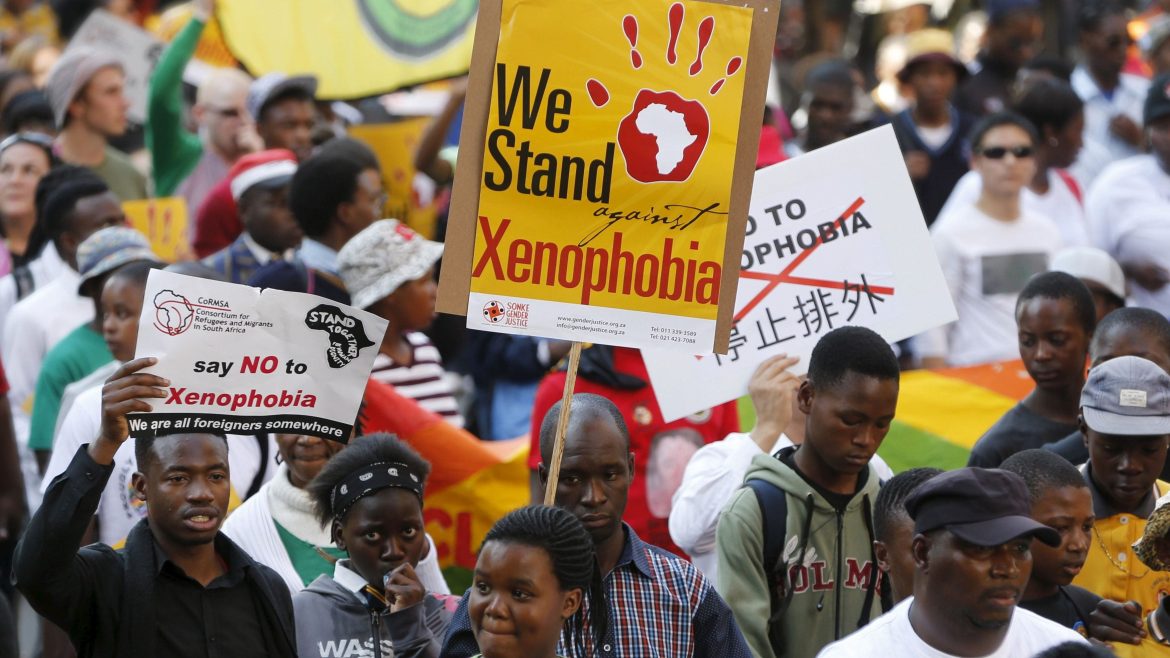
Dozens of undocumented foreign nationals sought refuge at a church-run shelter in Durban this week as anti-migrant protests intensified across parts of South Africa, exposing mounting social and economic tensions linked to unemployment, migration management and urban inequality ahead of local government elections. The unrest, centered in the Eastern port city of Durban, has seen vigilante-style groups demand that undocumented migrants leave the country by June 30, prompting fears of renewed xenophobic violence in Africa’s most industrialized economy.
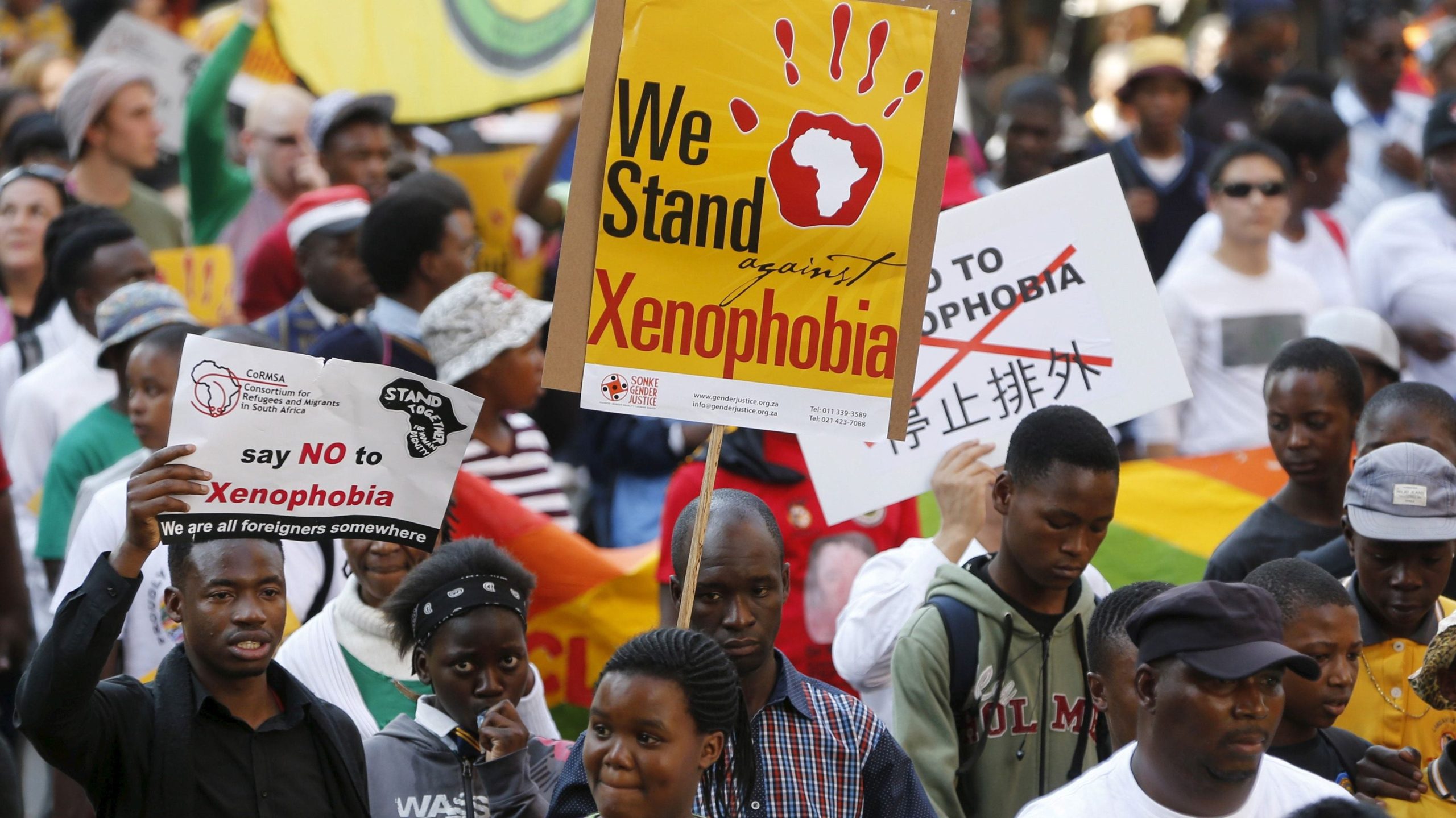 Around 250 people, many of them women and children from countries including the Democratic Republic of Congo, Burundi, Rwanda, Uganda and Tanzania, gathered at the Diakonia Council of Churches centre in Central Durban after reporting threats, intimidation and harassment in townships and informal settlements. Several migrants said groups of men had gone door-to-door warning foreign nationals to leave or risk violence.
The latest tensions reflect a broader pattern of anti-immigrant sentiment that has periodically erupted in South Africa over the past two decades, often during periods of economic strain, high unemployment and political contestation. According to Statistics South Africa, the country’s official unemployment rate remains above 32%, while youth unemployment exceeds 45%, creating fertile ground for populist narratives that blame migrants for rising crime, pressure on public services and competition in the informal economy.
Durban, one of South Africa’s largest commercial hubs and a critical gateway for regional trade through the Port of Durban, has frequently emerged as a flashpoint in previous outbreaks of xenophobic violence. Similar attacks in 2008, 2015 and 2021 disrupted local businesses, displaced thousands of migrants and damaged investor perceptions around social stability and governance capacity.
The current protests are being driven by small but vocal anti-migrant groups, including one movement operating under the name “March and March,” whose members have appeared publicly in traditional Zulu attire carrying shields and sticks. Although their demands hold no legal authority and are not backed by the state, the campaign has gained traction on social media platforms where misinformation and inflammatory rhetoric have amplified tensions.
Read also: https://www.bbc.com/news/articles/c7v9572ne0lo
Migrants sheltering at the church centre described deteriorating security conditions. Some reported robberies, while others said they feared returning home after receiving threats. Several claimed they had initially sought protection at a local police station before officers dispersed crowds using rubber bullets and tear gas.
The developments place additional pressure on South Africa’s institutions at a time when the government is already grappling with fiscal constraints, infrastructure failures and weak economic growth. According to the International Monetary Fund, South Africa’s economy continues to face structural challenges linked to energy shortages, logistics bottlenecks and rising public debt, all of which have heightened public frustration in urban centeres.
Migration has become an increasingly politicized issue ahead of municipal elections expected within the next six months. Political actors and activist movements have intensified calls for stricter immigration enforcement, arguing that undocumented migration places additional burdens on public healthcare systems, housing and labour markets. However, economists and regional policy experts note that migrants also play a significant role in sustaining South Africa’s informal economy, particularly in sectors such as retail trade, transport, construction and small-scale services.
The renewed tensions also carry broader regional implications for Southern Africa’s economic integration agenda. South Africa remains one of the continent’s largest destination markets for labour migrants and refugees fleeing conflict, economic instability and climate-related pressures elsewhere in Africa. Instability targeting migrant communities’ risks undermining regional mobility frameworks under the Southern African Development Community (SADC) and complicating efforts to strengthen cross-border trade and labour coordination.
Human rights organisations have warned that persistent xenophobic violence could further weaken trust in state institutions if authorities are perceived as unable to guarantee security and constitutional protections for both citizens and foreign nationals. South Africa’s constitution provides broad protections against discrimination, but enforcement has often struggled in densely populated urban settlements where policing capacity remains limited.
The unrest also highlights the intersection between migration, governance and social sustainability in rapidly urbanizing African economies. As African cities absorb growing populations driven by demographic expansion, regional conflict and climate displacement, pressure on housing, public infrastructure and employment systems is expected to intensify. Without coordinated migration management and stronger local economic inclusion policies, analysts warn that social tensions may continue to surface in politically sensitive environments.
 For many migrants now sheltering behind church gates in Durban, however, the crisis remains immediate and personal. Families displaced by conflict and instability elsewhere on the continent now face renewed uncertainty in a country long viewed as both an economic anchor and a refuge within the region.


