


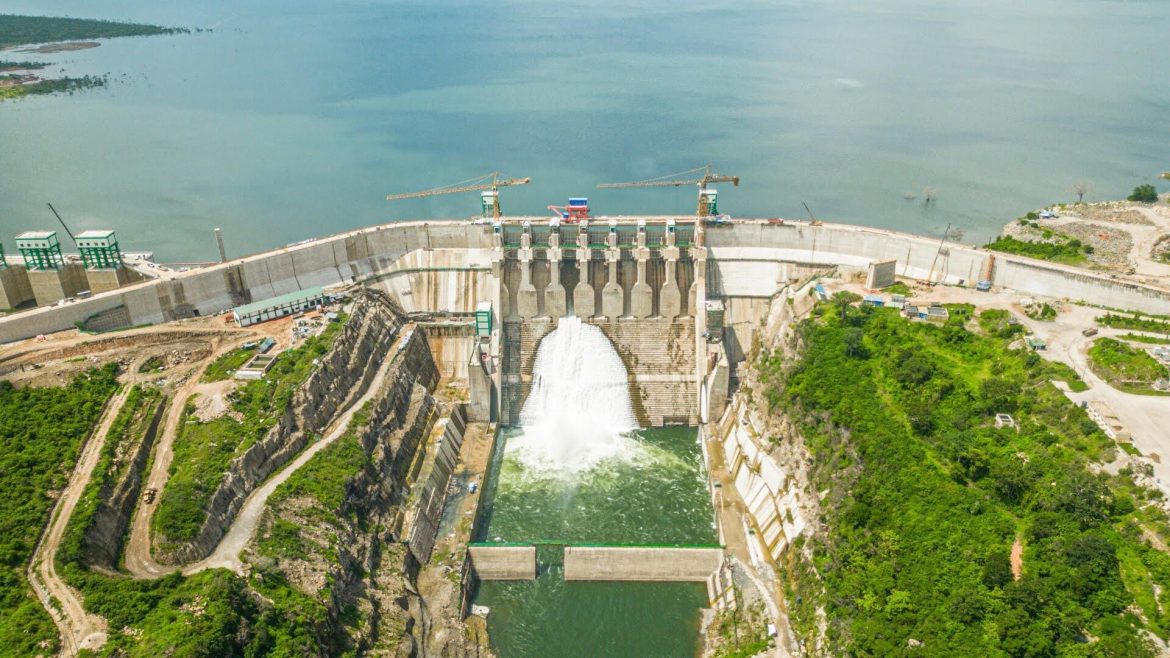
Tanzania officially inaugurated the 2,115-megawatt Julius Nyerere Hydropower Project on the Rufiji River, marking the conclusion of a multibillion-dollar construction effort intended to reshape the nation’s energy landscape. According to the state-owned Tanzania Electric Supply Company (TANESCO) and project contractors, the $2.9 billion facility, built by an Egyptian consortium of Arab Contractors and Elsewedy Electric, doubles the country’s installed generation capacity. However, as the plant transitions to full operational status, structural bottlenecks including transmission constraints, distribution line losses, and tariff structuring have exposed critical gaps between mega-scale generation and actual consumer delivery.
 According to energy sector assessments, the core engineering phase comprising a 131-meter-high concrete dam and nine 235 MW Francis turbines was finalized to alleviate chronic domestic power deficits and fuel industrialization. Yet, trailing investments in high-voltage transmission lines and substation infrastructure mean that immediate evacuation capacity remains constrained. Analysts note that without matching capital expenditures in grid modernization, large-scale generation assets risk operating below optimum capacity, leaving regional distribution networks vulnerable to technical losses and voltage instability.
Read also: https://www.esgnow.co.za/
For the broader East African economy, the commissioning of the plant highlights a recurring structural dilemma in infrastructure development: the friction between rapid generation scaling and legacy distribution networks. Public finances face dual pressures as utilities attempt to service capital-intensive energy investments while maintaining affordable consumer tariffs. According to regulatory filings, balancing cost-reflective pricing with industrial competitiveness remains a central challenge for TANESCO, as suppressed tariffs risk undermining utility balance sheets while immediate hikes threaten manufacturing margins and household affordability.
 The implications extend to regional integration and industrial policy across the wider Sub-Saharan market. As Tanzania positions itself as an emerging power exporter within the East African Power Pool, the efficiency of domestic grid integration will determine whether surplus capacity can be reliably monetized. Addressing these distribution and pricing realities will dictate the ultimate fiscal return on the country’s largest infrastructure investment, establishing a critical benchmark for capital deployment in major African energy projects.


