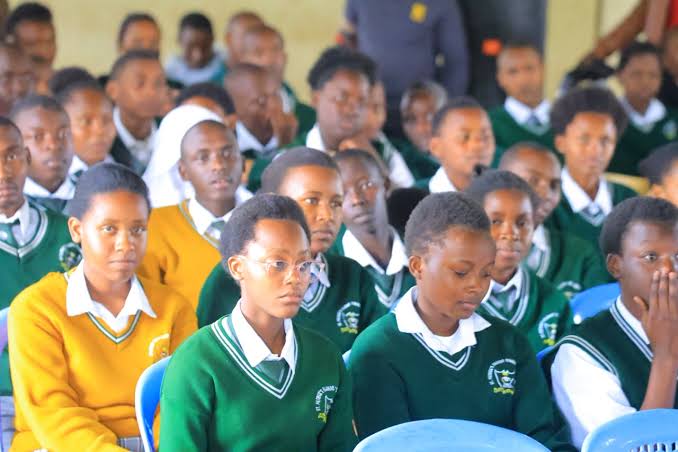
The Water Air Food Awards (WAFA) will bring university students, grassroots innovators and sustainability practitioners together on 20 November 2026 for the Generation Green Workshop, an event focused on advancing community-based environmental solutions through academic collaboration, knowledge exchange and practical innovation.
The 90-minute workshop will take place from 14:30 to 16:00 CET, both in person and online, as part of the Green Business Forum 2026 organised by Copenhagen Business School (CBS). Participation is free, with the event bringing together WAFA’s 2026 award winners and students participating in its Global Case Study Competition to discuss how locally developed sustainability solutions can be strengthened, replicated and extended to other communities.
The workshop is a special edition of the WAFA Green Circle Webinar series, which convenes researchers, practitioners, community leaders and innovators to share knowledge and experiences around nature-based solutions and sustainability initiatives. This edition places particular emphasis on the connection between grassroots innovation and university-led research, with students examining practical interventions already being implemented to address environmental and community challenges.
WAFA’s four 2026 award winners, representing its Water, Air, Food and Youth Climate categories, are expected to present their initiatives, outlining the challenges they address, their experiences implementing solutions and opportunities for collaboration. The workshop is intended to provide a platform for exchanging lessons from community-based projects while connecting innovators with students and other participants who may contribute to further development of the initiatives.
The Global Case Study Competition forms a central part of the programme. Developed in partnership with universities, the competition challenges students to analyse existing solutions developed by grassroots innovators and propose ways to improve their implementation, expand their reach or adapt them to other contexts.
WAFA said the competition has expanded to more than 50 universities and 200 participants. Copenhagen Business School is its founding university partner, while the second round of the competition was led by the University of Pécs in Hungary.
The first round, conducted during Spring 2026 under Copenhagen Business School, recognised three student projects. Project ACE: Actions for Communities and Environment from the Philippines took first place, followed by a project on innovative water filtration for rural communities in Kenya and a project examining fruit waste to conserve natural resources in Ethiopia.
The second round, conducted during Autumn 2026 under the University of Pécs, Hungary, also recognised three projects. Komb Green Solutions from Kenya took first place, followed by Transforming Lives and Land with Sand Dams, associated with the United Kingdom, and How Indigenous Youth Are Protecting the Forest’s Future from Ecuador.
The competition’s approach centres on using existing community-based innovations as the starting point for student research and problem-solving rather than developing solutions in isolation. Participants are expected to consider how projects can be adapted to different environments, how implementation challenges can be addressed and what partnerships or resources may be required to support wider adoption.
The workshop will also feature H.E. Judit Galambos, Ambassador of Hungary to Denmark, who is expected to attend in person and address participants. Petra Putzer, PhD, assistant professor and head of the Sustainability Centre at the University of Pécs, will also speak, reflecting the university’s involvement in the second round of the competition.
The involvement of universities, grassroots innovators and institutional representatives highlights the growing role of collaborative approaches in sustainability education. Case-based learning can expose students to practical challenges associated with water access, food systems, waste management, land restoration and climate resilience, while allowing community innovators to draw on academic research, technical expertise and potential partnerships.
However, translating student proposals into implementation will depend on the availability of financing, institutional support, technical capacity and partnerships with the communities and organisations responsible for delivering the solutions. The competition’s emphasis on proven grassroots initiatives provides a foundation for evaluating proposals against existing experience, although the potential for scaling will vary according to local conditions and the resources available.
WAFA has positioned the Generation Green initiative as a platform for connecting locally developed solutions with wider networks of research, collaboration and sustainability practice. The workshop forms part of that effort, bringing together participants from universities, community initiatives and professional sustainability networks to exchange perspectives and explore practical opportunities for further development.
The Generation Green Workshop will be held on Friday, 20 November 2026, from 14:30 to 16:00 CET, with both in-person and online participation available at no cost.
Registration is available through the WAFA event page: https://krpi.systeme.io/wafagenerationgreen20nov2026.