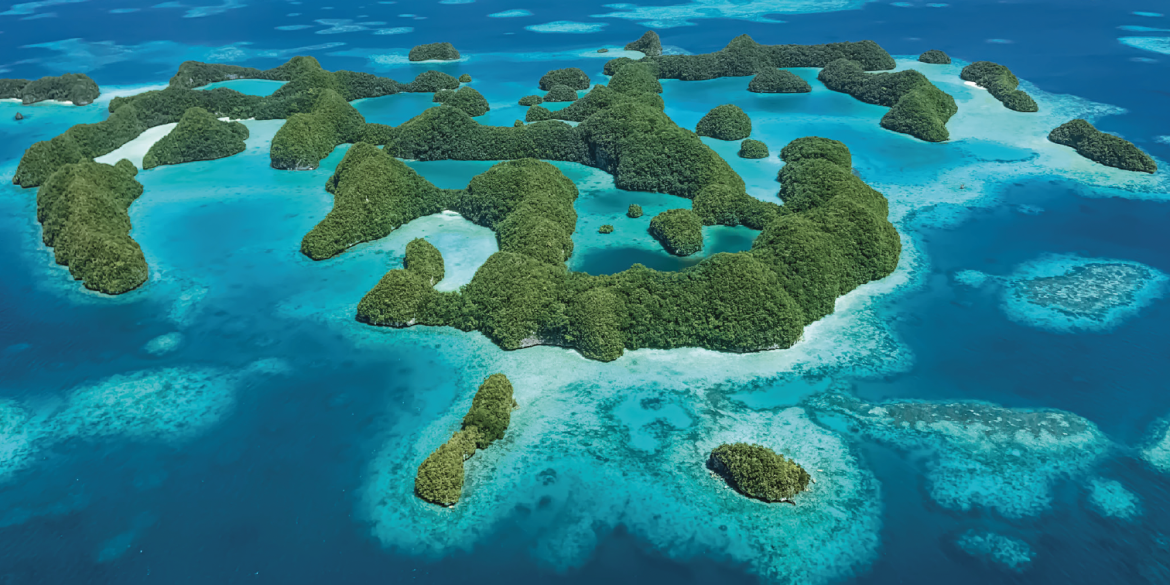
The global effort to protect 30 percent of the world’s oceans by 2030 is gaining momentum, but a major new report unveiled during the 11th Our Ocean Conference in Mombasa warns that ambitious conservation targets will remain out of reach unless governments, donors and development partners dramatically increase investment in the systems needed to make marine protection effective.
The report, Closing the Implementation Gap: Capacity Development for Effective Marine 30×30, published by the Smithsonian Tropical Research Institute, argues that the greatest challenge facing marine conservation is no longer the designation of protected areas but the capacity required to manage them successfully over the long term.
Its findings come at a critical moment for global biodiversity and climate action. In December 2022, countries adopted the Kunming-Montreal Global Biodiversity Framework, committing to conserve at least 30 percent of the world’s land and oceans by 2030. Since then, marine protection efforts have accelerated, with marine protected areas (MPAs) now covering 9.8 percent of the global ocean, up from 8.4 percent in 2024.
Despite this progress, the report highlights a significant gap between political commitments and practical implementation. While governments continue to announce new marine protected areas, many lack the financial resources, governance structures, technical expertise and institutional capacity required to ensure these areas deliver meaningful conservation outcomes.
Researchers estimate that at least half of existing marine protected areas remain either unimplemented or operationally ineffective, raising concerns that conservation targets may be achieved on paper without generating tangible benefits for marine ecosystems and coastal communities.
“It is insufficient for marine 30×30 to just be a designation challenge,”said Dr. Vanessa Constant, Associate Director for the Arsht Resilience Initiative at the Smithsonian Tropical Research Institute.
“It has to become an implementation challenge, backed by complementary investment in people, institutions, and long-term stewardship so that protected areas become more than lines on a map,” she said.
The report identifies what it describes as a widening implementation gap between the rapid growth of protected area commitments and the slower pace of building the human and institutional systems needed to support them.
For Africa, where coastal and marine ecosystems support millions of livelihoods through fisheries, tourism and maritime trade, the findings carry particular significance. Healthy oceans are increasingly recognised as essential to food security, climate resilience and economic development, especially in countries heavily dependent on blue economy sectors. The report draws on consultations involving governments, scientists, Indigenous Peoples, local communities, non-governmental organisations and financial institutions across Southeast Asia, Latin America and the Caribbean, and the Western Indian Ocean region. It concludes that successful marine conservation depends on two foundational pillars: strong regional contextualisation and effective coordination among stakeholders.
Rather than relying on uniform global models, the report argues that conservation strategies must be adapted to local social, economic and ecological realities. This requires governance systems that reflect local needs, long-term partnerships between institutions and communities, and stronger mechanisms for knowledge sharing across regions. Beyond these foundational elements, researchers identify six priority areas requiring urgent investment. These include governance and policy continuity, sustainable and locally accessible financing, inclusive stakeholder participation, access to data and technology, socio-ecological integration and improved public communication.
The financing challenge remains particularly acute. Many marine protected areas continue to depend on short-term donor support, limiting their ability to maintain staffing, enforcement, monitoring and community engagement programmes over time. The report also highlights a growing disconnect between technological innovation and operational realities on the ground. Advances in satellite monitoring, artificial intelligence and marine data analytics have transformed the ability to track ocean activity and monitor protected areas. However, many coastal communities and government agencies still lack the technical skills, infrastructure and resources required to utilise these technologies effectively.
As a result, the benefits of technological innovation often fail to reach the communities and institutions responsible for day-to-day conservation management. The authors argue that addressing this imbalance will require investments not only in technology itself but also in digital literacy, technical training and accessible data systems capable of supporting local decision-making. Another key recommendation focuses on public engagement. The report calls for a shift in how marine conservation is communicated, moving away from narratives that frame protected areas as restrictions on economic activity and toward approaches that emphasise their broader social and economic benefits. According to the report, marine protected areas should be presented as tools that support livelihoods, strengthen food security, preserve cultural heritage and create long-term economic resilience, particularly for coastal populations vulnerable to climate change and environmental degradation.
“This is ultimately a systems challenge,” said Rocky Sanchez Tirona, Managing Director of Regional Programs at Rare.
“Effectively protecting 30 percent of the ocean will depend not only on political will, but on sustained investment in the people, institutions, relationships, and regional and local leadership needed to make conservation endure,”he said.
The report’s release at the Our Ocean Conference carries symbolic significance. Hosted in Mombasa, Kenya, the gathering marks the first time the global conference has been held on African soil, reflecting the continent’s growing role in shaping international ocean governance and blue economy strategies.
The conference has brought together governments, investors, researchers, civil society organisations and development institutions seeking to accelerate practical solutions for ocean conservation, marine pollution reduction, sustainable fisheries and climate resilience. Across Africa and other developing regions, examples of successful marine conservation are already emerging. Local organisations, Indigenous leaders and innovative financing partnerships have demonstrated how community-led approaches can improve marine ecosystem management while supporting economic development. The challenge identified by the Smithsonian report is no longer whether effective conservation models exist, but whether governments and funding institutions can scale these approaches quickly enough to meet global biodiversity commitments.

https://www.aecweek-registration.com/2026/
With less than five years remaining before the 2030 deadline, the report concludes that success will not be measured solely by the percentage of ocean placed under protection. Instead, it will depend on whether those protected areas are adequately funded, effectively managed and capable of delivering lasting ecological and socioeconomic benefits. For policymakers, conservation organisations and development partners, the message is clear: achieving the 30×30 target will require investment not only in protecting marine spaces but also in building the people, institutions and systems needed to ensure those protections endure for generations to come.