


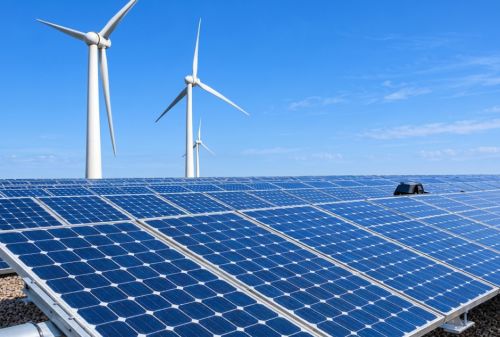
Zimbabwe’s renewable energy ambitions are set to receive a boost following a $300 million partnership between Modaso Energy and Tatanga Energy to develop a 228-megawatt hybrid power project in the country’s northern region. Announced on 3 November 2026, the Guruve-Mazowe project will combine wind, solar and battery storage technologies, with an expected annual electricity output of 550 gigawatt-hours, equivalent to approximately 5% of Zimbabwe’s current yearly power production.
The development brings together Modaso Energy, a subsidiary of MISA Group, and Zimbabwean energy developer Tatanga Energy. The proposed facility will comprise 128 MW of wind generation, 100 MW of solar capacity and a battery energy storage system rated at 50 MW/100 MWh. The combination is intended to provide a more consistent electricity supply by balancing the variability of wind and solar generation and storing electricity for periods when renewable output declines.
Most of the electricity generated is expected to be sold to Zimbabwe Electricity Supply Authority (ZESA), the state-owned utility. ZimGreenCo, a subsidiary of regional electricity trader Africa GreenCo, also intends to purchase part of the output. However, the developers and prospective buyers have yet to finalise the power purchase agreements, leaving an important commercial component of the project unresolved.

The planned investment comes as Zimbabwe continues to address electricity supply constraints and expand its domestic generation capacity. Its energy system remains exposed to fluctuations in hydropower production, which is influenced by rainfall patterns and water availability. Integrating wind and solar generation with battery storage could diversify the country’s electricity mix and reduce the extent to which supply depends on a single renewable resource.
The project’s hybrid design represents a change from its original development concept. Tatanga Energy and Spanish energy company Enerfin initially planned a 100 MW wind farm. In September 2021, the developers began a wind measurement campaign to assess the site’s generation potential and identify appropriate turbine technologies. The revised configuration now incorporates solar generation and battery storage, increasing the planned capacity and broadening the project’s contribution to electricity supply.
The shift towards hybrid generation reflects a wider change in renewable energy development across African markets. Rather than relying exclusively on individual solar or wind installations, developers are increasingly considering combinations of technologies that can improve the availability and predictability of electricity. Solar generation is typically concentrated during daylight hours, while wind output depends on local weather patterns. Battery storage can help manage some of these variations by retaining surplus electricity and releasing it when generation falls or demand rises.
For Zimbabwe, the proposed storage component could help improve the operational value of the renewable energy generated at Guruve-Mazowe. Its 100 MWh storage capacity would allow electricity to be shifted across periods of the day, although the extent of this contribution will depend on dispatch arrangements, grid conditions and the operating strategy adopted by the project. The storage system is therefore an important part of the development’s design, rather than simply an additional technology alongside wind and solar.
The project could also complement the country’s existing hydropower generation. Hydropower remains sensitive to rainfall variability and changing water levels, making diversification increasingly important as climate pressures affect regional water systems. Wind and solar resources offer alternative sources of electricity, while battery storage can provide additional flexibility. A more diversified generation mix could reduce exposure to prolonged periods of low hydropower output, although the actual effect will depend on the project’s integration into the national grid and the wider generation system.
Zimbabwe’s renewable energy targets provide a policy context for the investment. Under its National Energy Compact, developed through Mission 300, the country aims to increase renewable energy capacity from 1,282 MW in 2024 to 2,640 MW by 2030. Mission 300 is led by the World Bank Group and the African Development Bank, alongside other partners, with the broader objective of accelerating electricity access and expanding power infrastructure across Africa.
The Guruve-Mazowe project could contribute to this capacity expansion if it reaches construction and commissioning as planned. Its proposed 228 MW capacity represents a significant addition to Zimbabwe’s renewable energy pipeline, although its contribution to the national target will ultimately depend on implementation, financing, regulatory approvals and grid readiness. The developers have announced the investment estimate and technical configuration, but the available project announcement does not provide a construction timetable or a commissioning date.
Electricity access remains another central consideration. Zimbabwe aims to achieve universal electricity access by 2030, compared with an estimated household electrification rate of 41% in 2024. Reaching this objective will require more than increasing generation capacity. Transmission and distribution infrastructure, grid connections, affordability and the ability to extend electricity services to underserved communities will also determine how much new generation translates into improved access.
The proposed sale of most of the project’s output to ZESA places the state utility at the centre of its commercial structure. Finalising the power purchase agreement will be important in establishing the terms under which electricity will be delivered, priced and paid for. The intended participation of ZimGreenCo could provide an additional route to market through regional electricity trading arrangements, but its proposed share of the output and the terms of the purchase have not yet been disclosed.
The outstanding agreements also highlight a recurring challenge in African renewable energy development: moving from project announcements to bankable investments and operational assets. Long-term power purchase arrangements, payment security, regulatory certainty and the financial position of electricity buyers are important considerations for developers and lenders. For a project of this scale, clarity on these arrangements will be central to securing financing and progressing towards construction.
The $300 million investment estimate also places the development within the wider challenge of mobilising capital for Africa’s energy transition. Renewable energy projects require significant upfront expenditure on generation equipment, storage systems, grid infrastructure and associated development costs. Their ability to attract private investment depends on credible revenue arrangements and a regulatory environment that supports long-term project delivery.

The inclusion of battery storage is particularly relevant as African electricity systems seek to accommodate higher shares of variable renewable generation. Storage can help balance supply and demand, support grid flexibility and reduce some of the operational challenges associated with integrating wind and solar power. However, the value of storage depends on how it is dispatched, the duration of storage relative to system requirements and the capacity of the grid to absorb and distribute the electricity generated.
For Zimbabwe, the Guruve-Mazowe project presents an opportunity to expand renewable generation while diversifying the country’s energy supply. Its expected annual output of 550 GWh would represent a meaningful contribution to domestic electricity production if delivered, while the combination of wind, solar and storage could offer a more flexible generation profile than a single-source facility.
The next stage will depend on whether the partnership can translate the announced design and investment estimate into secured financing, concluded power purchase agreements and construction. The project’s significance will ultimately be measured not only by its installed capacity but also by the reliability of electricity delivered, the strength of its commercial arrangements and its contribution to Zimbabwe’s wider electricity access and renewable energy objectives.
As the country works towards doubling its renewable energy capacity by 2030, Guruve-Mazowe illustrates the growing role of hybrid renewable energy systems in addressing generation constraints. Its progress will offer a useful indication of how private developers, utilities and regional power traders can work together to expand electricity supply in markets where energy security, climate resilience and universal access remain closely connected.


